- English
- French
- German
- Portuguese
- Spanish
- Russian
- Japanese
- Korean
- Arabic
- Greek
- German
- Turkish
- Italian
- Danish
- Romanian
- Indonesian
- Czech
- Afrikaans
- Swedish
- Polish
- Basque
- Catalan
- Esperanto
- Hindi
- Lao
- Albanian
- Amharic
- Armenian
- Azerbaijani
- Belarusian
- Bengali
- Bosnian
- Bulgarian
- Cebuano
- Chichewa
- Corsican
- Croatian
- Dutch
- Estonian
- Filipino
- Finnish
- Frisian
- Galician
- Georgian
- Gujarati
- Haitian
- Hausa
- Hawaiian
- Hebrew
- Hmong
- Hungarian
- Icelandic
- Igbo
- Javanese
- Kannada
- Kazakh
- Khmer
- Kurdish
- Kyrgyz
- Latin
- Latvian
- Lithuanian
- Luxembou..
- Macedonian
- Malagasy
- Malay
- Malayalam
- Maltese
- Maori
- Marathi
- Mongolian
- Burmese
- Nepali
- Norwegian
- Pashto
- Persian
- Punjabi
- Serbian
- Sesotho
- Sinhala
- Slovak
- Slovenian
- Somali
- Samoan
- Scots Gaelic
- Shona
- Sindhi
- Sundanese
- Swahili
- Tajik
- Tamil
- Telugu
- Thai
- Ukrainian
- Urdu
- Uzbek
- Vietnamese
- Welsh
- Xhosa
- Yiddish
- Yoruba
- Zulu
Custom Mechanical Components
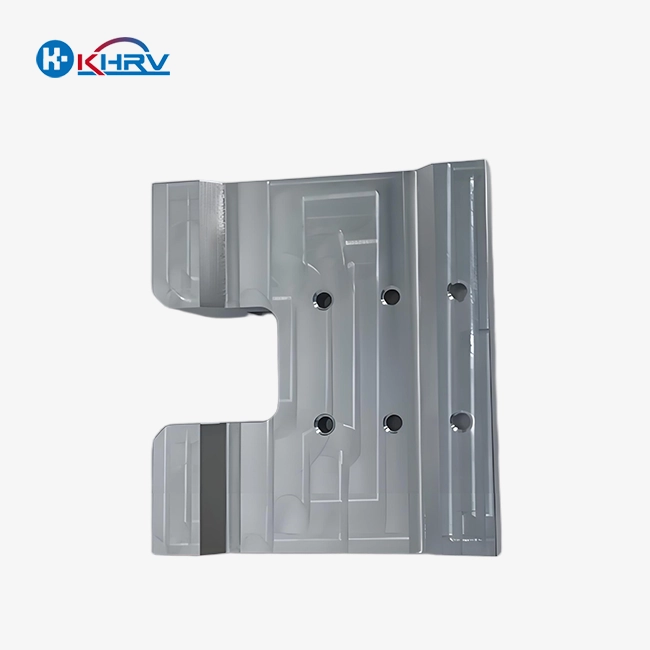
2. Process: Three-axis/four-axis CNC precision milling
3. Critical hole accuracy: ±0.01mm
4. Surface finish: Machined finish, blackening/passivation treatment can be customized upon request. Stainless steel can be passivated, while iron parts can only be chrome plated, nickel plated, blackened, painted, electrophoretically coated, or sprayed.
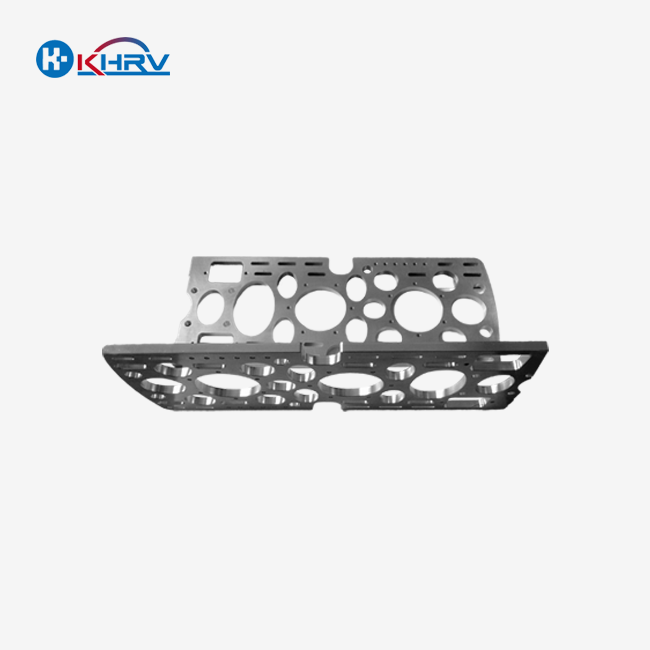
5. Structural features: Square countersunk positioning surface on top, with shaft holes and limit slots on the sides.
Custom Mechanical Components for Industrial Automation — Precision Mounting & Positioning Base Solutions
Wuxi Kaihan Technology Co., Ltd. delivers precision-engineered Custom Mechanical Components built for demanding industrial automation environments. This multi-functional mounting and positioning base is manufactured from Q345 low-alloy high-strength steel using three-axis/four-axis CNC precision milling. Critical hole accuracy is held to ±0.01mm, and the integrated top countersunk positioning surface with side shaft holes and limit slots makes it adaptable across automated transmission mechanisms, testing instruments, and assembly equipment. With 15 years of experience, 22 patents, and an ISO9001-certified quality system, Kaihan delivers components you can trust.
Product Overview & Core Design
This precision base component is purpose-built for industrial automation applications where dimensional accuracy and structural reliability are non-negotiable. The top square recess functions as the primary positioning reference surface, while the side-integrated shaft holes and limit slots enable multi-directional assembly engagement.
The part simultaneously serves as a mounting base, positioning slider, or mechanical adapter — reducing the need for multiple separate components within one assembly. Whether you are building automated transmission systems, precision testing rigs, or equipment fixtures, this component provides a stable, consistent assembly reference you can rely on.
Material & Manufacturing Process
The component is machined from Q345 low-alloy high-strength steel, a material well regarded in industrial engineering for its high yield strength combined with good impact toughness. This makes it particularly suitable for applications involving long-term alternating stress and dynamic mechanical loads.
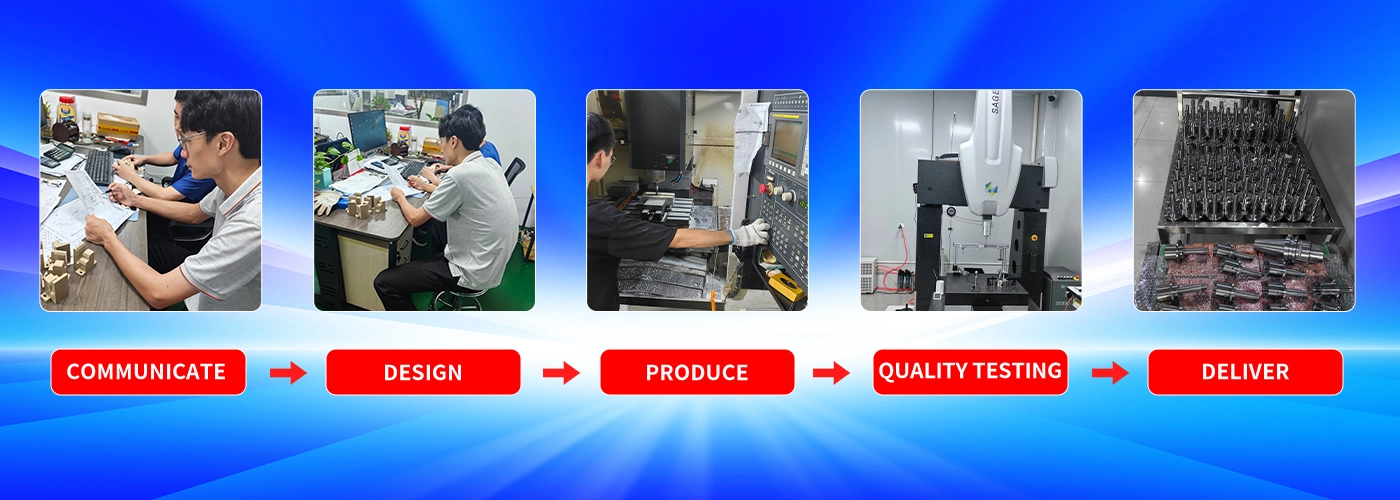
Manufacturing is performed through three-axis and four-axis CNC precision milling, allowing complex geometries — including the countersunk positioning recess, shaft holes, and limit slots — to be produced in a single integrated workflow. This integrally formed approach eliminates tolerance stack-up risks that occur when features are machined in separate operations.
Technical Specifications
| Parameter | Detail |
|---|---|
| Material | Q345 Low-Alloy High-Strength Steel |
| Machining Process | Three-Axis / Four-Axis CNC Precision Milling |
| Critical Hole Accuracy | ±0.01mm |
| Positioning Surface Flatness | Within 0.05mm |
| Structural Features | Square countersunk top surface, side shaft holes, limit slots |
| Standard Surface Finish | Machined finish |
| Optional Surface Treatments | Blackening, passivation, chrome plating, nickel plating, painting, electrophoretic coating, spraying |
| Customization | Interface dimensions, mounting hole positions, and structural layouts per customer drawings |
Surface Treatment Options
Surface treatment selection depends on both material type and the operating environment. For stainless steel variants, passivation is available to enhance corrosion resistance without altering dimensional accuracy. For iron-based Q345 parts, a broader range of treatments is supported — including blackening, chrome plating, nickel plating, painting, electrophoretic coating, and spray coating.
Blackening is a popular choice for industrial automation components because it improves rust resistance, reduces surface reflectivity, and adds a degree of wear protection — all while maintaining tight dimensional tolerances. If your application involves high humidity, chemical exposure, or abrasive contact, specifying a surface treatment upfront helps extend service life and reduce maintenance intervals.
Key Advantages for Industrial Buyers
Multi-Reference Integrated Structure
The top positioning surface and side shaft holes/limit slots are machined as a single integrated unit. This removes the assembly complexity and potential misalignment risks associated with separately manufactured datum features.
Verified Assembly Precision
All critical hole positions are controlled to ±0.01mm, with positioning surface flatness guaranteed within 0.05mm. For automation equipment where repeatability and consistency are essential, these tolerances directly support reliable machine performance across production batches.
Load-Bearing Capability
Q345 steel's mechanical properties — combining tensile strength with ductility — allow the component to sustain long-term cyclic loading and impact forces typical in automated machinery without deformation or fatigue failure.
Drawing-Based Customization
Interface dimensions, mounting hole layouts, and structural geometry can all be adjusted to match your specific equipment design. You provide the drawing; Kaihan engineers the solution. This is what separates a true Custom Mechanical Components supplier from a standard parts vendor.
Applications Across Industries
This mounting and positioning base is well suited to roles across a broad range of industrial sectors:
- Automated Assembly Equipment — Serves as a precision adapter or fixture base where accurate component positioning determines final product quality.
- Transmission Mechanisms — Integrates shaft holes and limit slots directly into drivetrain support structures, reducing auxiliary hardware requirements.
- Testing & Inspection Instruments — Provides a stable, repeatable reference surface for sensor mounts, probing fixtures, or calibration platforms.
- Robotics & Handling Systems — Acts as a structural link or end-effector mounting interface in robotic arms and automated handling cells.
The ability to customize hole patterns, recess geometry, and surface treatments means this component adapts to your equipment rather than requiring you to redesign around a standard part.
Why Source Custom Mechanical Components from Kaihan
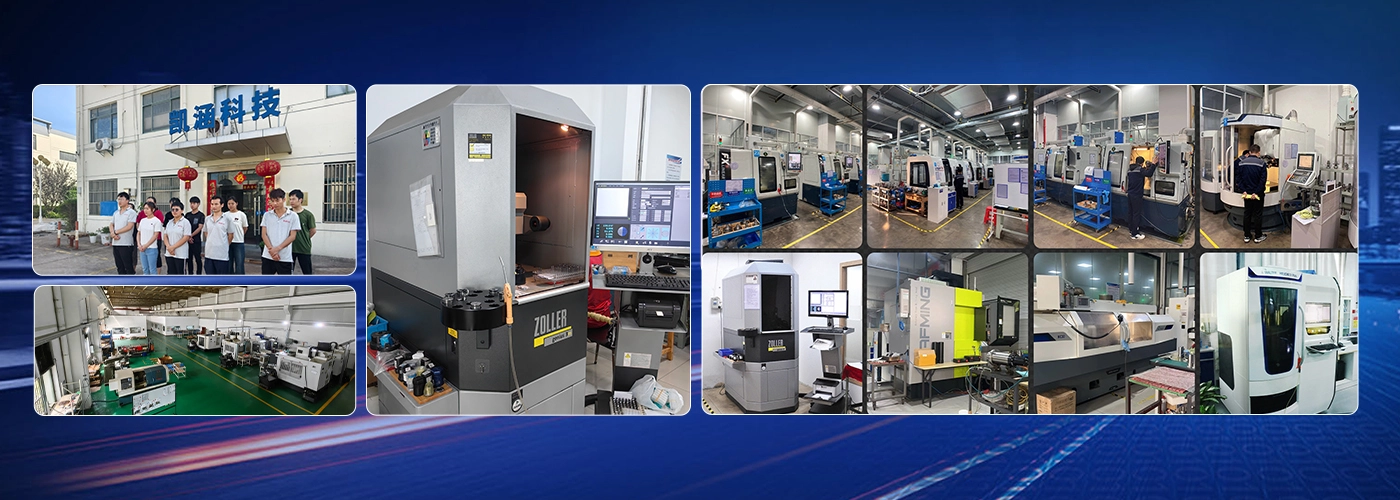
With 15 years of manufacturing experience and a team that includes professionals from Singapore's top engineering enterprises, Kaihan brings real technical depth to every project. Research personnel make up 36% of the workforce, and 8% of annual revenue is reinvested into R&D — reflected in the 22 patents held by the company.
Sourcing precision Custom Mechanical Components from Kaihan also delivers a 30%–40% cost advantage compared to equivalent Western manufacturing sources, without compromising on quality or lead time reliability. The lean production system and advanced CNC equipment base ensure consistent output whether you need prototype quantities or full production runs.
Frequently Asked Questions
Q1: What types of automated equipment is this base compatible with?
It works as a mounting base, positioning slider, or mechanical adapter across automated transmission systems, testing instruments, and industrial assembly equipment. Custom adaptations based on your drawings are fully supported.
Q2: How is critical hole accuracy guaranteed across production batches?
All critical assembly holes are controlled to ±0.01mm, with positioning surface flatness held within 0.05mm. Kaihan uses precision CNC equipment combined with systematic quality inspection to maintain consistency from first article through full production.
Q3: Can surface treatments be applied without affecting dimensional accuracy?
Yes. Treatments such as blackening and passivation are applied after final machining and are selected specifically to avoid dimensional impact on precision features. Treatment type is matched to material and operating environment requirements.
Q4: Can the component be adapted to my specific equipment drawing?
Absolutely. Interface dimensions, mounting hole positions, countersunk geometry, and structural features can all be modified to match your engineering drawings. Submit your specifications and the engineering team will evaluate feasibility and provide feedback.
Q5: What is the minimum order quantity for custom parts?
MOQ varies depending on complexity and material requirements. Contact the Kaihan team directly to discuss your project volume, and they will recommend the most cost-effective production approach.
Q6: What quality certifications support your manufacturing process?
Kaihan operates under an ISO9001-certified quality management system, supported by 22 patents and a dedicated R&D team. Each component batch goes through dimensional inspection before shipment to ensure compliance with agreed tolerances.
Q7: How does Q345 steel compare to other common materials for this application?
Q345 offers a stronger yield strength-to-weight ratio compared to standard mild steel (Q235), while remaining cost-effective and readily machinable. For automated equipment subject to cyclic loads and impact, it provides a better service life than lower-grade alternatives without the cost premium of alloy tool steels.
Contact Us
Ready to source precision Custom Mechanical Components for your next project? Reach out to our engineering team at service@kaihancnc.com — we respond promptly and are ready to support your requirements from drawing review through delivery.
Learn about our latest products and discounts through SMS or email