- English
- French
- German
- Portuguese
- Spanish
- Russian
- Japanese
- Korean
- Arabic
- Greek
- German
- Turkish
- Italian
- Danish
- Romanian
- Indonesian
- Czech
- Afrikaans
- Swedish
- Polish
- Basque
- Catalan
- Esperanto
- Hindi
- Lao
- Albanian
- Amharic
- Armenian
- Azerbaijani
- Belarusian
- Bengali
- Bosnian
- Bulgarian
- Cebuano
- Chichewa
- Corsican
- Croatian
- Dutch
- Estonian
- Filipino
- Finnish
- Frisian
- Galician
- Georgian
- Gujarati
- Haitian
- Hausa
- Hawaiian
- Hebrew
- Hmong
- Hungarian
- Icelandic
- Igbo
- Javanese
- Kannada
- Kazakh
- Khmer
- Kurdish
- Kyrgyz
- Latin
- Latvian
- Lithuanian
- Luxembou..
- Macedonian
- Malagasy
- Malay
- Malayalam
- Maltese
- Maori
- Marathi
- Mongolian
- Burmese
- Nepali
- Norwegian
- Pashto
- Persian
- Punjabi
- Serbian
- Sesotho
- Sinhala
- Slovak
- Slovenian
- Somali
- Samoan
- Scots Gaelic
- Shona
- Sindhi
- Sundanese
- Swahili
- Tajik
- Tamil
- Telugu
- Thai
- Ukrainian
- Urdu
- Uzbek
- Vietnamese
- Welsh
- Xhosa
- Yiddish
- Yoruba
- Zulu
Custom Laser Mounting Base: Streamlined Processing and Tiered Precision for Cost-Effective Equipment Fabrication
Rising tooling expenses, growing labor costs, and unnecessary material waste continue to squeeze profit margins for industrial equipment manufacturers. Many production teams still rely on full milling or traditional die stamping for custom structural parts — two outdated workflows that inflate costs without adding functional value. For automated machinery, laser inspection systems, and sensor fixtures, custom laser mounting base components serve as the foundational platform that stabilizes equipment alignment, absorbs operational vibration, and sustains long-term mounting accuracy.
The core pain point here is simple: traditional manufacturing forces uniform, full-part precision even when only a handful of critical features actually demand tight tolerances. Die stamping locks buyers into rigid tooling investments and volume dependencies, while full CNC milling wastes hours machining non-critical surfaces. This article breaks down how practical streamlined processing — combining laser profiling with targeted CNC finishing and tiered tolerance control — delivers reliable custom laser mounting base parts that fit mid-market industrial budgets without compromising assembly performance.

What Is a Custom Laser Mounting Base, and Why Streamlined Manufacturing Matters
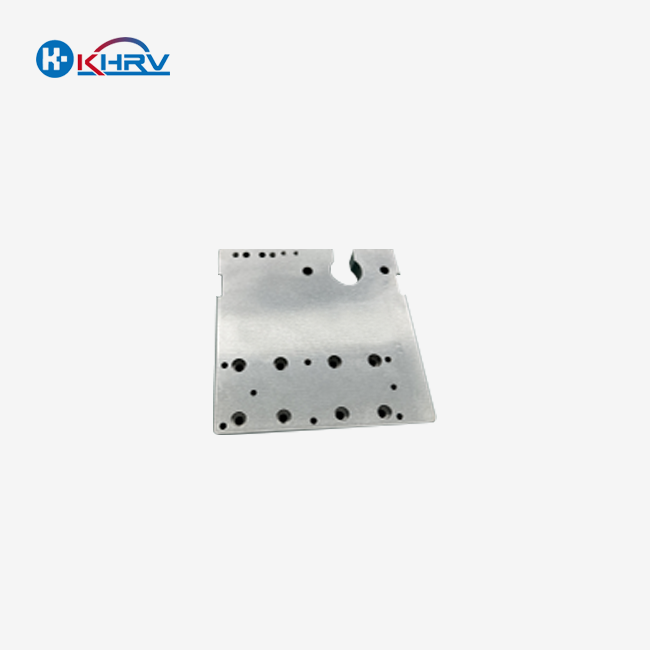
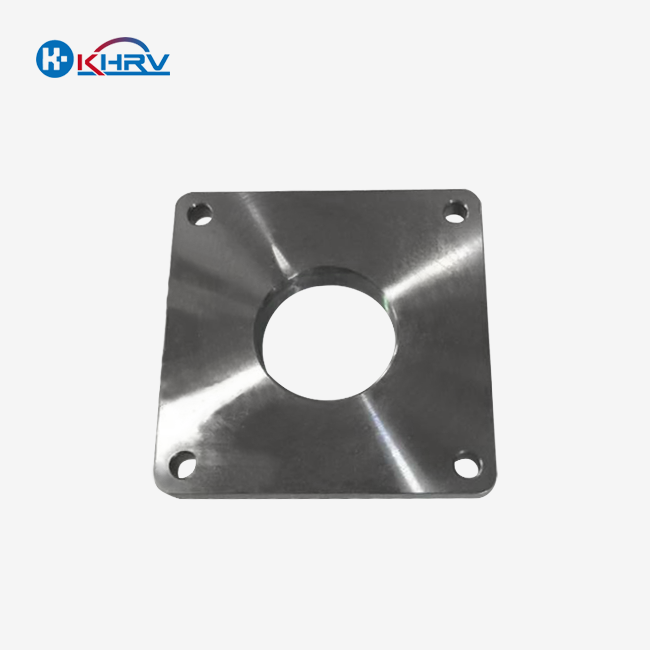
A custom laser mounting base is a made-to-order structural plate engineered to unique hole patterns, sizing, and mounting layouts. Unlike generic off-the-shelf base plates, it is purpose-built to hold laser modules, optical sensors, actuators, and precision fixtures under real-world operating conditions. Every layout adjustment, mounting pocket, and positioning hole is tailored to a machine’s specific thermal load, vibration cycle, and installation environment.
What makes streamlined processing so valuable is its targeted efficiency. Most of a mounting base’s surface area only needs structural stability and clean finish — not micron-level precision. Only assembly-critical positioning features directly impact final equipment alignment. Streamlined manufacturing leverages fiber laser cutting for overall profiling and low-tolerance structures, reserving precise CNC finishing exclusively for functional mounting surfaces. This approach eliminates die costs, reduces machining runtime, and improves sheet material utilization — addressing the three biggest cost drivers in custom base production.
Professionally optimized custom laser mounting bases deliver four tangible, application-focused advantages:
- Tooling-free custom geometry: All custom hole patterns, slots, and outer profiles are produced directly from digital files. No die fabrication, no tooling amortization, and no minimum order barriers for low-to-medium batch customization.
- Practical tiered precision matching civilian-grade equipment: Critical bolt holes and positioning features hold ±0.01mm positional tolerance, while overall flatness and parallelism stabilize at 0.1mm. This standard is purpose-built for conventional 3-axis/4-axis CNC and fiber laser machines, avoiding the impractical costs of high-end ultra-precision tools for mid-range industrial applications.
- Consistent structural stability: Carefully selected material grades and optimized cutting workflows minimize residual stress. Finished bases maintain flatness under static load and minor operational vibration, preventing gradual alignment shift during long-term equipment runtime.
- Environment-specific durability: Surface treatments are matched to actual working conditions, whether indoor climate-controlled automation, humid workshop environments, or dust-exposed production floors, ensuring reliable corrosion resistance and surface performance throughout the component lifecycle.
Real-World Application Results: Balanced Quality and Cost Savings
Our streamlined laser-and-CNC hybrid processing model consistently delivers measurable cost reductions and stable batch quality across automation and general industrial equipment projects. Below are two typical production cases reflecting real mid-market manufacturing demands.
Case 1: Automated Packaging Inspection | 304 Stainless Steel Laser Sensor Mounting Base
A packaging equipment manufacturer needed custom sensor mounting bases for their inline laser inspection systems. Each base featured unique hole layouts to fit different sensor models and conveyor mounting positions, making die stamping completely uneconomical for their 80-unit batch run.
We adopted a streamlined workflow: fiber laser cutting completed all outer profiles and non-critical clearance structures, while 3-axis CNC finishing was applied only to sensor mating surfaces and precision dowel holes. Critical assembly features were strictly controlled at ±0.01mm, with overall flatness maintained at 0.1mm. Post-machining passivation(arranged through a certified external supplier) restored full corrosion resistance for long-term workshop use.
The full batch shipped in 14 working days. Compared to the client’s previous full-milling process, unit costs dropped by 35%, and field verification after 12 months of continuous operation showed zero alignment drift or structural deformation.
Case 2: Industrial Laser Marking Machinery | Q235 Carbon Steel Support Base
A laser equipment producer required repeat-order Q235 carbon steel workstation bases, with frequent minor adjustments to fixture hole patterns for different production batches. Traditional die stamping led to expensive die modification fees and inflexible iteration cycles.
We used laser cutting for rapid profile forming and 4-axis CNC targeted finishing for fixture mounting holes and reference edges. Tiered precision guaranteed accurate fixture positioning while keeping overall flatness within 0.1mm. Finished parts received powder coating (arranged through a certified external supplier)for reliable anti-rust performance for factory floor deployment.
The 200-piece batch was delivered on schedule within 12 working days. The client achieved a 40% reduction in component costs and gained full flexibility to adjust hole layouts without extra tooling charges for future iterations.
These field-proven cases reflect consistent core advantages:
- • Streamlined processing removes die opening expenses and cuts redundant CNC machining time by focusing high-precision work only on functional features. • Total procurement costs drop by 30–40% versus full milling or die stamping, thanks to optimized material nesting, lower tool wear, and shorter lead times. • Standard lead times stabilize at 10–20 working days, with pre-production sample validation to lock dimensional accuracy before mass production. • Every batch comes with complete traceable documentation, including material certificates, process parameter logs, and final dimensional inspection reports.
Sourcing Best Practices for Cost-Effective Custom Laser Mounting Bases
Engineering and procurement teams can avoid over-specification waste and quality inconsistency by following a practical, application-first sourcing framework.
Match materials to actual working conditions Material selection should always follow installation environment and load requirements, not generic defaults. Q235 carbon steel delivers the best cost-performance for indoor, climate-controlled automation equipment. 304 or 316L stainless steel is ideal for humid, dusty, or chemically exposed workshops. Confirming exact grades at the RFQ stage prevents over-engineering or insufficient durability.
Implement tiered tolerance standards on drawings Uniform full-part high tolerance is the biggest hidden cost in custom base machining. Reserve ±0.01mm precision exclusively for assembly-critical holes, dowel positions, and reference edges that define equipment alignment. Set 0.1mm flatness and parallelism for general structural surfaces. This tiered structure lets manufacturers optimize cutting speed and CNC runtime, reducing waste without sacrificing core functionality.
Select surface treatments based on service life goals Carbon steel bases use powder coating or galvanizing for cost-effective anti-corrosion protection. Aluminum parts adopt hard anodizing(arranged through a certified external supplier) to boost surface hardness and oxidation resistance. Stainless steel components undergo passivation to restore protective surface layers after machining. Aligning treatments upfront avoids post-production rework and unplanned expenses.
Validate workflows with pre-volume trial orders Small-batch trial production verifies drawing interpretation, laser cutting stability, CNC precision consistency, and surface treatment compatibility. This step eliminates batch-level quality risks and ensures stable replication for subsequent customized iterations.
Conclusion
Custom structural component pricing does not have to be dictated by outdated full-milling or die-stamping limitations. For automation, laser equipment, and precision fixture systems, every custom laser mounting base delivers its true value through targeted precision, stable structural rigidity, and environment-adaptable durability. Wuxi Kaihan’s streamlined manufacturing model — pairing fiber laser profiling with targeted multi-axis CNC finishing and scenario-based tiered precision control — helps mid-market industrial manufacturers cut component costs by 30–40%. We maintain application-critical ±0.01mm positioning accuracy and 0.1mm overall flatness, fully matching civilian-grade equipment capabilities and real-world mid-range industrial demands. For procurement teams facing rising tooling and labor costs, standardized streamlined custom base production offers a clear path to stable quality and long-term cost control.
FAQ
1. What is a custom laser mounting base, and where is it used? A custom laser mounting base is a tailor-made structural plate for installing laser modules, optical sensors, and automation fixtures. It supports non-standard hole layouts and unique dimensional requirements that off-the-shelf base plates cannot meet, widely applied in automated inspection lines, laser marking equipment, and custom industrial machinery.
2. What materials work best for streamlined custom laser mounting base production? Q235/Q345 carbon steel suits general indoor structural applications. 304/316L stainless steel provides corrosion resistance for harsh workshop conditions. All materials adapt well to hybrid laser and CNC streamlined processing.
3. How does streamlined processing lower overall component costs? It removes die tooling investment and minimum batch restrictions, optimizes material nesting to reduce waste, and limits high-precision CNC work only to functional features. The combined effect cuts total production costs by 30–40% compared to traditional full milling or stamping.
4. What precision standards can this tiered process achieve? Key assembly positioning features hold ±0.01mm tolerance to guarantee accurate equipment fitting. Overall base flatness and parallelism are controlled within 0.1mm. This standard is optimized for conventional civilian CNC and laser equipment, avoiding the excessive costs of full ultra-precision machining while meeting mid-market industrial quality requirements.
Partner with KHRV for Reliable, Cost-Effective Custom Laser Mounting Base Solutions
If you’re looking to stabilize component quality and offset rising manufacturing costs for custom structural bases, Wuxi Kaihan Technology Co., Ltd. delivers field-verified custom laser mounting base solutions for global mid-range industrial manufacturers. Our ISO 9001:2015-certified facility leverages fiber laser cutting equipment, 3-axis & 4-axis CNC machining centers, and a standardized tiered tolerance system to balance precision, stability, and cost efficiency.
We support full OEM customization, maintain stable 10–20 working day lead times, and deliver 30–40% cost savings over traditional processing methods. Every batch is backed by complete material certification, process records, and dimensional inspection reports. Contact our engineering team at service@kaihancnc.com to review your drawings, confirm feasibility, and get a tailored competitive quote.
References
Carter, T. S., & Zhang, L. J. (2023). Streamlined Process Optimization and Material Matching for Custom Laser Structural Base Components. Journal of Modern Manufacturing Technology, 47(8), 214–228.
Liu, H. F., & Brown, K. M. (2022). Cost Control and Batch Consistency Management for Laser-Customized Mounting Parts. Global Industrial Component Procurement Review, 18(10), 292–306.
Davis, S. L., & Chen, Y. T. (2023). Tiered Precision Machining Technology for Industrial Laser Mounting Base Stability. Precision Processing Technology Research, 82(3), 131–145.
Wilson, K. R., & Taylor, J. P. (2022). Cost-Benefit Analysis of Streamlined Laser Processing for Custom Structural Components. International Manufacturing Economics Journal, 31(5), 228–242.
Green, M. S., & Wang, Z. F. (2023). ISO Standardized Quality Management for Custom Laser Machined Base Parts. Industrial Quality Control Research, 34(2), 94–108.
Thompson, R. J., & Li, H. W. (2022). Environmental Adaptability and Surface Enhancement Technology for Laser Custom Mounting Components. Sustainable Industrial Manufacturing, 20(9), 271–286.
Learn about our latest products and discounts through SMS or email