- English
- French
- German
- Portuguese
- Spanish
- Russian
- Japanese
- Korean
- Arabic
- Greek
- German
- Turkish
- Italian
- Danish
- Romanian
- Indonesian
- Czech
- Afrikaans
- Swedish
- Polish
- Basque
- Catalan
- Esperanto
- Hindi
- Lao
- Albanian
- Amharic
- Armenian
- Azerbaijani
- Belarusian
- Bengali
- Bosnian
- Bulgarian
- Cebuano
- Chichewa
- Corsican
- Croatian
- Dutch
- Estonian
- Filipino
- Finnish
- Frisian
- Galician
- Georgian
- Gujarati
- Haitian
- Hausa
- Hawaiian
- Hebrew
- Hmong
- Hungarian
- Icelandic
- Igbo
- Javanese
- Kannada
- Kazakh
- Khmer
- Kurdish
- Kyrgyz
- Latin
- Latvian
- Lithuanian
- Luxembou..
- Macedonian
- Malagasy
- Malay
- Malayalam
- Maltese
- Maori
- Marathi
- Mongolian
- Burmese
- Nepali
- Norwegian
- Pashto
- Persian
- Punjabi
- Serbian
- Sesotho
- Sinhala
- Slovak
- Slovenian
- Somali
- Samoan
- Scots Gaelic
- Shona
- Sindhi
- Sundanese
- Swahili
- Tajik
- Tamil
- Telugu
- Thai
- Ukrainian
- Urdu
- Uzbek
- Vietnamese
- Welsh
- Xhosa
- Yiddish
- Yoruba
- Zulu
CNC Machining for Robotic Parts
2. Weight: Approx. 0.3–0.5kg (adjustable according to actual size)
3. Surface Treatment: Hard anodizing (wear-resistant and corrosion-resistant, uniform and dense film)
4. Machining Accuracy: Critical inner hole ±0.01mm
5. Roughness: Ra1.6–Ra3.2 (inner hole and mounting surface)
CNC Machining for Robotic Parts — Precision Aluminum Robot Joint Components for Industrial Automation
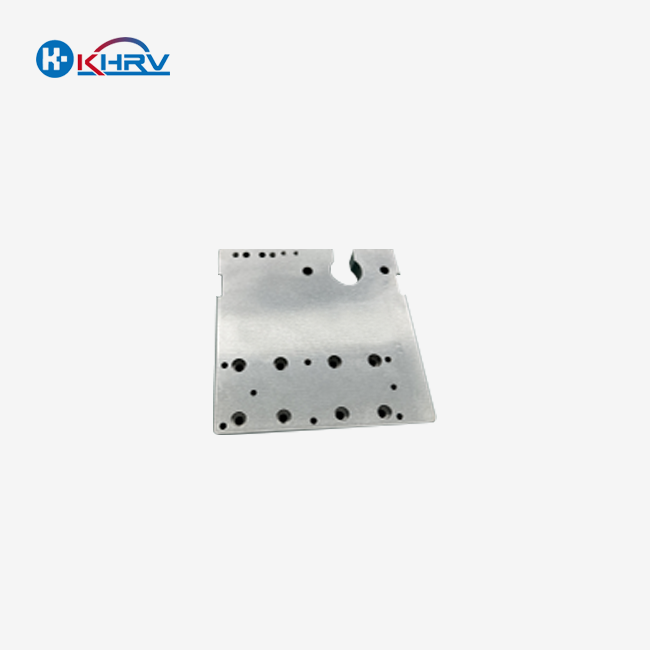
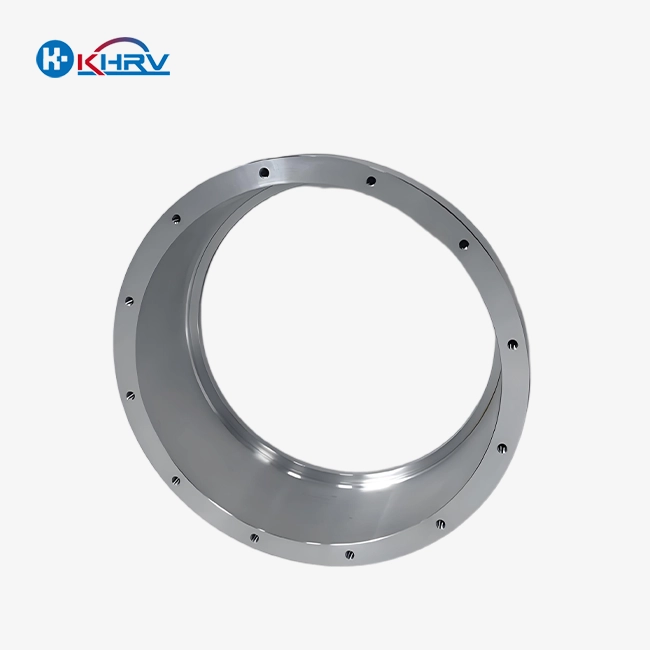
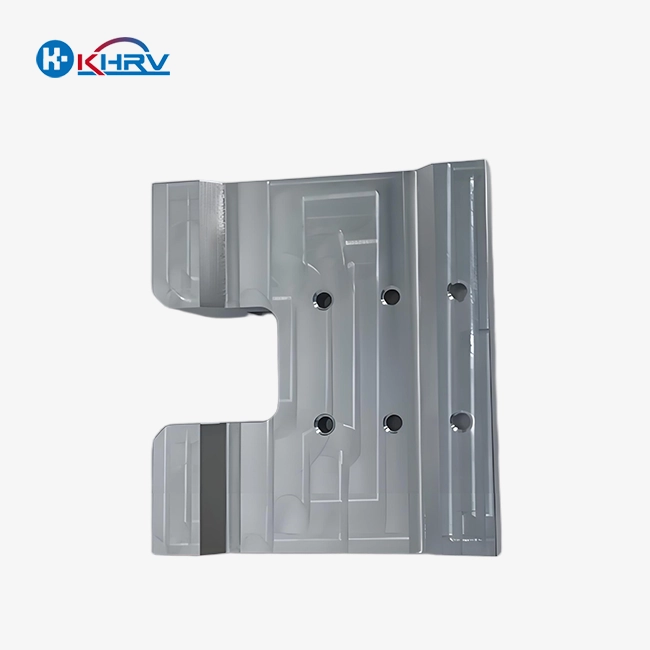
Wuxi Kaihan Technology Co., Ltd. delivers professional CNC Machining for Robotic Parts with over 15 years of manufacturing experience. These aluminum alloy robot joint end caps are CNC milled from 6061-T6 aluminum alloy, weighing approximately 0.3–0.5 kg and achieving a critical inner hole tolerance of ±0.01 mm. Hard anodizing treatment ensures wear and corrosion resistance across demanding industrial environments. With 22 patents and R&D investment at 8% of annual revenue, Kaihan provides enterprise-level precision components that serve servo motor, stepper motor, and industrial automation drive applications globally.
What Makes These Robot Joint Components Stand Out
Industrial robotic systems require structural parts that balance rigid stability, thermal resistance and ultra-high dimensional accuracy. Our custom robot joint end caps are professionally engineered for high-frequency, high-dynamic automation operating scenarios with stringent performance standards.
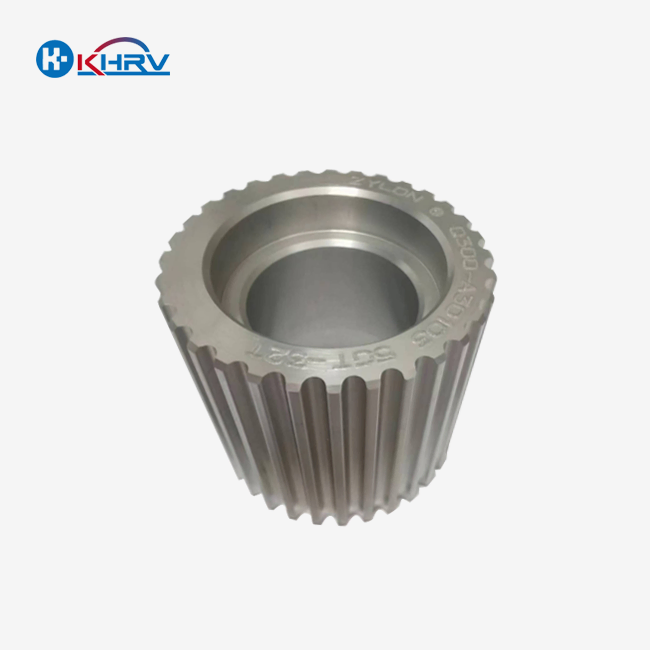
Manufactured from 6061-T6 aluminum alloy, a mainstream industrial material renowned for excellent strength-to-weight ratio, superior machinability and reliable thermal conductivity, these components effectively reduce end load on robotic arms while maintaining complete structural stability during continuous cyclic operation. The outer wall is precision machined with multi-ring heat dissipation grooves, which greatly expand the heat dissipation contact area, accelerate air convection heat exchange, lower continuous operating temperature of supporting motors, and effectively extend the overall service life of automation equipment.
Technical Specifications
| Parameter | Details |
|---|---|
| Material | 6061-T6 Aluminum Alloy |
| Weight | Approx. 0.3–0.5 kg (adjustable by actual size) |
| Surface Treatment | Hard Anodizing (wear-resistant, corrosion-resistant, uniform dense film) |
| Machining Accuracy (Critical Inner Hole) | ±0.01 mm |
| Non-Functional Surface Tolerance | Within 0.1 mm |
| Roughness (Inner Hole & Mounting Surface) | Ra1.6–Ra3.2 |
| Compatibility | Servo motors, stepper motors, industrial automation drive modules |
Key Performance Advantages
High-Efficiency Heat Dissipation Structure
The annular grooves on the outer wall are not decorative — they are precisely machined to maximize convection surface area. This structural design actively reduces motor temperature rise during continuous operation, directly extending the service life of connected drive components.
Lightweight and High-Strength Design
6061-T6 aluminum alloy delivers a balance of low mass and structural rigidity that few materials can match at this price point. Reducing the end load on your robotic arm improves dynamic response and reduces actuator fatigue over time.
Graded Precision Machining
Not all surfaces need the same tolerance. Kaihan applies a graded approach — holding critical inner holes and mounting reference surfaces to ±0.01 mm while controlling non-functional surfaces within 0.1 mm. This strategy balances precision where it matters with cost efficiency across the whole part.
Hard Anodized Surface Layer
Industrial-grade hard anodizing creates a dense, tightly adhered oxide layer on the aluminum surface. This significantly improves surface hardness and scratch resistance, protecting the component against oxidation, rust, and the abrasive conditions common in workshop and factory environments.
Material and Surface Treatment Considerations
For B2B buyers sourcing robotic joint components at volume, material selection and surface finishing decisions have long-term cost implications. 6061-T6 is the preferred alloy for precision-machined robotic structural parts because it machines cleanly, holds tight tolerances, and accepts anodizing uniformly.
Hard anodizing, unlike standard anodizing, penetrates deeper into the aluminum substrate, resulting in a harder and more durable surface. The film layer is uniform and dense, which means dimensional consistency is maintained even after surface treatment. Anodizing thickness and color can be adjusted based on your project requirements.
The inner hole and mounting surface roughness of Ra1.6–Ra3.2 ensures proper fit with mating components such as motor shafts, bearings, and encoder housings — reducing assembly friction and improving positional repeatability in the robotic joint.
Applications in Robotic and Automation Systems
This component is designed for industrial robots and automation equipment that rely on servo or stepper motor-driven joints. Typical use scenarios include:
Collaborative robot (cobot) joint assemblies — where precise inner hole tolerances ensure accurate motor shaft alignment and repeatable motion control.
Industrial robot arm segments — where the lightweight 6061-T6 construction reduces inertia at each joint, improving the speed and accuracy of the entire arm system.
Automated guided vehicles (AGVs) and drive modules — where long operating hours demand both thermal management and surface durability.
Custom automation fixtures and end effectors — where non-standard interfaces are required and drawing-based customization is essential.
This is where CNC Machining for Robotic Parts delivers clear technical value: components are built to drawing, not to a generic catalog size, allowing your engineering team to specify exact interface dimensions.
Quality Control and B2B Supply Assurance
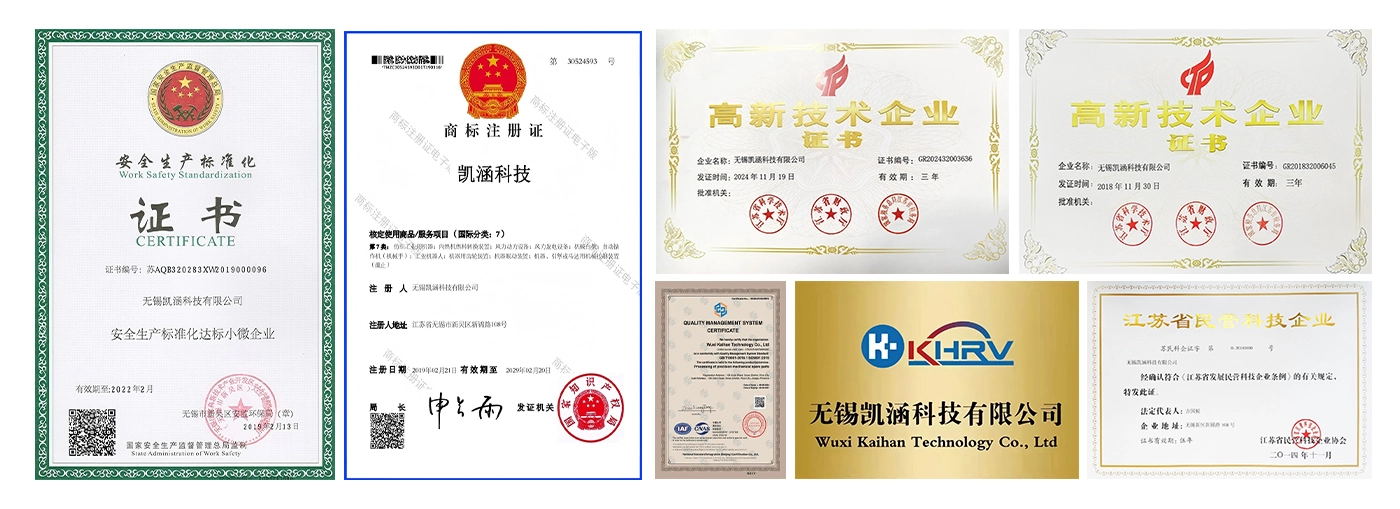
Kaihan operates under an ISO 9001 quality management system with dedicated precision testing instruments at every production stage. Inner hole dimensions are verified to ±0.01 mm using calibrated inspection equipment before any part proceeds to surface treatment.
Research personnel make up 36% of Kaihan's total staff, and R&D investment accounts for 8% of annual revenue. This engineering depth means your custom robotic parts are supported by a team that understands precision manufacturing — not just basic machining.
Buyers sourcing from China can achieve 30%–40% cost savings compared to equivalent Western supply chains without sacrificing dimensional accuracy or material quality. Kaihan's lean production system and 15 years of experience ensure consistent delivery performance across batch sizes.
Customization and OEM Support
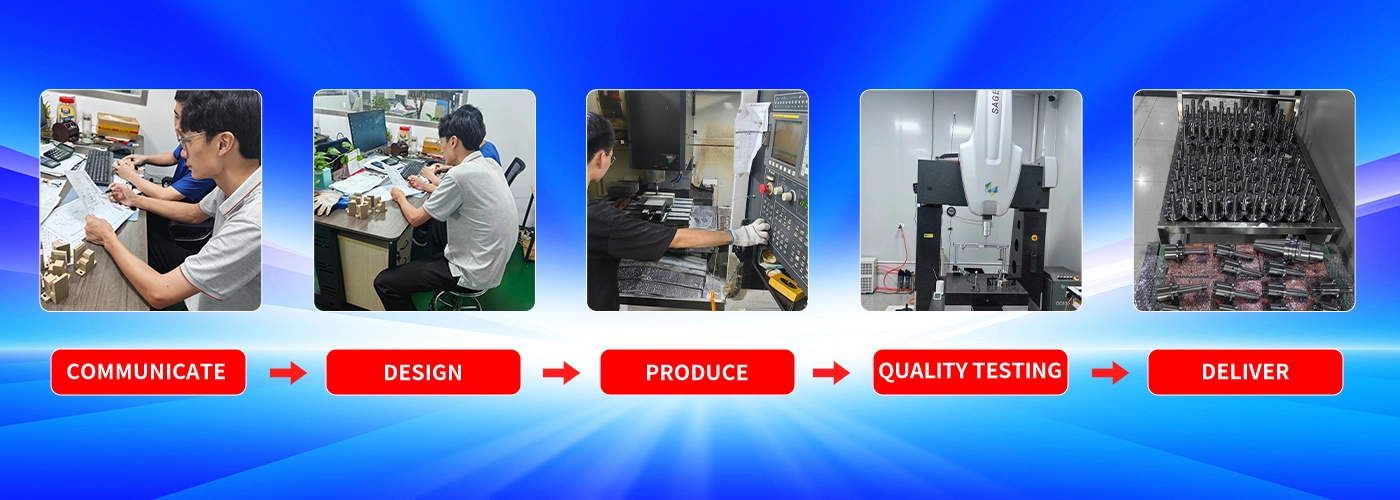
Every robotic application has different interface requirements. Kaihan supports full customization based on customer drawings, including:
- Inner hole diameter and depth
- Mounting hole pattern and thread specifications
- Outer diameter and overall length
- Anodizing thickness and color options
- Non-standard flanges or keyway features
Whether you are prototyping a new robotic joint design or scaling to production volumes, CNC Machining for Robotic Parts at Kaihan is built around your engineering requirements — not the other way around.
Frequently Asked Questions
Q1: Can this end cap be compatible with different servo motor models?
A: Yes. Kaihan supports full customization of inner hole dimensions, mounting hole positions, and outer diameter specifications based on your drawings. It is compatible with mainstream servo motor brands of equivalent specifications, and non-standard interfaces can also be accommodated.
Q2: Is the hard anodized layer durable enough for long-term use?
A: Industrial-grade hard anodizing creates a dense, strongly adhered film with excellent wear resistance under normal operating conditions. The layer will not peel under standard use. Anodizing thickness and color can be adjusted to meet your specific requirements.
Q3: How does the heat dissipation structure perform during continuous operation?
A: The annular heat dissipation grooves machined into the outer wall significantly increase the effective surface area. Combined with 6061-T6 aluminum's high thermal conductivity, this design actively reduces temperature rise during extended motor operation and helps prolong equipment service life.
Q4: What tolerance can be achieved on the critical inner hole?
A: The critical inner hole is controlled to ±0.01 mm. Mounting reference surfaces follow the same standard. Non-functional surfaces are held within 0.1 mm. This graded approach ensures precision where it directly affects performance.
Q5: What is the minimum order quantity for custom robotic joint parts?
A: Kaihan supports both small-batch prototyping and large-volume production. Please contact the team with your drawings and volume requirements for a specific quotation and lead time.
Q6: Can the surface roughness be adjusted for specific mating conditions?
A: The standard inner hole and mounting surface roughness is Ra1.6–Ra3.2. If your assembly requires a tighter finish for press-fit or bearing interfaces, surface finishing parameters can be discussed and adjusted during the drawing review stage.
Q7: What quality documentation is available for these components?
A: Kaihan operates under ISO 9001 quality management certification. Dimensional inspection reports and material certifications can be provided upon request for incoming quality control purposes.
Contact Us
If you are looking for reliable suppliers of high-precision CNC Machining for Robotic Parts and customized aluminum robot joint components, please send your detailed drawings and technical requirements to our team. We provide professional engineering evaluation, reasonable quotation and timely after-sales service for global automation industry clients. Email us: service@kaihancnc.com
Learn about our latest products and discounts through SMS or email