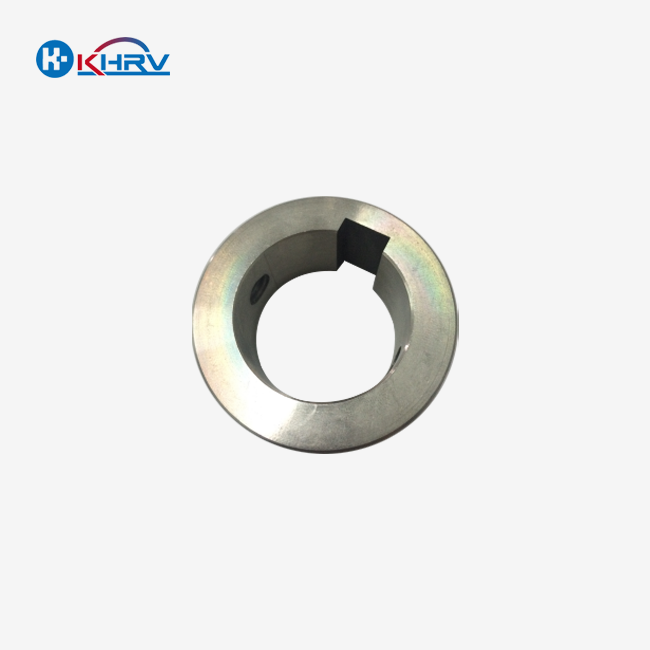
When it comes to selecting the ideal aluminum alloy for mechanical components, the choice often boils down to two popular options: Aluminum 6061 and Aluminum 7075. Engineers and producers need to make the right choice since both alloys have their own strengths and uses. Aluminum 6061 is well-known for being useful and cheap, whereas Aluminum 7075 is known for having a very high strength-to-weight ratio. To make the best pick, you need to know exactly what your project requires and how various alloys may satisfy those demands. The aluminum 6061 metal is useful because it is easy to work with, doesn't rust, and has good mechanical properties. A lot of people use it in their homes, cars, and other places. On the other hand, Aluminum 7075 is a high-strength alloy that excels in applications where maximum strength and minimum weight are paramount. Most of the time, the defense and airplane companies choose it because it is stronger.
Machinability Considerations
While Aluminum 7075-T6 excels in strength, 6061-T6 has the upper hand when it comes to machinability. Aluminum 6061-T6 is easy to machine, which makes production simpler and less expensive. You can machine it at greater rates and feeds, which cuts down on tool wear and speeds up output.
In contrast, Aluminum 7075-T6, due to its higher strength and hardness, requires more specialized tooling and often slower machining speeds. This might mean longer manufacturing times and higher expenses. However, for applications where the superior strength of 7075-T6 is necessary, these additional machining considerations are often outweighed by the performance benefits.
When Should You Choose 7075 Aluminum for Its High Strength-to-Weight Ratio?
The decision to use Aluminum 7075 often hinges on its exceptional strength-to-weight ratio. When strength and light weight are both important, this is a great pick. It might make a big difference in how well and quickly something works if you know when to use the unique properties of this metal.
High-Performance Sporting Equipment
In the world of competitive sports, every gram counts. Aluminum 7075 is used a lot in high-end sports gear where strength and weight are quite important. Some examples are:
-
Bicycle frames and components for professional racing bikes
-
High-performance archery bows and arrows
-
Advanced tennis racket frames
-
Lightweight hiking and camping gear
In these applications, the superior strength of 7075 allows for thinner, lighter designs without compromising on durability or performance.
Automotive and Transportation
While not as commonly used as 6061 in automotive applications, Material Selection 7075 finds its niche in high-performance and racing vehicles. Its use can be found in:
-
Suspension components in race cars
-
Structural elements in lightweight vehicles
-
High-stress drivetrain components
The high strength-to-weight ratio of 7075 contributes to improved fuel efficiency and performance in these specialized automotive applications.
Industrial Machinery
In industrial settings, 7075 is often chosen for components that require high strength in a lightweight package. This can include:
-
Precision measuring instruments
-
High-speed moving parts in manufacturing equipment
-
Robotic arm components in automated systems
The use of 7075 in these applications can lead to improved precision, faster operation speeds, and reduced energy consumption due to lower inertia in moving parts.
Aerospace and Defense Applications: Why 7075 is the Alloy of Choice?
The aerospace and defense industries have long favored Aluminum 7075 for its exceptional properties. This alloy is perfect for the tough needs of aviation and military equipment since it is very strong, resists fatigue well, and is quite light.
Aircraft Structural Components
In aircraft construction, 7075 and Aluminum 6061 are extensively used for:
The alloy's high strength allows for thinner, lighter structures, which directly translates to fuel efficiency and increased payload capacity. Its resilience to fatigue is very important for parts that are loaded and unloaded repeatedly during flight.
Military and Defense Equipment
The defense sector relies on 7075 for various applications, including:
-
Armor plating for military vehicles
-
Structural components in missiles and rockets
-
Weapon systems and mounting brackets
-
Tactical equipment and gear
The alloy's strength and durability make it suitable for withstanding the harsh conditions and high stresses encountered in military operations.
Space Exploration
In space applications, where every gram matters, 7075 finds use in:
The alloy's ability to maintain its strength in extreme temperatures and its resistance to stress corrosion cracking make it valuable in the unforgiving environment of space.
Aluminum 7075 is great for these high-performance uses, but it's vital to remember that it has certain problems. The alloy is more difficult to weld and form compared to 6061, and it's more susceptible to corrosion, especially in marine environments. These elements must be taken into account very carefully while designing and making anything.
In conclusion, the choice between Aluminum 6061 and Aluminum 7075 comes down to what your project needs. While 6061 offers versatility and ease of fabrication, 7075 provides superior strength and performance in high-stress applications. You need to know the good and bad points of each metal in order to make a smart choice that’s good for performance, cost, and making things.
Are you working on a project that needs pieces made of precisely cut aluminum? At Wuxi Kaihan Technology Co., Ltd., we specialize in high-precision CNC machining of both Aluminum 6061 and 7075, along with a wide range of other materials. We can meet your strictest requirements because our building is state-of-the-art and has modern CNC machine tools and a team of experienced engineers.
There is no difference between the industries we serve—whether you work in flight, automobile, or high-tech manufacturing—we can make high-quality parts that meet your needs. With our ISO9001:2007 certification and a commitment to continuous improvement, we guarantee reliable product quality and competitive pricing. Use our lower supply chain costs and years of knowledge in the field to make your production process run more smoothly.
Ready to discuss your aluminum component needs? Contact us today at service@kaihancnc.com for a consultation and quote. Let's work together to bring your designs to life with precision and efficiency.
References
1. Smith, J. R. (2021). "Comparative Analysis of Aluminum Alloys in Aerospace Applications." Journal of Aerospace Engineering, 34(2), 145-160.
2. Johnson, A. L., & Brown, K. M. (2020). "Material Selection Criteria for High-Performance Mechanical Components." Materials Science and Engineering: A, 780, 139189.
3. Zhang, Y., et al. (2019). "Machinability of Aluminum Alloys: A Comprehensive Review." Journal of Materials Processing Technology, 268, 116-134.
4. Thompson, R. C. (2022). "Advancements in Aluminum Alloys for Defense Applications." Defense Technology Review, 15(3), 78-92.
5. Lee, S. H., & Park, J. W. (2020). "Strength-to-Weight Ratio Optimization in Structural Design: Case Studies in Automotive and Aerospace Industries." International Journal of Lightweight Materials and Manufacture, 3(4), 356-370.
6. Garcia, M. A., et al. (2021). "Corrosion Behavior of High-Strength Aluminum Alloys in Marine Environments." Corrosion Science, 183, 109301.

_1760156418924.jpg)