- English
- French
- German
- Portuguese
- Spanish
- Russian
- Japanese
- Korean
- Arabic
- Greek
- German
- Turkish
- Italian
- Danish
- Romanian
- Indonesian
- Czech
- Afrikaans
- Swedish
- Polish
- Basque
- Catalan
- Esperanto
- Hindi
- Lao
- Albanian
- Amharic
- Armenian
- Azerbaijani
- Belarusian
- Bengali
- Bosnian
- Bulgarian
- Cebuano
- Chichewa
- Corsican
- Croatian
- Dutch
- Estonian
- Filipino
- Finnish
- Frisian
- Galician
- Georgian
- Gujarati
- Haitian
- Hausa
- Hawaiian
- Hebrew
- Hmong
- Hungarian
- Icelandic
- Igbo
- Javanese
- Kannada
- Kazakh
- Khmer
- Kurdish
- Kyrgyz
- Latin
- Latvian
- Lithuanian
- Luxembou..
- Macedonian
- Malagasy
- Malay
- Malayalam
- Maltese
- Maori
- Marathi
- Mongolian
- Burmese
- Nepali
- Norwegian
- Pashto
- Persian
- Punjabi
- Serbian
- Sesotho
- Sinhala
- Slovak
- Slovenian
- Somali
- Samoan
- Scots Gaelic
- Shona
- Sindhi
- Sundanese
- Swahili
- Tajik
- Tamil
- Telugu
- Thai
- Ukrainian
- Urdu
- Uzbek
- Vietnamese
- Welsh
- Xhosa
- Yiddish
- Yoruba
- Zulu
Carbon Steel Machining: Semi-Finishing + Stress Relief Outsourcing for Your Subsequent Precision Work
For automation, machine-tool and heavy-equipment OEMs sourcing Carbon Steel Machining, a persistent operational headache is occupying high-precision CNC and grinding resources with labour-intensive rough-cutting work. Carbon-steel structural brackets, base plates and mechanical housings demand stable geometry for subsequent finishing operations. Yet raw-material procurement, scale removal, heavy stock removal and stress-relief coordination consume machine hours that should be reserved for micron-level final-precision work. Outsourced rough and semi-finish pre-machining with coordinated stress relief solves this bottleneck. It delivers semi-finished blanks with drawing-specified stock allowance, mitigates residual-stress-driven warping, reduces internal workload and compresses lead time. This article explains what the service delivers, realistic capability boundaries, and how procurement teams deploy it to safeguard high-precision machine capacity.

Understanding Rough and Semi-Finish Pre-Machining for Carbon Steel Machining
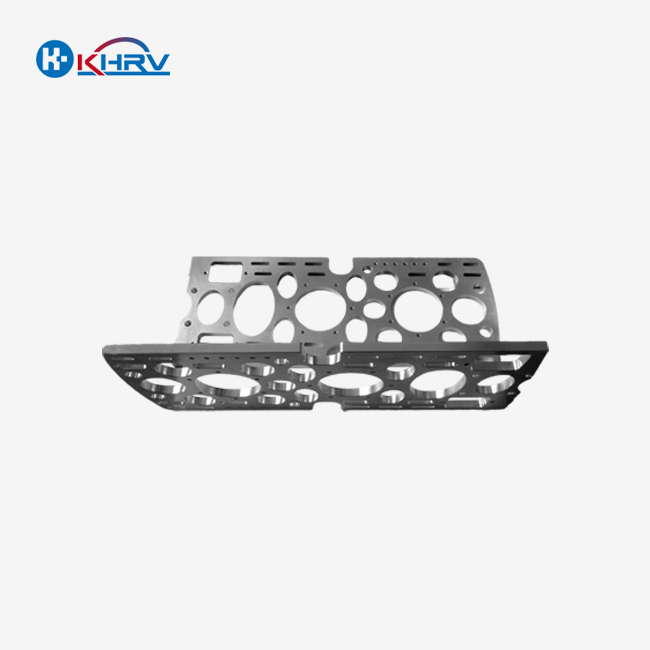
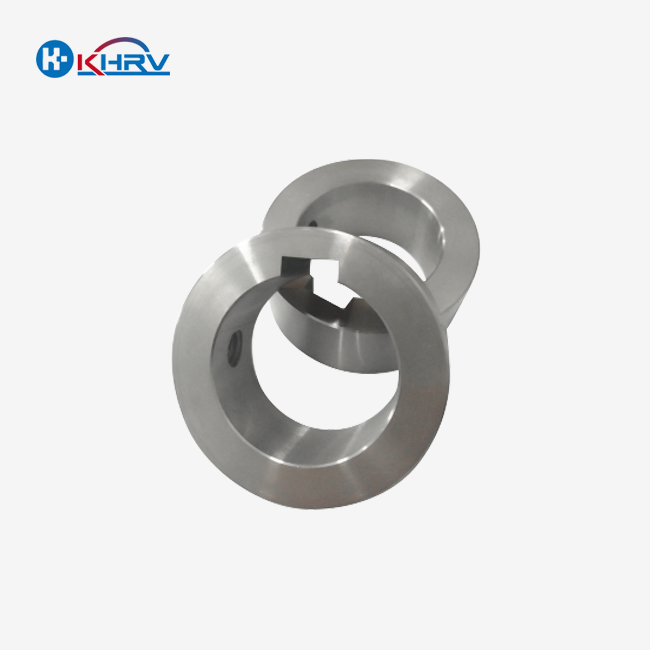
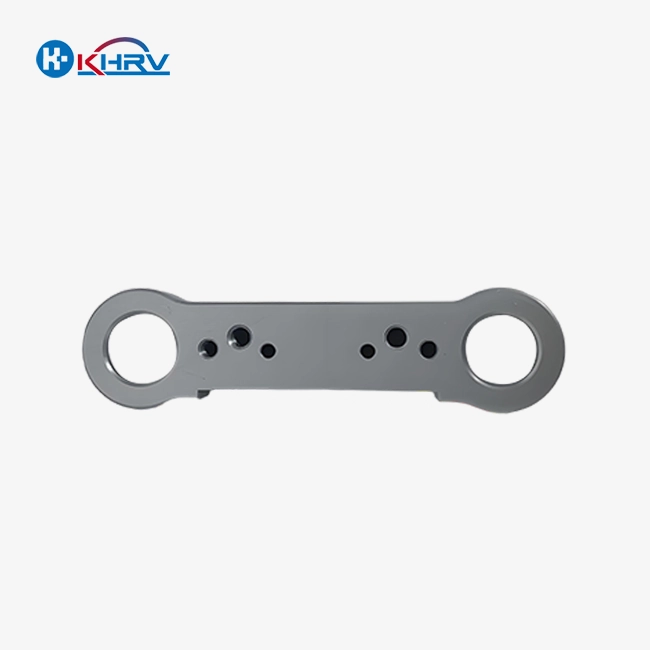
Carbon-steel machined components include structural bases, mounting brackets, gear blanks and mechanical housings, typically produced from 1045 (45#) carbon steel and 4140 alloy steel.
Rough machining removes mill scale and the majority of excess raw stock. Semi-finishing mills holes, slots, threaded profiles and locating features while leaving uniform, drawing-defined stock allowance for the customer's final-finish, grinding or hard-machining operations. Carbon steel releases significant residual stress after large-volume removal, and poorly executed pre-machining triggers hidden warping that only appears during customer final-precision processing.
Core deliverables of the outsourced pre-machining service:
- Source raw carbon-steel bar or plate, verify dimensions and remove oxide skin.
- Execute roughing plus semi-finish milling and turning with configurable residual stock for final-finish passes.
- Coordinate third-party stress-relief annealing on request; heat treatment is subcontracted and never performed in-house.
- A clear capability boundary: micron-grade final dimensional accuracy, ultra-tight flatness and precision bore finishing are completed on the customer's own high-precision equipment.
Common Carbon-Steel Grades for Pre-Machining and Practical Trade-Offs
Material selection influences pre-machining stability, required stock allowance and deformation risk for carbon-steel parts.
Carbon steel moves differently from aluminium
Aluminium warps soon after roughing — you see it on the bench. Carbon steel is more patient. A 1045 plate that loses half its thickness may look flat right after machining. The distortion shows up later: after stress-relief annealing, after hardening, or on the customer's grinder. The stress balance shifts again each time the part goes through a thermal cycle.
This is why the annealing or hardening sequence cannot be skipped on long-span or thin-wall carbon-steel parts. Without it, the warp appears on the customer's finishing machine, not on our mill — and by then the part is already fixtured, indicating, and halfway through a grinding pass.
1045 and 4140 follow different sequences
1045 usually needs one annealing cycle after roughing, then semi-finishing, then the customer finishes. Straightforward and predictable.
4140 usually needs hardening to reach final strength, and hardening distorts the part. The working sequence is rough machining, hardening, grinding to re-establish the datum, then semi-finishing. Two extra steps, both coordinated externally, but the customer receives a blank that has already been through its thermal cycle and is ready for one final finishing pass.
1045 (45#) Carbon Steel: general-purpose medium-carbon steel widely used for structural brackets, base plates and mechanical blanks, machining smoothly in rough and semi-finish workflows. Thin-walled or long-span workpieces carry notable residual-stress risk after heavy removal, so coordinated stress relief is strongly recommended for large parts.
4140 Alloy Steel: Cr-Mo alloy steel for high-strength, high-torque components. Hardening is usually required to reach final strength, and the sequence matters. We rough machine first, leaving enough stock for hardening distortion. The part then goes out for hardening, followed by a grinding step to re-establish a flat datum — hardening moves the part, and semi-finishing cannot proceed until there is a reliable reference surface again. Only after that do we semi-finish, leaving controlled allowance for the customer's final grinding or finishing.
We coordinate the hardening and grinding steps with qualified external partners. If distortion after hardening is severe, the heat treatment partner performs straightening before the part returns for grinding. The customer receives a semi-finished blank that has already been through hardening, already has a re-established datum, and is ready for one final finishing operation.
Important capability note: roughing and semi-finishing do not produce final micron-level tolerances. Distortion risk persists, especially on long, thin-wall carbon-steel blanks and on 4140 parts after hardening. All ultra-precision requirements must be achieved in the customer's downstream finishing or grinding operations.
Core Criteria for Outsourcing Pre-Machining of Carbon Steel Machining
Effective outsourcing aligns supplier workflows with drawing specifications, internal equipment allocation and project timelines.
Equipment-Capacity Planning Perspective
If high-precision CNC or grinding assets are occupied by heavy rough-cutting cycles on carbon-steel blanks, outsourcing unlocks capacity for final finishing. Prototype development and low-volume serial projects both gain, since semi-finished blanks compress turnaround cycles.
Residual-Stress and Deformation Risk Management
Carbon-steel workpieces warp after large stock removal, so define allowance values clearly on drawings. For long-span, thin-wall or high-strength alloy-steel components, specify whether coordinated third-party stress-relief annealing is required. The supplier manages logistics and coordination; heat treatment is executed by external specialist subcontractors.
Drawing Specification and Capability Boundary
Separate pre-roughing from final-finish requirements on drawings and document feature-specific allowance. Never assign micron-level finishing tolerances to semi-finished deliverables: qualified suppliers provide semi-finish dimensional documentation, while final precision validation stays in your internal finishing workflow.
Optimising Production Workflow Through Outsourced Pre-Roughing
Structured outsourcing improves manufacturability and requires alignment between design, engineering and procurement stakeholders.
Three Typical Service Workflows for Carbon-Steel Parts
Basic pre-roughing: raw steel stock procured, mill scale and bulk material removed, rough blanks shipped for full customer finishing or grinding.
Pre-roughing plus semi-finishing: holes, slots and threads machined with controlled stock reserved for downstream finishing or grinding.
Pre-roughing, semi-finishing and coordinated stress relief: pre-machining completed, parts sent for third-party stress-relief annealing under supplier coordination before shipment.
DFM Alignment During the Quotation Phase
Submit drawings and 3D files at quoting so your partner can flag geometry prone to post-machining distortion and advise on reasonable allowance settings, avoiding surprises once steel blanks reach your finishing or grinding machines.
Total-Cost-of-Ownership Evaluation
Evaluate not only subcontract price but machine-hour opportunity cost, scrap risk from in-house roughing-induced steel warping and lead-time improvements. Many projects realise 30-40% effective capacity-related savings by moving pre-roughing externally without degrading final-part performance.
Procurement Guidance for Sourcing Pre-Roughing Service for Carbon Steel Machining
Successful subcontracting depends on unambiguous specifications, realistic expectations and structured supplier qualification.
Supplier Evaluation Criteria
ISO 9001:2015 certification confirms a formal quality-management system, and RoHS compliance is mandatory for export-oriented steel components. Verify hands-on carbon-steel rough and semi-finish experience, grasp of allowance rules and the process for coordinating external stress-relief annealing, then confirm capacity covers prototype through low-volume series. Wuxi Kaihan operates 3-axis and 4-axis CNC machines for steel pre-machining.
Quality-Assurance Protocols
Request dimensional reports for semi-finished features rather than final-finish reports, and validate raw material, actual allowance and geometry through pre-production samples before volume release.
Customization and Service Capabilities
Allowance is adjustable feature by feature under OEM pre-machining. Standard lead times run 10-20 working days, depending on complexity and whether external stress relief is required.
Conclusion
For Carbon Steel Machining, outsourced roughing and semi-finishing with coordinated stress relief preserves high-precision machine and grinding capacity, shortens lead times and mitigates carbon-steel residual-stress deformation. Realistic expectations are essential: pre-roughing outputs semi-finished blanks with controlled allowance, while micron-grade finishing, ultra-tight flatness and precision bore work remain customer-owned, and stress-relief annealing is coordinated through third-party subcontractors. Wuxi Kaihan delivers carbon-steel pre-roughing and semi-finish on 3-axis and 4-axis CNC machines. With pre-quote DFM review and transparent coordination, OEM customers gain 30-40% opportunity-cost savings on machine-hour capacity and accelerate prototype-to-production cycles for automation, machine-tool and heavy-equipment projects. When costly precision grinding and CNC equipment should handle only high-value finishing, outsourcing pre-roughing plus semi-finishing is a proven procurement strategy.
FAQ
1. What does outsourced pre-machining for Carbon Steel Machining cover? Raw carbon-steel stock procurement, mill-scale removal, bulk stock removal and semi-finish milling or turning with drawing-specified allowance. Customers run their own micron-level finishing or grinding; stress-relief annealing is coordinated via third-party subcontractors.
2. Which carbon-steel grades fit outsourced pre-roughing and semi-finish work? 1045 (45#) medium-carbon steel and 4140 alloy steel are typical options. The 4140 alloy carries higher residual-stress risk, so coordinated stress-relief annealing is strongly recommended on thin-wall or large-format parts.
3. Will Wuxi Kaihan deliver final micron-level carbon-steel precision parts? No. Our scope is pre-roughing and semi-finishing only. Micron-precision finishing, ultra-tight flatness and critical bores are completed on customer-owned equipment, and we supply semi-finish dimensional documentation, not final inspection reports.
4. How is stress-relief annealing handled for pre-machined carbon-steel blanks? Third-party services are coordinated on request; specialist subcontractors perform the heat treatment and our team manages logistics before shipment.
5. What lead times and savings can carbon-steel pre-roughing outsourcing deliver? Standard lead times of 10-20 working days, with 30-40% savings on internal machine-hour opportunity cost by off-loading pre-roughing work.
Partner with KHRV for Pre-Roughing Service for Carbon Steel Machining
Ready to protect high-precision machine and grinding capacity by outsourcing pre-roughing for Carbon Steel Machining? Wuxi Kaihan Technology Co., Ltd. provides rough and semi-finish CNC milling and turning for automation, machine-tool and heavy-equipment OEMs. Our ISO 9001:2015-certified workshop runs 3-axis and 4-axis CNC machines on 1045 (45#) and 4140 steel, sources raw stock, removes mill scale, holds drawing-specified allowance and coordinates third-party stress-relief annealing on request. Final micron-level finishing and grinding stays with you. Full OEM customisation delivers 30-40% savings in machine opportunity cost, with lead times of 10-20 working days.
Send drawings to service@kaihancnc.com for a quotation on your carbon-steel pre-roughing project.
References
Miller, T. R., & Carter, J. B. (2023). Rough-to-Semi-Finish Milling Workflows for Carbon-Steel Components: Stock Allowance and Residual-Stress Distortion Control. Journal of Manufacturing and Assembly Engineering, 46(9), 242-258.
Sánchez, L. M., & Wang, H. (2022). Residual-Stress-Induced Distortion in Pre-Machined 1045 and 4140 Steel Blanks. International Journal of Precision Engineering, 17(12), 401-416.
Hughes, R. D., Patel, S. K., & Chen, L. (2023). Procurement Best Practices for Outsourced Steel Pre-Machining CNC Subcontract Work. Machining Science and Technology, 27(4), 521-537.
Liu, C., He, Y., & Li, Y. (2021). Residual-Stress Evolution of Medium-Carbon-Steel Parts During Rough-to-Semi-Finish Milling. Journal of Manufacturing Science and Engineering, 144(5).
Evans, C. F., & Lin, J. H. (2023). DFM Guidance for Subcontracted Pre-Machined Carbon-Steel Blanks: Stock Allowance and Drawing Specification Rules. Industrial Procurement Review, 30(5), 102-117.
DIN ISO 2768-mk: General tolerances for linear and angular dimensions without individual tolerance indications.
Weiss, S., Baker, G. S., & Das Gupta, R. (2022). Third-Party Stress-Relief Annealing Options for Milled Thin-Wall and Large-Format Carbon-Steel Pre-Machined Components. Journal of Materials Science and Engineering, 13(6), Article 219.
Learn about our latest products and discounts through SMS or email