- English
- French
- German
- Portuguese
- Spanish
- Russian
- Japanese
- Korean
- Arabic
- Greek
- German
- Turkish
- Italian
- Danish
- Romanian
- Indonesian
- Czech
- Afrikaans
- Swedish
- Polish
- Basque
- Catalan
- Esperanto
- Hindi
- Lao
- Albanian
- Amharic
- Armenian
- Azerbaijani
- Belarusian
- Bengali
- Bosnian
- Bulgarian
- Cebuano
- Chichewa
- Corsican
- Croatian
- Dutch
- Estonian
- Filipino
- Finnish
- Frisian
- Galician
- Georgian
- Gujarati
- Haitian
- Hausa
- Hawaiian
- Hebrew
- Hmong
- Hungarian
- Icelandic
- Igbo
- Javanese
- Kannada
- Kazakh
- Khmer
- Kurdish
- Kyrgyz
- Latin
- Latvian
- Lithuanian
- Luxembou..
- Macedonian
- Malagasy
- Malay
- Malayalam
- Maltese
- Maori
- Marathi
- Mongolian
- Burmese
- Nepali
- Norwegian
- Pashto
- Persian
- Punjabi
- Serbian
- Sesotho
- Sinhala
- Slovak
- Slovenian
- Somali
- Samoan
- Scots Gaelic
- Shona
- Sindhi
- Sundanese
- Swahili
- Tajik
- Tamil
- Telugu
- Thai
- Ukrainian
- Urdu
- Uzbek
- Vietnamese
- Welsh
- Xhosa
- Yiddish
- Yoruba
- Zulu
CNC Precision Machining Aluminum Parts – Pre-Roughing Service Before Your Final Precision Machining
Many manufacturers of automation, robotics and medical hardware share one pain point with CNC Precision Machining Aluminum Parts: tying expensive precision-grade CNC machines to heavy rough-cutting work. Raw-material preparation, scale removal and bulk stock removal consume hours meant for final micron-level finishing. Pre-roughing and semi-finish subcontracting solves this bottleneck. Done correctly, it delivers semi-finished blanks with controlled allowance, cuts internal workload and shortens lead time. This article covers what pre-roughing delivers, where the capability boundary sits, and how procurement teams use it to protect machine capacity.

Understanding Pre-Roughing and Semi-Finish for CNC Precision Machining Aluminum Parts
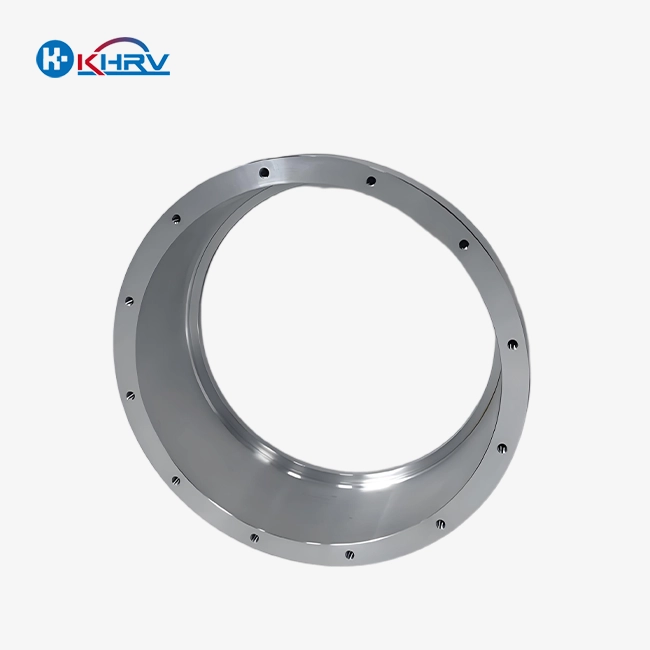
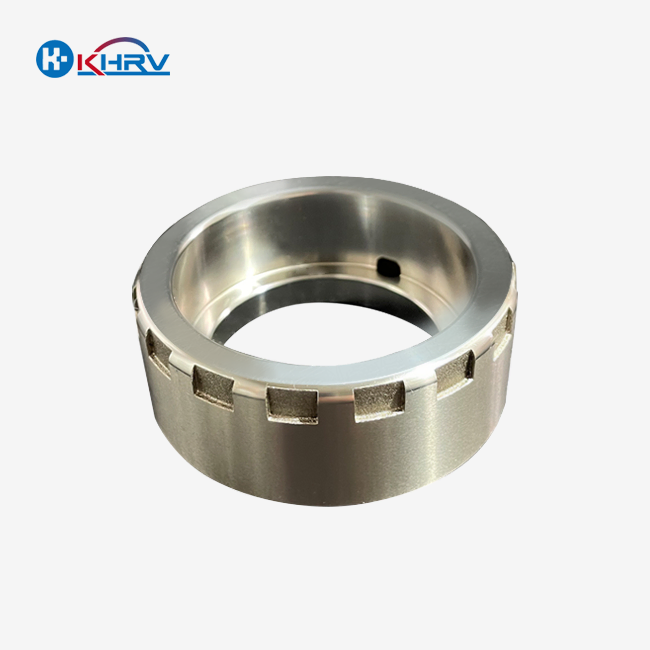
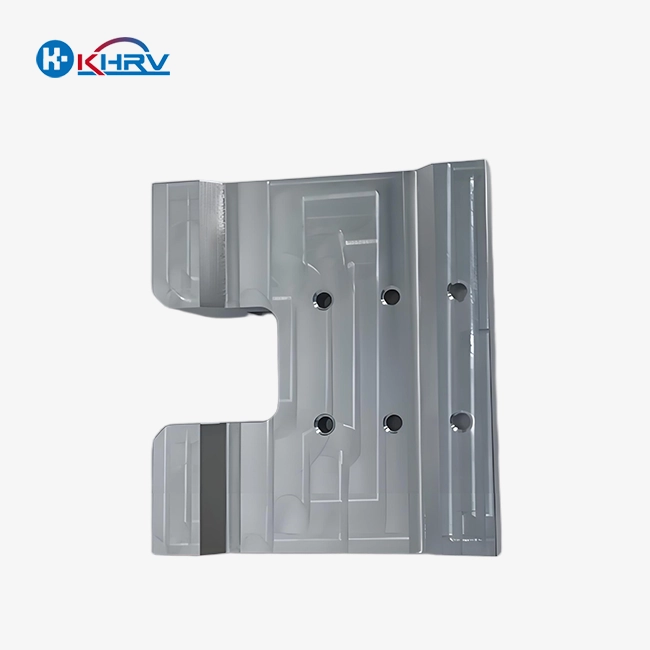
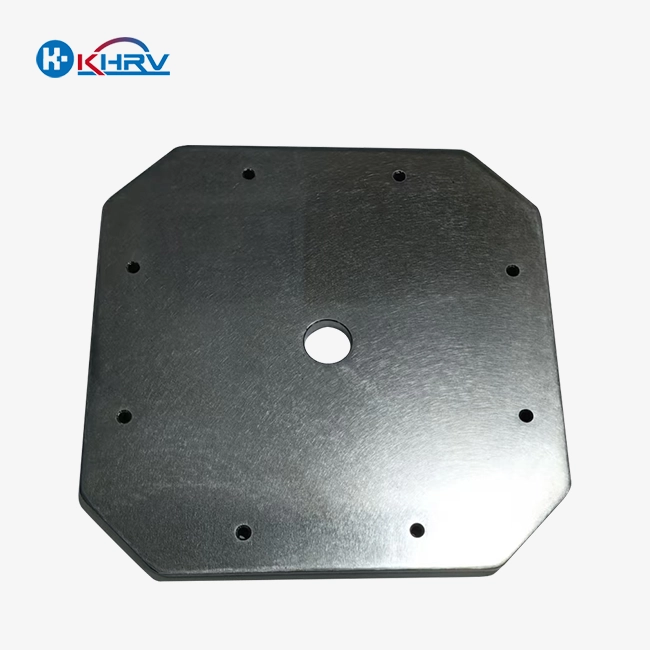
Pre-roughing covers every pre-finishing step before final precision operations. Typical workpieces: housings, fixture bases, mounting brackets and structural frames in 6061-T6, 7075-T6 or 5052.
Roughing removes mill scale and most excess material; semi-finishing mills holes, slots and threads while leaving uniform, drawing-specified stock for finishing passes. Aluminium moves after large stock removal, and a poorly planned workflow leaves hidden distortion that shows up on your finishing machine.
Core deliverables from an outsourced pre-roughing service:
- Raw aluminium sourcing, dimension verification and oxide-skin removal.
- Pre-roughing plus semi-finish milling with configurable residual stock for final-finish passes.
- Third-party stress-relief coordination on request; heat treatment is subcontracted, never performed in-house.
- A clear capability boundary: micron-grade accuracy, ultra-tight flatness and precision bore finishing stay on the customer's own equipment.
Common Aluminium Alloys for Pre-Roughing and Semi-Finish
Grade choice drives stability, allowance and deformation risk.
6061-T6: general-purpose structural alloy for housings and brackets; machines smoothly, though thin walls still need residual-stress attention.
7075-T6: high-strength aerospace alloy with higher inherent stress after heavy removal, so third-party stress relief is strongly advised on thin-wall parts.
5052: good corrosion resistance for non-high-load enclosures; lower strength limits heavy dynamic loads.
Important: pre-roughing and semi-finishing do not produce final micron-level tolerances. Distortion risk persists, especially on 7075 thin walls, and ultra-precision requirements must be met in the customer's downstream finishing.
Core Criteria for Outsourcing Pre-Roughing
Effective outsourcing aligns supplier workflow with drawings, equipment allocation and project timing.
Equipment-Capacity Planning
If precision CNC assets are occupied by heavy roughing, outsourcing unlocks capacity for finishing; prototype and low-volume programs gain most, since semi-finished blanks compress turnaround.
Deformation and Residual Risk
Aluminium warps after large stock removal, so define allowance values clearly on drawings. For high-strength thin-wall parts, specify whether coordinated third-party stress relief is needed; the supplier manages coordination, while heat treatment stays with specialist subcontractors.
Drawing Specification and Capability Boundaries
Separate pre-roughing from final-finish requirements on drawings and document feature-specific allowance. Never assign micron-level finishing tolerances to a semi-finished deliverable; qualified suppliers document semi-finish dimensions and leave precision validation to your finishing workflow.How much allowance to leave depends on the finishing process.For a ground groove, 0.1mm per side is often enough. For a face that will be milled again on a precision machine, 0.3–0.5mm is a safer range. For bores that will be reamed or honed, 0.2–0.3mm on diameter. We confirm these values against your finishing method before quoting — the goal is enough stock for a clean finish pass, not so much that your finishing machine spends hours removing it.
Optimising Production Workflow Through Outsourced Pre-Roughing
Structured outsourcing improves manufacturability but needs alignment across design, engineering and procurement.
Three Typical Service Workflows
Basic pre-roughing: raw stock procured, mill scale and bulk material removed, rough blanks shipped for full customer finishing.
Pre-roughing plus semi-finishing: holes, slots and threads machined with controlled stock reserved for finishing.
Pre-roughing, semi-finishing and coordinated stress relief: third-party treatment arranged under supplier coordination before shipment.
Field Example: Iron Sliding Block with 0.1mm Allowance per Side
A Singapore-based automation OEM was building linear guide assemblies with iron sliding blocks. The critical groove width had to hold a tight tolerance against the mating rail, and that final tolerance could only be achieved on their high-precision grinder.
The problem was timing, not capability. Their grinder sat idle while waiting for the semi-finished blanks to arrive. Every day the upstream work ran late, the most expensive machine in the shop stayed unproductive — or the customer had to reshuffle other jobs around it.
We machined the blocks to a semi-finished state, leaving 0.1mm allowance per side on the groove— enough for their grinder to clean up and hit the final tolerance, no more. Holes, mounting faces and clearance pockets were completed in the same setup, so the customer received a blank that needed one finishing operation only.
Because our production runs on a tight schedule and ships fast, the customer could plan their grinder time with confidence: the semi-finished blanks arrived when promised, the grinder ran finishing passes, and the machine moved on to the next job instead of sitting idle. Groove tolerance stayed within specification after grinding, and the customer reported a noticeable improvement in grinder utilization across the production quarter.
DFM Alignment at Quotation
Submit drawings and 3D files when quoting so your partner can flag geometry prone to distortion and advise on allowance settings before machining starts.
Total-Cost-of-Ownership Evaluation
Weigh subcontract price against machine-hour opportunity cost, scrap risk from in-house roughing distortion and lead-time gains; many projects reach 30-40% capacity-related savings without degrading final-part quality.
Procurement Guidance for Sourcing Pre-Roughing Service
Subcontracting rests on clear specifications and structured supplier qualification.
Supplier Evaluation Criteria
ISO 9001:2015 certification confirms a formal quality system, and RoHS compliance is mandatory for export-oriented aluminium parts. Verify hands-on pre-roughing experience, grasp of allowance rules and the process for coordinating external stress relief, then confirm capacity covers prototype through low-volume series. Wuxi Kaihan operates 3-axis and 4-axis CNC machines for pre-machining.
Quality-Assurance Protocols
Request dimensional reports for semi-finished features rather than final-finish reports, and validate raw material, allowance and geometry through pre-production samples before volume release.
Customization and Service Capabilities
Allowance is adjustable feature by feature per drawing under OEM pre-machining. Standard lead times run 10-20 working days, depending on complexity and whether external stress relief is required.
Conclusion
For CNC Precision Machining Aluminum Parts, outsourced pre-roughing preserves precision capacity, shortens lead times and limits aluminium residual-stress deformation. Expectations should stay realistic: pre-roughing outputs semi-finished blanks with controlled allowance, while micron-level finishing, ultra-tight flatness and precision bores remain customer-owned, and stress relief goes through third-party subcontractors. Wuxi Kaihan runs aluminium pre-roughing and semi-finish on 3-axis and 4-axis CNC machines. With pre-quote DFM review and transparent coordination, OEM customers gain 30-40% opportunity-cost savings on machine-hour capacity and move faster from prototype to production. When costly precision equipment should only handle high-value finishing—like a grinder that should be taking 0.1mm cleanup passes, not sitting idle waiting for blanks to arrive— outsourcing pre-roughing is a proven procurement strategy.
FAQ
1. What does outsourced pre-roughing cover? Raw-material procurement, mill-scale removal, bulk stock removal and semi-finish milling with controlled allowance. Customers run their own micron-level finishing; stress relief is coordinated via third-party subcontractors.
2. Which aluminium alloys fit pre-roughing and semi-finish work? 6061-T6, 7075-T6 and 5052. The 7075-T6 alloy carries higher residual-stress deformation risk, so coordinated stress relief is strongly advised on thin walls.
3. Will Wuxi Kaihan deliver final micron-level parts? No. Our scope is pre-roughing and semi-finishing only. Micron-precision finishing, ultra-tight flatness and critical bores are completed on customer-owned equipment, and we supply semi-finish dimensional documentation, not final inspection reports.
4. How is stress relief handled? Third-party services are coordinated on request; specialist subcontractors perform the heat treatment and our team manages logistics.
5. What lead times and savings can outsourcing deliver? Standard lead times of 10-20 working days, with 30-40% savings on internal machine-hour opportunity cost by off-loading pre-roughing.
6. How do you decide how much stock allowance to leave?It depends on the finishing process the customer will use. Ground grooves typically need 0.1mm per side; faces to be re-milled need 0.3–0.5mm; bores to be reamed or honed need 0.2–0.3mm on diameter. We confirm the finishing method at quotation and set allowance per feature, not one blanket value across the part.
Partner with KHRV for Pre-Roughing Service for CNC Precision Machining Aluminum Parts
Ready to protect precision capacity by outsourcing pre-roughing for CNC Precision Machining Aluminum Parts? Wuxi Kaihan Technology Co., Ltd. provides pre-roughing plus semi-finish CNC machining for automation, robotics and industrial-equipment OEMs. Our ISO 9001:2015-certified workshop runs 3-axis and 4-axis CNC machines on 6061-T6, 7075-T6 and 5052, sources raw stock, removes mill scale, holds drawing-specified allowance and coordinates third-party stress relief on request. Final micron-level finishing stays with you. Full OEM customisation delivers 30-40% savings in machine opportunity cost, with lead times of 10-20 working days.
Send drawings to service@kaihancnc.com for a quotation.
References
Miller, T. R., & Carter, J. B. (2023). Pre-Roughing and Semi-Finish Milling Workflows for Aluminium Components: Stock Allowance and Deformation Risk Control. Journal of Manufacturing and Assembly Engineering, 46(8), 211-226.
Sánchez, L. M., & Wang, H. (2022). Residual-Stress-Induced Distortion in Pre-Machined 6061-T6 and 7075-T6 Aluminium Blanks. International Journal of Precision Engineering, 17(11), 374-389.
Hughes, R. D., Patel, S. K., & Chen, L. (2023). Procurement Best Practices for Outsourced Pre-Machining CNC Subcontract Work. Machining Science and Technology, 27(3), 411-427.
Zheng, Y., & Tian, Y. (2023). Residual Stress Evolution of Aluminium Alloy Parts During Rough-to-Semi-Finish Milling Operations. The International Journal of Advanced Manufacturing Technology, 127(5-6), 2241-2254.
Evans, C. F., & Lin, J. H. (2023). DFM Guidance for Subcontracted Pre-Machined Aluminium Blanks: Stock Allowance and Drawing Specification Rules. Industrial Procurement Review, 30(4), 76-91.
Learn about our latest products and discounts through SMS or email