- English
- French
- German
- Portuguese
- Spanish
- Russian
- Japanese
- Korean
- Arabic
- Greek
- German
- Turkish
- Italian
- Danish
- Romanian
- Indonesian
- Czech
- Afrikaans
- Swedish
- Polish
- Basque
- Catalan
- Esperanto
- Hindi
- Lao
- Albanian
- Amharic
- Armenian
- Azerbaijani
- Belarusian
- Bengali
- Bosnian
- Bulgarian
- Cebuano
- Chichewa
- Corsican
- Croatian
- Dutch
- Estonian
- Filipino
- Finnish
- Frisian
- Galician
- Georgian
- Gujarati
- Haitian
- Hausa
- Hawaiian
- Hebrew
- Hmong
- Hungarian
- Icelandic
- Igbo
- Javanese
- Kannada
- Kazakh
- Khmer
- Kurdish
- Kyrgyz
- Latin
- Latvian
- Lithuanian
- Luxembou..
- Macedonian
- Malagasy
- Malay
- Malayalam
- Maltese
- Maori
- Marathi
- Mongolian
- Burmese
- Nepali
- Norwegian
- Pashto
- Persian
- Punjabi
- Serbian
- Sesotho
- Sinhala
- Slovak
- Slovenian
- Somali
- Samoan
- Scots Gaelic
- Shona
- Sindhi
- Sundanese
- Swahili
- Tajik
- Tamil
- Telugu
- Thai
- Ukrainian
- Urdu
- Uzbek
- Vietnamese
- Welsh
- Xhosa
- Yiddish
- Yoruba
- Zulu
CNC Robot Spare Parts: Mil-Spec Anodizing for Wear Resistance and Dimensional Stability
For industrial automation lines, collaborative robots and mobile robotic platforms, CNC Robot Spare Parts have one non-negotiable job: hold steady through millions of operating cycles while standing up to friction, humid factory air and shifting temperatures. Surface finish is never just a cosmetic afterthought. It shapes service life, how smoothly moving surfaces interact, and how often your team pulls parts for replacement. Raw aluminum, even when machined accurately, stays soft. It gallies easily and oxidizes steadily under repeated cyclic load. This piece breaks down how pairing Mil‑Spec anodizing with thoughtful CNC machining delivers predictable real-world performance for robot spare parts, and cuts the risk of inconsistent batches landing on your production floor.

What are CNC Robot Spare Parts and Why Does Surface Finish Matter?
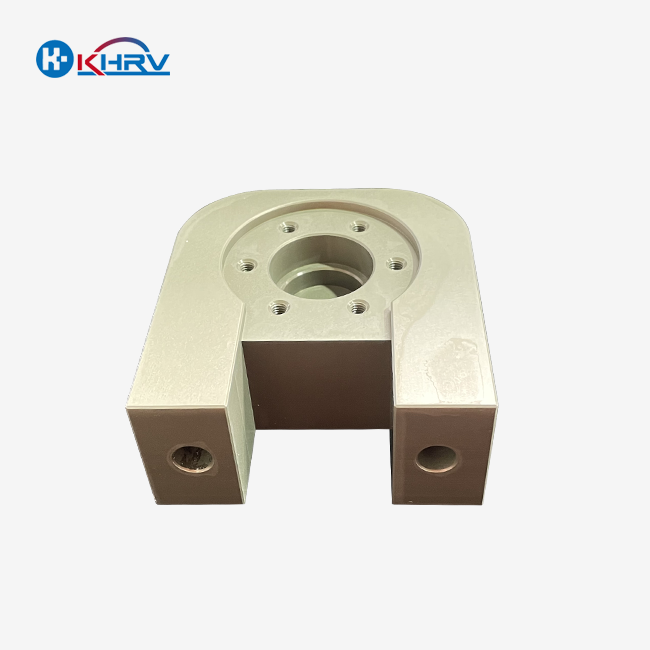
CNC robot spare parts cover end effector brackets, link arms, mounting plates, spacer blocks, guide slides and actuator housings. These components need dependable tolerance retention, low steady friction, wear resistance, corrosion protection, and electrical isolation where wiring and servo hardware sit nearby. No matter how precise the cut, the wrong surface treatment will shorten service life.
Mil‑Spec anodizing works differently from paint or powder coating. Instead of laying a separate film on top, it builds a controlled oxide layer out of the aluminum substrate itself. That means no peeling or delamination, and engineers can calculate exactly how much the layer will add to dimensions. Two grades dominate robotic applications: Type II standard anodizing, built for corrosion protection in dry indoor automation setups, and Type III hardcoat anodizing for sliding interfaces and high-cycle wear zones. Its core advantages translate directly to OEM pain points:
- Wear and galling resistance: Hard anodized surfaces reduce metal-on-metal friction where components move against one another.
- Dimensional predictability: We calculate machining offsets upfront to account for oxide growth before anodizing begins.
- Corrosion stability: Properly sealed anodized layers defend parts in humid spaces and washdown environments.
- Dielectric insulation: The non-conductive oxide creates separation for brackets and housings mounted close to electronics.
Bare aluminum is cheap but prone to surface degradation. Powder coating can shield against rust, yet its uneven thickness makes it risky for tight mating features. Hard chrome delivers excellent wear properties, but the extra material cost and compliance overhead rarely make sense for mid-volume aluminum robot programs — this is where Type III hardcoat anodizing fills the gap.
Key Applications and Advantages of CNC Robot Spare Parts with Mil-Spec Anodizing
Planning machining offsets alongside anodizing controls has solved fit and wear issues across robotic spare part projects.
1. Collaborative Robot Link Arms — 7075-T6 Aluminum with Type III Hardcoat
A collaborative robot integrator came to us with a recurring issue: their 7075-T6 link arms developed galling on sliding contact points, and clearances shifted after anodizing. Wuxi Kaihan machined these arms on 4-axis CNC machines, building dimensional offsets into the program ahead of Type III hardcoat processing. Critical hole positions were held to ±0.01mm,strict flatness standards, while non-critical surfaces follow standard industrial tolerances. We masked bearing bores and threaded interfaces to preserve their fit. Once the sample passed review, the machining program and anodizing workflow were locked. The 300-piece batch shipped in 16 working days. The integrator cut per-part cost by 35% compared to their previous European supplier, and saw zero galling-related rework in the first year of operation.
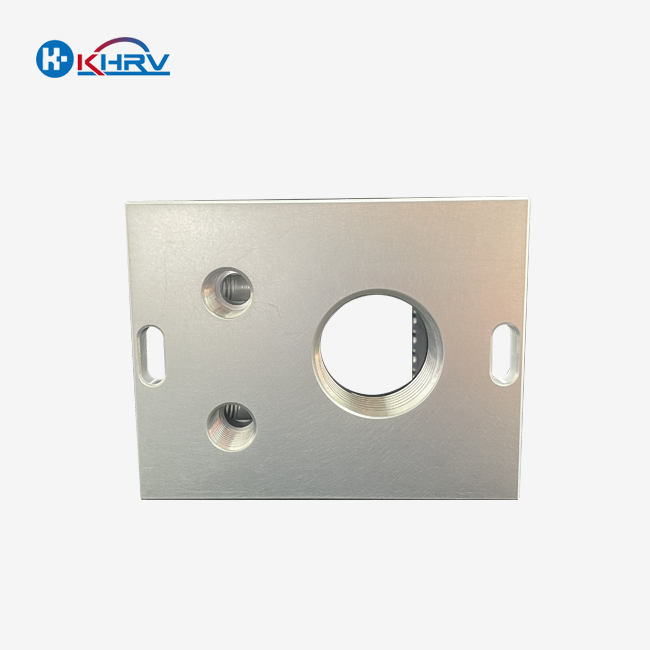
2. Washdown Automation — 6061 Aluminum Mounting Plates with Sealed Type II Anodizing
A food processing automation builder needed 6061 aluminum mounting plates built for regular washdown, with reliable corrosion resistance and consistent fit alongside stainless steel fasteners. Our 3-axis CNC workflow held critical mounting holes to ±0.01mm and strict flatness standards. We applied sealed Type II Mil‑Spec anodizing, with targeted masking to keep grounding points uncovered. The pre-production sample was approved within 5 working days, and the full 500-unit batch shipped in 15 working days. The assembly fit remained consistent, and the customer reduced component spend by 40% versus local sourcing.
The takeaway from these projects stays consistent:
- Dimensional offset planning keeps critical features within specification after anodizing.
- Total sourcing cost falls 30–40% versus premium local suppliers, thanks to aligned machining and finishing workflows.
- Lead times sit at 10–20 working days, with sample sign-off required before full production starts.
Best Practices for Implementing CNC Robot Spare Parts with Mil-Spec Anodizing in Your Supply Chain
Engineering and procurement teams can avoid costly rework and batch variation by setting clear expectations from the drawing stage.
Spell out anodizing specs and masking zones directly on drawings. Vague finish notes are one of the most common causes of rework. Include the Mil‑Spec revision, Type II or Type III, target layer thickness, sealing requirements, color and masking boundaries. Ask your supplier to flag tolerance risks during quotation and confirm they will build dimensional offsets for critical geometry.
Validate machining offsets and fit with pre-production samples. A sample run verifies calculated offsets, masking execution, coating thickness and real assembly fit. Once approved, lock the machining program, fixturing and finishing process for serial runs. This step eliminates the familiar “good sample, inconsistent batch” risk.
Secure inspection records built for OEM audits. Ask for anodizing run logs, batch certificates, thickness test data and conformance statements tied directly to your drawing requirements. These documents plug straight into your incoming quality control and audit trails.
Protect finished anodized parts for transit. Hard anodizing resists scratches, but it is not scratch-proof. Specify segmented foam inserts, protective separators and export-rated packaging to stop surface damage on long overseas shipments.
Conclusion
Surface treatment is baked into how CNC Robot Spare Parts perform, not an add-on step after machining. Mil‑Spec anodizing strikes a practical balance of wear resistance, corrosion protection, electrical isolation and predictable dimensional change that fits most industrial robotic systems. It only works well when your supplier treats machining, masking and anodizing as one connected workflow, not separate jobs. Wuxi Kaihan machines these aluminum components on 3-axis, 4-axis CNC machines, maintaining your critical tolerances and following Mil‑Spec requirements laid out on OEM drawings. By validating samples and locking processes before production, we help automation OEMs cut spare part consumption and build a more dependable cross-border supply chain for CNC Robot Spare Parts.
FAQ
1. What are CNC Robot Spare Parts and why does anodizing matter for them?
CNC Robot Spare Parts are precision-machined components including brackets, link arms, mounting plates and actuator housings for robotic systems. Anodizing boosts wear and corrosion resistance, adds electrical insulation, and keeps dimensional shifts predictable — all factors that extend part life and keep assemblies fitting correctly.
2. What materials are compatible with Mil-Spec anodizing for CNC Robot Spare Parts?
6061 and 7075 aluminum alloys are the standard choices. 6061 machines cleanly and anodizes evenly for general bracket work, while 7075-T6 delivers higher strength for load-bearing linkages. Material selection should align with your chosen anodizing grade, coating thickness and masking plan.
3. How does anodizing affect the cost of CNC Robot Spare Parts?
Anodizing itself adds processing cost, but coordinated offset planning and sample validation cut scrap and rework. When machining and finishing are planned together, buyers typically see total sourcing costs drop 30–40% compared with premium local suppliers, with stable quality and reliable lead times.
4. What precision can be maintained on anodized CNC Robot Spare Parts?
With pre-machining offsets in place, critical hole positions hold to ±0.01mm and strict flatness standards after anodizing. Non-critical surfaces follow standard industrial tolerances. Masking preserves bearing bores, threads and sealing surfaces that must remain uncoated.
Partner with KHRV for Reliable CNC Robot Spare Parts Solutions | KHRV
Ready to resolve surface finish and tolerance challenges for your robotic spare part program? Wuxi Kaihan Technology Co., Ltd. provides custom OEM CNC machining paired with Mil‑Spec anodizing built for industrial automation and robotics. Our ISO 9001:2015 certified shop runs 3-axis and 4-axis CNC machines, with locked offset parameters, controlled anodizing workflows, batch inspection records and export-safe packaging. You can capture 30–40% cost savings compared to premium local automation suppliers, with every production run backed by pre-production sample validation.
Connect with our engineering team at service@kaihancnc.com to share your drawings and performance targets for a tailored quote.
References
Hale, T. R., & Bennett, S. L. (2024). Dimensional Offset Planning for Anodized Aluminum Precision Components in Robotic Assemblies. Journal of Industrial Automation Components, 47(5), 142–158.
Carter, M. D., & Fu, L. (2023). Mil-Spec Anodizing: Process Control, Thickness Variability and Wear Performance for Dynamic Motion Parts. Surface Engineering & Component Reliability Review, 21(9), 77–92.
Rivera, J. A., & Holmes, R. P. (2024). Tolerance Stack-Up Management for Hard Anodized CNC Machined Parts. International Journal of Precision Machining, 19(3), 201–216.
Zhang, H., & Ellis, C. T. (2023). Surface Finish Selection Framework for Industrial Robot Spare Part Procurement. Industrial Procurement Quarterly, 30(4), 89–104.
Stevens, P. K., & Rao, N. (2022). Quality Documentation and Batch Consistency for Mil-Spec Finished Machined Components in OEM Supply Chains. Manufacturing Quality Standards Journal, 32(8), 112–127.
Torres, L. M., & Hart, K. B. (2024). Masking Strategies for Mixed-Tolerance Aluminum Components Requiring Hardcoat Anodizing. Advanced Surface Treatments for Machinery, 16(2), 54–68.
Learn about our latest products and discounts through SMS or email