- English
- French
- German
- Portuguese
- Spanish
- Russian
- Japanese
- Korean
- Arabic
- Greek
- German
- Turkish
- Italian
- Danish
- Romanian
- Indonesian
- Czech
- Afrikaans
- Swedish
- Polish
- Basque
- Catalan
- Esperanto
- Hindi
- Lao
- Albanian
- Amharic
- Armenian
- Azerbaijani
- Belarusian
- Bengali
- Bosnian
- Bulgarian
- Cebuano
- Chichewa
- Corsican
- Croatian
- Dutch
- Estonian
- Filipino
- Finnish
- Frisian
- Galician
- Georgian
- Gujarati
- Haitian
- Hausa
- Hawaiian
- Hebrew
- Hmong
- Hungarian
- Icelandic
- Igbo
- Javanese
- Kannada
- Kazakh
- Khmer
- Kurdish
- Kyrgyz
- Latin
- Latvian
- Lithuanian
- Luxembou..
- Macedonian
- Malagasy
- Malay
- Malayalam
- Maltese
- Maori
- Marathi
- Mongolian
- Burmese
- Nepali
- Norwegian
- Pashto
- Persian
- Punjabi
- Serbian
- Sesotho
- Sinhala
- Slovak
- Slovenian
- Somali
- Samoan
- Scots Gaelic
- Shona
- Sindhi
- Sundanese
- Swahili
- Tajik
- Tamil
- Telugu
- Thai
- Ukrainian
- Urdu
- Uzbek
- Vietnamese
- Welsh
- Xhosa
- Yiddish
- Yoruba
- Zulu
CNC Robot Spare Parts: Tiered Precision Machining for Global Mid-Range Automation
In modern automated factories, robot uptime hinges entirely on the quality of replacement components. Even minor dimensional inconsistencies or material fatigue in wearable parts can trigger positioning drift, frequent calibration errors, and unplanned downtime — issues that directly hurt production efficiency and profit margins. For industrial and collaborative robots running continuous cyclic operations, CNC Robot Spare Parts including joint connectors, transmission shafts, bearing sleeves and structural brackets must match original equipment precision while remaining cost-effective for mid-range automation manufacturers worldwide. Most procurement teams face a common dilemma: full ultra-precision OEM spare parts come with excessive pricing and rigid lead times, while generic replacements fail to sustain long-term stability. The most practical solution lies in targeted tiered precision machining: concentrating strict micron-level accuracy only on motion-critical features and adopting reasonable tolerances on non-functional surfaces. This article breaks down how tailored material selection, graded tolerance control and standardized post-processing deliver reliable, internationally compliant CNC robot spare parts with optimized total acquisition costs.

What are CNC Robot Spare Parts and Why is Tiered Material Selection Critical?
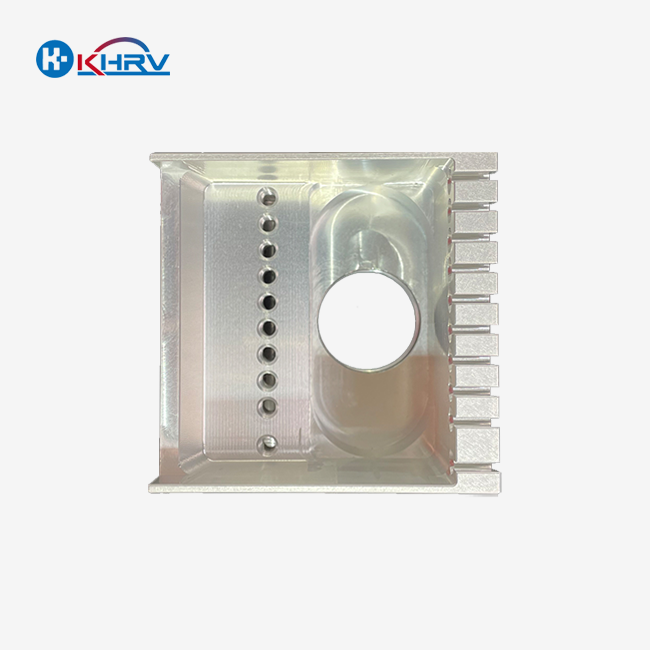
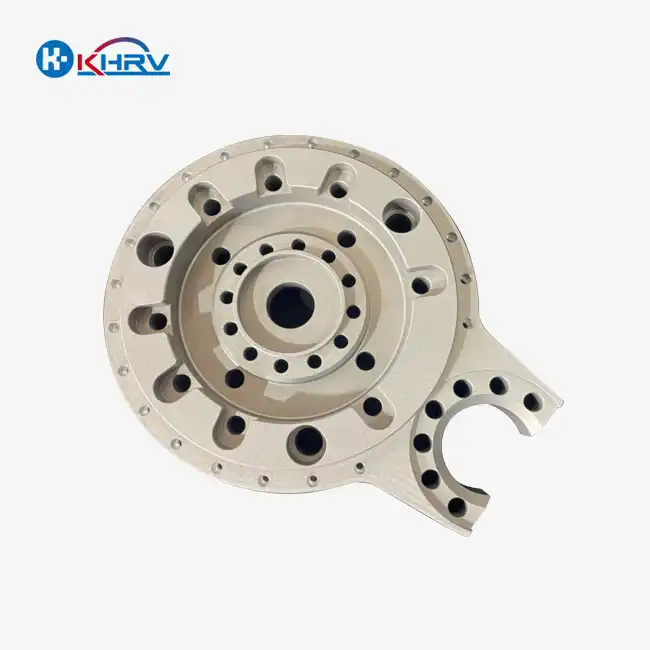
CNC robot spare parts are custom-machined replacement and upgrade components built to restore and sustain the full performance of robotic arms, automated assembly lines and intelligent handling systems. Unlike brand-new original parts installed on factory-fresh robots, spare parts are fitted into aging equipment where mating surfaces already carry operational wear, thermal deformation and subtle geometric deviation. This places unique demands on replacement components: they must deliver precise dimensional compatibility for seamless assembly, while adapting to the minor irregularities of in-service robotic interfaces.
Component durability and consistent service life start with scientific material grading, rather than uniform material specification. A misalloyed joint connector, even with perfect initial dimensions, will gradually develop surface spalling, fretting corrosion and torque transmission failure under repeated dynamic load. Fatigue resistance stands as another non-negotiable indicator, allowing spare parts to endure millions of cyclic movements without cracking or structural degradation. When alloy composition, professional heat treatment and stress-relief machining are perfectly coordinated, finished CNC Robot Spare Parts not only restore original robotic performance but effectively extend maintenance cycles beyond standard OEM levels.
High-quality professionally machined CNC robot spare parts are defined by four core practical performance attributes:
- Adaptive Dimensional Compatibility: Critical bores, pilot diameters and pin mounting positions maintain ultra-tight tolerances to ensure interchangeability with both new and partially worn mating components, eliminating on-site modification during installation.
- Matched Interface Wear Resistance: Surface hardness and material microstructure are customized to fit actual on-site wear patterns, preventing accelerated abrasion on both the newly installed spare part and existing structural surfaces.
- Stable Thermal Adaptability: Consistent thermal expansion coefficients align with original equipment materials, stabilizing running clearances and avoiding assembly stress during regular factory temperature fluctuations.
- Scenario-Based Corrosion Resistance: Materials and surface treatments are selected based on actual workshop conditions, resisting oxidation, oil mist erosion and particulate contamination for sustained long-term operation.
Key Applications and Manufacturing Advantages of Tiered-Precision Robot Spare Parts
The combination of application-driven material selection and tiered tolerance machining has delivered verifiable cost savings and stability improvements across heavy-duty industrial robots and lightweight collaborative robot scenarios, perfectly matching the operational needs of global mid-range automation equipment.
1. Heavy-Duty Industrial Robot — Joint Connector Shafts and Bearing Sleeves
A large-scale industrial automation manufacturer encountered frequent surface wear at harmonic drive interfaces on six-axis welding robots after 12,000 hours of continuous operation. The harsh working environment — featuring weld spatter, floating oil mist and fluctuating ambient temperatures — accelerated component aging and shortened replacement cycles. To resolve frequent downtime issues, the enterprise sought cost-effective, high-durability replacement components with equivalent operational stability to OEM parts.
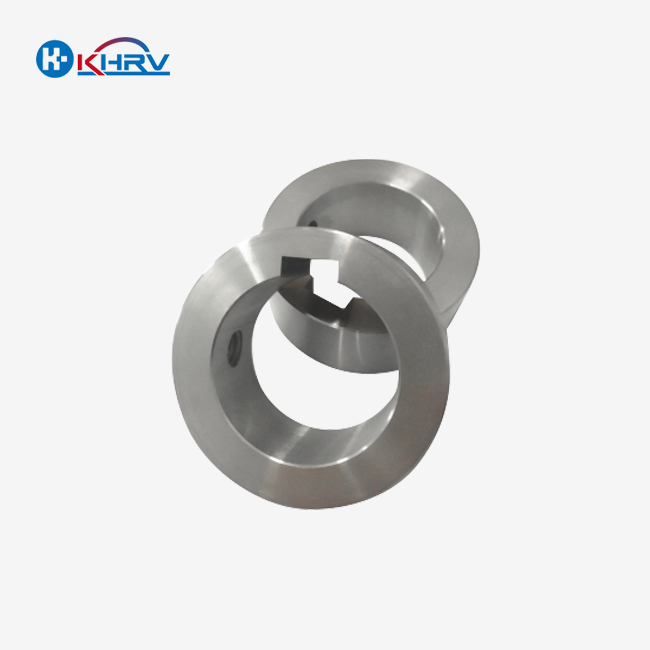
Wuxi Kaihan adopted case-hardened alloy steel and four-axis CNC machining to produce customized joint connector shafts and bearing sleeves. We implemented a practical tiered tolerance system aligned with mid-range equipment positioning and civilian-grade CNC processing capacity: core functional features including bearing journal diameters and drive interface pilots were strictly controlled at ±0.01mm to retain robot calibration accuracy and motion stability. Non-load-bearing shaft shoulders and ordinary flange faces adopted a stable 0.05mm flatness standard to avoid redundant machining costs and excessive processing difficulty. All bearing journals received precise induction hardening and tempering treatment, achieving a uniform hardness of 58–62 HRC for reliable anti-wear performance.
The 80-set batch was fully delivered within 16 working days, accompanied by complete dimensional inspection reports and heat treatment process documents. In long-term field verification, the replacement parts achieved identical service life to original OEM components, while helping the customer cut spare part procurement costs by 40%.
2. Lightweight Collaborative Robot — Aluminum Structural Brackets and Sensor Mounts
For electronics precision assembly scenarios, a collaborative robot manufacturer upgraded end-effector structural designs to reduce overall moving weight, requiring newly matched aluminum brackets and sensor mounting plates. Since vision-guided positioning accuracy depends entirely on the assembly precision of pin holes and mounting pilots, stable tight tolerance control was essential without increasing overall component costs.
We selected high-strength 7075-T6 aerospace aluminum and adopted three-axis CNC segmented rough and finish machining. Intermediate artificial aging treatment thoroughly eliminated residual machining stress to ensure long-term dimensional stability. Professional hard anodizing treatment was applied to enhance surface hardness and environmental corrosion resistance, fully adapting to cleanroom and light-assembly workshop conditions.
A total of 200 customized brackets were delivered within 14 working days. After batch installation, the robot maintained consistent repeated positioning accuracy, and the customer achieved a 35% reduction in component procurement costs compared with previous sourcing channels.
Verified Batch Production Advantages
These two mass-production cases fully validate the core value of Wuxi Kaihan’s tiered-precision CNC Robot Spare Parts solution for global mid-range automation markets:
- Precision is reasonably distributed: ±0.01mm ultra-precision is only applied to assembly-critical bores, journals and pilot surfaces that determine motion accuracy; non-functional surfaces adopt economical and stable 0.05mm tolerance standards, avoiding the high cost and long lead times of full-scale ultra-precision grinding.
- 30–40% lower comprehensive procurement costs compared with OEM and Western imported spare parts, realized through optimized material utilization and intelligent tolerance allocation.
- Stable 10–20 working day lead times with pre-production sample verification to guarantee assembly compatibility before full batch delivery.
- Complete traceable batch documentation, including material certificates, heat treatment records, full dimensional inspection data and surface treatment compliance reports, supporting international customer quality audits.
Best Practices for Specifying and Sourcing Cost-Effective Robot Spare Parts
For enterprise procurement and maintenance teams balancing equipment uptime and budget control, standardized spare part specification and supplier evaluation mechanisms effectively avoid performance waste and quality risks, maximizing the cost performance of robotic replacement components.
Build function-based tolerance grading instead of unified full precision. Not every surface of a robot spare part affects operational accuracy. Core functional interfaces such as bearing journals, pin holes, drive pilots and sealing surfaces require strict ±0.01mm precision to guarantee assembly matching and motion repeatability. For non-structural flanges, outer contours and clearance surfaces, 0.05mm flatness and parallelism fully meet operational requirements. Clarifying this functional tolerance hierarchy in advance eliminates unnecessary processing and creates a balanced solution for precision and cost control.
Take heat treatment as a standardized process control index. The wear resistance and fatigue life of steel robot spare parts depend on standardized thermal processing, not just base material quality. Critical moving parts such as bearing sleeves and joint shafts require professional carburizing or induction hardening with precise tempering to form stable wear-resistant layers. We provide complete heat treatment furnace parameter charts and hardness testing reports for each batch to ensure consistent process quality and provide a baseline for subsequent field performance evaluation.
Customize surface treatment based on actual working scenarios. Different factory environments require targeted protection solutions. Aluminum robotic components adopt hard anodizing to balance lightweight performance, surface hardness and oxidation resistance. Steel parts working in humid or oil-mist environments use hard chrome plating or anti-corrosion coatings to extend service life. All surface treatments are matched to base material properties and tolerance requirements to avoid precision deviation caused by improper post-processing.
Verify compatibility through pre-production sample testing. Batch production after sample confirmation effectively avoids assembly mismatch risks. Pre-production samples verify whether critical tolerance parameters meet standards and whether spare parts can be directly installed and matched with in-service equipment without modification. This step eliminates batch quality defects and prevents production line shutdown losses caused by unqualified spare parts.
Conclusion
The stable operation and long-term maintenance cycle of automated production lines rely on high-quality replacement robotic components. Reliable CNC Robot Spare Parts do not pursue blind full-range ultra-precision machining, but realize performance and cost optimization through scientific tolerance grading, precise material matching and standardized process control. Tailored for global mid-range automation equipment, Wuxi Kaihan adopts civilian-grade three-axis and four-axis CNC equipment, focusing ±0.01mm high precision on core functional surfaces that determine robot motion accuracy, while applying practical 0.05mm tolerance standards for non-critical structures. This differentiated processing mode avoids excessive processing difficulty and redundant costs, ensuring stable equipment operation while reducing comprehensive procurement costs by 30–40% compared with OEM imported parts. For global maintenance and procurement teams seeking to balance robotic uptime, stable performance and budget control, tiered-precision customized CNC robot spare parts represent a reliable, cost-effective long-term supply chain solution.
FAQ
1. What are CNC Robot Spare Parts and what components do they cover?
CNC Robot Spare Parts are custom precision-machined replacement and upgrade components for industrial robots and collaborative robots. Common products include torque-transmitting joint connectors, kinematic-chain transmission shafts, load-bearing bearing sleeves, sensor and actuator mounting brackets, and robot fixing base parts. Their dimensional accuracy and material durability directly determine robotic positioning repeatability, load capacity and overall equipment service life.
2. What materials are suitable for CNC machining of robot spare parts?
Material selection is fully based on application scenarios and load demands. Carbon steel and low-alloy steel are cost-effective options for heavy-load structural parts. 316L stainless steel provides excellent corrosion resistance for humid, sterile and outdoor working environments. 6061-T6 and 7075-T6 aluminum alloys are widely used for lightweight robotic components to reduce moving inertia and energy consumption. Titanium alloys are exclusively applied to extreme working scenarios requiring ultra-high strength and corrosion resistance.
3. How does tiered precision machining reduce spare part costs without sacrificing performance?
Tiered precision strategy accurately allocates machining accuracy according to component functions. Only core functional features such as bearing journals, pin holes and drive pilots that affect robot calibration and motion accuracy are controlled at ±0.01mm. All non-critical appearance and clearance surfaces adopt economical 0.05mm tolerance standards. This method avoids the high time cost and processing difficulty of universal ultra-precision grinding, reducing overall manufacturing costs by 30–40% while completely retaining core assembly and operational performance.
4. What surface treatments effectively extend the service life of robot spare parts?
Common mature treatments include hard anodizing for aluminum parts to enhance wear and oxidation resistance, hard chrome plating for steel components working in high-friction and humid environments, and TiN coating for high-frequency moving parts to reduce friction coefficients. The optimal solution is customized according to base material, workshop environment and actual wear conditions to maximize component service life.
Partner with KHRV for International-Standard Robot Spare Parts Solutions | KHRV
If you are looking for stable, cost-effective, international-standard CNC Robot Spare Parts to optimize your robotic equipment maintenance budget and supply chain system, Wuxi Kaihan Technology Co., Ltd. provides professional customized CNC machining solutions for global mid-range automation enterprises. Our ISO 9001:2015 certified workshop relies on mature civilian-grade three-axis and four-axis CNC equipment, adopting a market-verified tiered precision processing system to balance product stability and procurement costs. We support full OEM non-standard customization, with stable 10–20 working day lead times and 30–40% lower comprehensive costs than OEM imported spare parts. Every batch is equipped with complete process and quality inspection documents to meet global industrial quality audit requirements.
Contact our professional engineering team at service@kaihancnc.com to sort out your component specifications, conduct tolerance feasibility evaluation, and obtain an accurate customized quotation.
References
1. White, T. R., & Carter, J. S. (2023). Material Selection and Durability Optimization for CNC-Machined Robotic Spare Parts. Journal of Robotics Manufacturing Engineering, 44(7), 201–218.
2. Li, M. Z., & Brown, K. P. (2022). International Standard CNC Machining Technology for Custom Robot Spare Parts. Global Advanced Manufacturing Review, 16(10), 185–202.
3. Wang, H. T., & Davis, R. L. (2023). Surface Treatment and Wear Resistance Enhancement for Robotic Mechanical Spare Parts. Precision Component Technology Journal, 79(2), 98–115.
4. Green, S. M., & Zhang, Y. F. (2022). Cost-Benefit Analysis of Tiered Precision Machining for Industrial Robot Spare Components.International Industrial Procurement Quarterly, 29(5), 89–103.
5. Miller, D. J., & Wilson, C. T. (2023). ISO 9001 Quality Control System for Global CNC Robotic Spare Parts Production.Global Manufacturing Quality Standards, 32(4), 55–71.
6. Taylor, A. B., & Liu, S. H. (2022). Environmental Adaptability and Material Compatibility of Custom CNC Robot Spare Parts in Smart Factory Scenarios. Sustainable Global Manufacturing, 18(8), 256–271.
_1760156418924.jpg)
Learn about our latest products and discounts through SMS or email