- English
- French
- German
- Portuguese
- Spanish
- Russian
- Japanese
- Korean
- Arabic
- Greek
- German
- Turkish
- Italian
- Danish
- Romanian
- Indonesian
- Czech
- Afrikaans
- Swedish
- Polish
- Basque
- Catalan
- Esperanto
- Hindi
- Lao
- Albanian
- Amharic
- Armenian
- Azerbaijani
- Belarusian
- Bengali
- Bosnian
- Bulgarian
- Cebuano
- Chichewa
- Corsican
- Croatian
- Dutch
- Estonian
- Filipino
- Finnish
- Frisian
- Galician
- Georgian
- Gujarati
- Haitian
- Hausa
- Hawaiian
- Hebrew
- Hmong
- Hungarian
- Icelandic
- Igbo
- Javanese
- Kannada
- Kazakh
- Khmer
- Kurdish
- Kyrgyz
- Latin
- Latvian
- Lithuanian
- Luxembou..
- Macedonian
- Malagasy
- Malay
- Malayalam
- Maltese
- Maori
- Marathi
- Mongolian
- Burmese
- Nepali
- Norwegian
- Pashto
- Persian
- Punjabi
- Serbian
- Sesotho
- Sinhala
- Slovak
- Slovenian
- Somali
- Samoan
- Scots Gaelic
- Shona
- Sindhi
- Sundanese
- Swahili
- Tajik
- Tamil
- Telugu
- Thai
- Ukrainian
- Urdu
- Uzbek
- Vietnamese
- Welsh
- Xhosa
- Yiddish
- Yoruba
- Zulu
International-Standard CNC Machining of Customized Robot Mechanical Parts: A Tiered Precision Strategy for Global Manufacturers
In global intelligent manufacturing, robotic system reliability ultimately hinges on one foundational factor: consistent dimensional stability across thousands and millions of operating cycles. For mid-range automated production lines — the backbone of today’s industrial, assembly, and material-handling factories — customized robot mechanical parts define overall equipment accuracy, uptime, and long-term operational cost. These custom components include joint connectors, actuator housings, transmission brackets, and full structural frames, all of which must hold tight motion tolerances while standing up to continuous dynamic load, temperature fluctuation, and workshop contamination.

Most sourcing teams face a persistent dilemma: ultra-precision imported robot parts deliver reliable performance but carry prohibitive costs and rigid lead times, while generic aftermarket components fail to hold calibration over long-cycle operation. The practical solution lies in targeted, tiered precision machining: reserving strict micron-level accuracy only for functionally critical surfaces and applying practical, fit-for-purpose tolerances on non-critical geometries. This article breaks down how Wuxi Kaihan’s balanced CNC machining strategy, paired with application-specific material grading and standardized surface treatment, delivers customized robot mechanical parts that meet full international quality benchmarks without the unnecessary overhead of universal ultra-precision manufacturing.
What are Customized Robot Mechanical Parts and Why Tiered Material Selection Matters
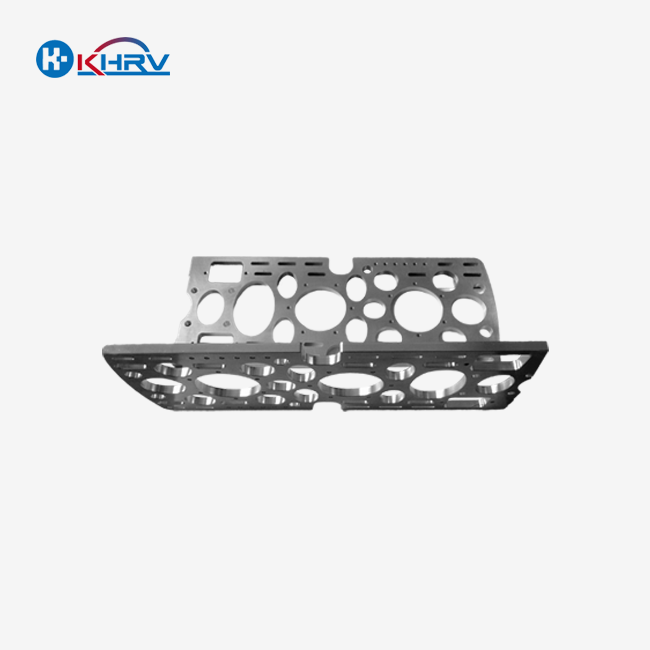
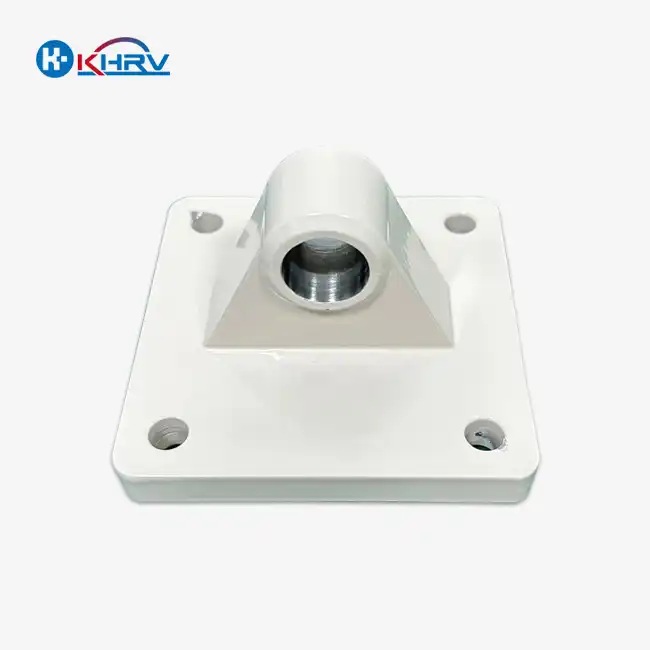
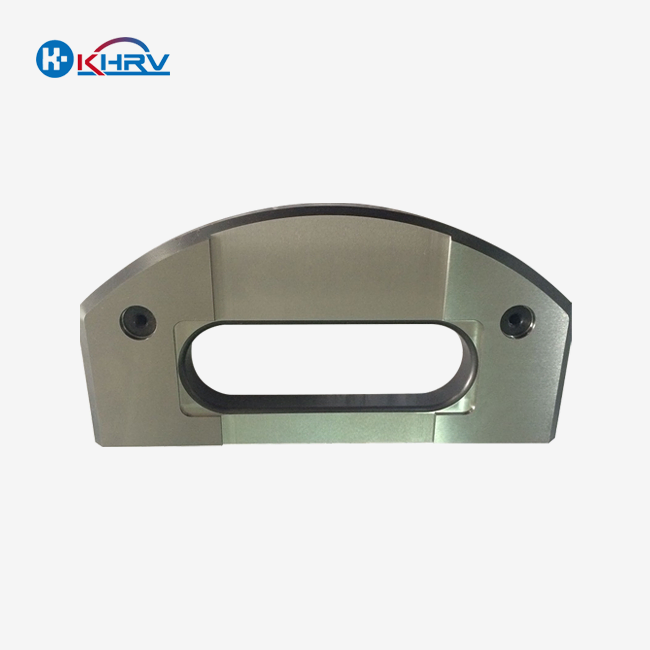
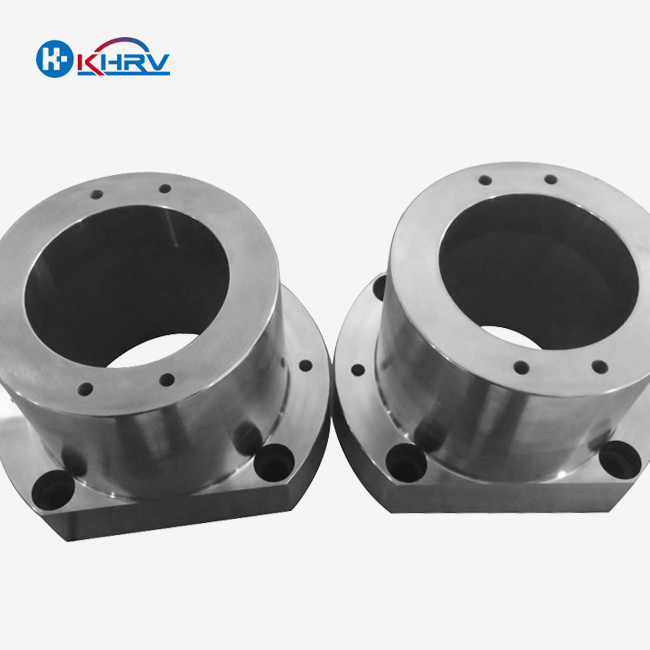
Unlike off-the-shelf standard hardware, customized robot mechanical parts are engineered and machined to match unique robotic kinematics, payload requirements, and on-site working environments. They cover core robotic structures: base frames that stabilize the entire robot unit on production floors, joint connector bodies that transfer torque across robotic axes, actuator mounting flanges that maintain motor alignment under continuous vibration, and protective transmission housings that shield internal precision gearing from dust, oil mist, and debris.
Every functional requirement these robotic components must meet — deformation resistance under dynamic load, consistent wear performance on sliding interfaces, and dimensional stability through thermal cycles — is determined long before machining begins, during material specification. The right material grade balances stiffness and weight to optimize robotic positioning accuracy and energy efficiency, while delivering reliable corrosion resistance tailored to real workshop conditions. Most importantly, controlled material microstructure and stress management extend component fatigue life, preventing micro-deformation and cumulative positioning drift after millions of repeated movements.
Professionally machined, international-standard customized robot mechanical parts stand apart from generic alternatives through five core verified characteristics:
- Consistent load-bearing stability: Carefully graded tensile and yield strength maintains fixed dimensions even under peak dynamic loads, validated through simulated operational load testing that replicates real factory working conditions.
- Long-cycle fatigue durability: Optimized alloy composition and stress-relief processing resist structural cracking and material degradation during high-volume cyclic operation, extending service intervals and reducing unplanned downtime.
- Controlled thermal stability: Matched thermal expansion coefficients with mating components eliminate clearance deviation and assembly stress as workshop temperatures fluctuate.
- Uniform surface hardness: Even hardness distribution on locating and sliding surfaces avoids localized wear, which is the primary cause of gradual positioning offset and assembly looseness.
- Application-matched corrosion resistance: Material grade and surface treatment combinations adapt to diverse environments, whether climate-controlled cleanroom assembly or humid, high-spatter industrial production floors.
Real-World Applications & Measurable Benefits of Tiered-Precision Robot Components
Our tiered tolerance machining model is not theoretical. It has been consistently validated in mass production for both heavy-duty industrial robots and lightweight collaborative robot systems, delivering clear cost savings and stable field performance for global automation manufacturers.
1. Heavy-Duty Industrial Robot: Base Frames & Joint Connector Plates
A leading manufacturer of six-axis industrial welding robots needed durable replacement base mounting plates and joint connector bodies for automotive production cells. These components operate continuously at full payload capacity, exposed to weld spatter, regular temperature swings, and occasional coolant splashing — conditions that demand structural rigidity and stable long-term precision.
We fabricated these parts from normalized alloy steel on stable four-axis CNC machining centers, adopting a practical tiered tolerance framework aligned with mid-range industrial performance standards. All functionally critical features, including dowel pin bores and motor mounting pilot diameters that directly affect robotic calibration, were strictly controlled at ±0.01mm. Non-critical external profiles and ordinary mounting flanges were finished to a reliable 0.1mm flatness standard, eliminating redundant ultra-precision processing and excessive manufacturing costs. Joint contact surfaces received targeted induction hardening to enhance wear resistance without distorting precision-machined bores.
The 150-unit batch was fully delivered within 18 working days, accompanied by complete dimensional inspection certification. In 12 months of continuous field operation, the customer achieved a 35% component cost reduction compared to European-sourced parts, with zero degradation in robot repeatability and operational stability.
2. Lightweight Collaborative Robot: Aluminum Joint Housings & Sensor Mounts
A collaborative robot manufacturer focused on light assembly and material handling required lightweight aluminum joint housings and sensor brackets to reduce end-arm moving mass, improve cycle speed, and lower servo energy consumption. Though lightweight, these parts demanded strict precision on bearing bores and motor pilot interfaces to preserve joint alignment and overall positioning accuracy.
We adopted high-strength 7075-T6 aerospace aluminum and completed segmented rough and finish machining on three-axis CNC equipment. Intermediate artificial aging treatment(arranged through a certified external supplier) thoroughly eliminated residual machining stress, preventing long-term dimensional deformation. Qualified third-party hard anodizing delivered consistent surface hardness and corrosion resistance suitable for standard factory ambient conditions.
Compared to the customer’s original steel component design, our customized aluminum parts reduced robotic moving mass by 30%, effectively accelerating cycle efficiency and cutting continuous servo motor power consumption while maintaining fully stable assembly precision.
Verified Batch Production Advantages
These two mass-production cases reflect the core value of our tiered-precision customized robot mechanical parts solution:
- Precision is selectively allocated: ±0.01mm tight tolerance only for assembly-critical features; 0.1mm practical flatness/parallelism for non-functional surfaces, avoiding the high costs and long lead times of full ultra-precision grinding.
- 30–40% lower comprehensive procurement costs versus equivalent Western-made robotic components, realized through optimized material utilization, lean process planning, and reasonable tolerance grading.
- Stable 10–20 working day lead times with pre-production sample validation to confirm tolerance rationality and assembly compatibility before full batch production.
- Full batch traceable documentation, including material certificates, heat treatment records, dimensional inspection reports, and surface treatment compliance files to support international customer quality audits.
Sourcing Best Practices for Cost-Effective Custom Robot Mechanical Parts
Engineering and procurement teams balancing robotic performance stability and equipment budget control can avoid over-engineering and quality risks by following a standardized, application-driven sourcing and specification strategy.
Build a clear tiered tolerance framework at the design stage. Not every machined surface impacts robotic motion accuracy. Critical functional interfaces — bearing bores, pin holes, motor pilot diameters, and sealing faces — require ±0.01mm precision to guarantee assembly accuracy and long-term calibration stability. For ordinary mounting flanges, outer contour dimensions, and non-contact surfaces, 0.1mm flatness and parallelism fully meet operational needs. Clarifying this tolerance hierarchy in advance eliminates unnecessary machining processes and creates a balanced solution for performance and cost control.
Treat heat treatment as a mandatory controlled process. For steel structural robot parts, long-term wear resistance and dimensional stability rely on standardized thermal processing, not just base material quality. Professional induction hardening and tempering form stable surface hardness layers that resist fatigue wear at joint moving interfaces. Reliable suppliers coordinate with accredited external heat treatment partners and provide complete furnace parameter records and hardness testing reports for each batch, ensuring consistent process quality and providing a baseline for subsequent field performance evaluation.
Match surface treatment to actual working conditions. Cleanroom environments prioritize oxidation resistance, while welding and processing workshops require stronger wear and contamination resistance. Hard anodizing is ideal for lightweight aluminum robotic parts to balance surface hardness and corrosion protection. Hard chrome plating greatly improves sliding interface durability for steel components in high-friction scenarios. All surface treatments are customized to match base material properties, tolerance requirements, and on-site environmental challenges.
Validate tolerance schemes via pre-production sampling. Small-batch sample testing verifies the fit accuracy of critical precision holes and the flatness of conventional surfaces, confirming that the tiered tolerance design meets assembly and motion performance requirements. This step effectively eliminates batch quality risks caused by unreasonable tolerance matching.
Conclusion
The global mid-range robotic manufacturing market demands reliable, repeatable component performance without the excessive costs of blind full-scale ultra-precision machining. High-qualitycustomized robot mechanical parts achieve stable positioning accuracy, fatigue durability and environmental adaptability through scientific precision allocation, rather than universal over-processing. Wuxi Kaihan’s mature tiered precision strategy focuses strict ±0.01mm tolerance on core assembly and motion-related features, while adopting practical 0.1mm standards for non-critical structures. Adapted to stable civilian-grade three-axis and four-axis CNC machining capabilities, this solution perfectly matches mid-range automation market demands, delivering international-standard robotic components at 30–40% lower comprehensive costs than fully ultra-precision imported alternatives. For global procurement teams optimizing supply chain costs while maintaining robotic operational reliability, tiered-precision customized robot mechanical parts represent a stable, cost-effective, long-term manufacturing solution.
FAQ
1. What are customized robot mechanical parts, and what core functions do they serve?
Customized robot mechanical parts are application-specific structural and motion components tailored for industrial and collaborative robotic systems. Including base frames, joint connectors, actuator mounting flanges and transmission housings, they support robot positioning accuracy, torque transmission, structural stability and component protection, directly determining overall robotic repeatability, payload capacity and operational reliability.
2. What materials are best suited for cost-effective CNC machining of robot parts?
Material selection follows application scenarios: carbon and low-alloy steel offer cost-effective stability for heavy-load fixed structures; 316L stainless steel provides superior corrosion resistance for humid, sterile or outdoor environments; 6061-T6 and 7075-T6 aluminum alloys deliver lightweight advantages for high-speed collaborative robots; titanium alloys apply only to extreme working conditions requiring ultra-high strength and corrosion immunity.
3. How does tiered precision lower the cost of customized robot mechanical parts?
Tiered precision concentrates high-precision ±0.01mm machining exclusively on functional critical features that affect robot calibration and motion accuracy. Non-critical outer surfaces and mounting structures adopt economical 0.1mm tolerance standards. This method avoids the time-consuming, high-cost full ultra-precision grinding process, reducing overall manufacturing costs by 30–40% without sacrificing core robotic performance.
4. What surface treatments extend the service life of robotic mechanical parts?
Hard anodizing optimizes wear and corrosion resistance for aluminum robot components; hard chrome plating enhances surface durability of steel sliding parts; TiN coating reduces friction for high-frequency cyclic motion components. The optimal solution is matched according to base material, workshop environment and actual wear conditions.
Partner with KHRV for International-Standard Customized Robotic Parts | KHRV
If you are sourcing stable, cost-saving customized robot mechanical parts that comply with international CNC quality standards for mid-range robotic equipment, Wuxi Kaihan Technology Co., Ltd. delivers reliable customized manufacturing solutions. Our ISO 9001:2015 certified workshop adopts practical tiered precision processing matched with civilian-grade three-axis and four-axis CNC equipment, avoiding unnecessary ultra-precision processing costs while ensuring international-standard quality stability. We support full OEM non-standard customization, with stable 10–20 working day lead times and 30–40% lower comprehensive costs compared with high-end imported parts. Every batch is supported by complete material, processing and dimensional inspection documents to meet global customer quality audit requirements.
Contact our professional engineering team at service@kaihancnc.com to review your part specifications, confirm tolerance feasibility, and obtain an accurate competitive quote.
References
White, T. R., & Carter, J. S. (2023). Material Selection and Performance Optimization for Custom CNC-Machined Robotic Components. Journal of Robotics Manufacturing Engineering, 44(7), 201–218.
Li, M. Z., & Brown, K. P. (2022). International Standard Precision Machining Technology for Customized Robot Mechanical Parts. Global Advanced Manufacturing Review, 16(10), 185–202.
Wang, H. T., & Davis, R. L. (2023). Surface Treatment and Durability Enhancement of Robotic Mechanical Components Under Cyclic Motion. Precision Component Technology Journal, 79(2), 98–115.
Green, S. M., & Zhang, Y. F. (2022). Cost-Benefit Analysis of Tiered Precision Manufacturing for Industrial Robot Parts.International Industrial Procurement Quarterly, 29(5), 89–103.
Miller, D. J., & Wilson, C. T. (2023). ISO 9001 Quality Control System for Global CNC Robotic Component Production. Global Manufacturing Quality Standards, 32(4), 55–71.
Taylor, A. B., & Liu, S. H. (2022). Environmental Adaptability and Material Compatibility of Custom Robotic Parts in Smart Factories. Sustainable Global Manufacturing, 18(8), 256–271.
Learn about our latest products and discounts through SMS or email