- English
- French
- German
- Portuguese
- Spanish
- Russian
- Japanese
- Korean
- Arabic
- Greek
- German
- Turkish
- Italian
- Danish
- Romanian
- Indonesian
- Czech
- Afrikaans
- Swedish
- Polish
- Basque
- Catalan
- Esperanto
- Hindi
- Lao
- Albanian
- Amharic
- Armenian
- Azerbaijani
- Belarusian
- Bengali
- Bosnian
- Bulgarian
- Cebuano
- Chichewa
- Corsican
- Croatian
- Dutch
- Estonian
- Filipino
- Finnish
- Frisian
- Galician
- Georgian
- Gujarati
- Haitian
- Hausa
- Hawaiian
- Hebrew
- Hmong
- Hungarian
- Icelandic
- Igbo
- Javanese
- Kannada
- Kazakh
- Khmer
- Kurdish
- Kyrgyz
- Latin
- Latvian
- Lithuanian
- Luxembou..
- Macedonian
- Malagasy
- Malay
- Malayalam
- Maltese
- Maori
- Marathi
- Mongolian
- Burmese
- Nepali
- Norwegian
- Pashto
- Persian
- Punjabi
- Serbian
- Sesotho
- Sinhala
- Slovak
- Slovenian
- Somali
- Samoan
- Scots Gaelic
- Shona
- Sindhi
- Sundanese
- Swahili
- Tajik
- Tamil
- Telugu
- Thai
- Ukrainian
- Urdu
- Uzbek
- Vietnamese
- Welsh
- Xhosa
- Yiddish
- Yoruba
- Zulu
High-Precision Robotic CNC Machining: Ensuring Dynamic Accuracy for Automated Production Lines
Unlike static structural components for energy infrastructure, robotic systems demand dynamic accuracy— the ability to maintain positioning precision under continuous high-speed motion, frequent starts and stops, and varying payloads. For industrial robots, collaborative arms, and automated assembly lines, the Aluminum Robot Mounting Plate serves as the critical interface that transmits motion from actuators to end-effectors. Any deformation or tolerance drift in this plate directly translates into endpoint positioning errors, affecting pick-and-place reliability, welding consistency, or assembly accuracy.

What is an Aluminum Robot Mounting Plate, and Why Does Machining Precision Matter?
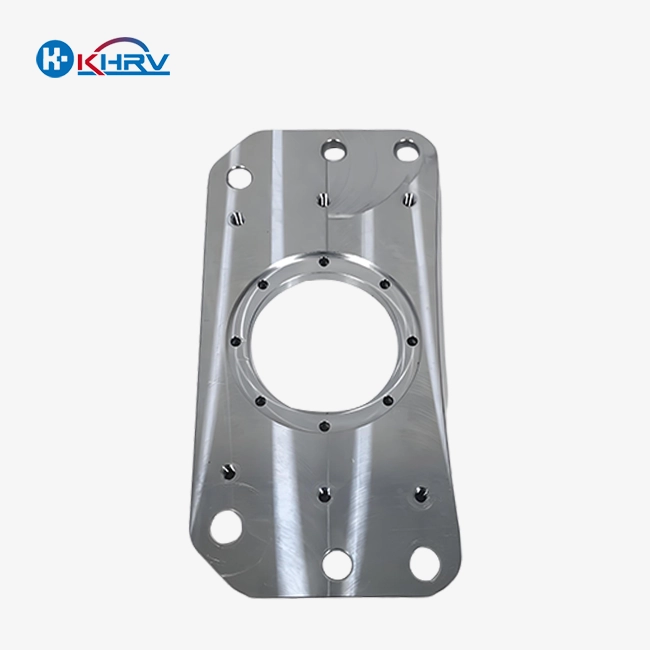
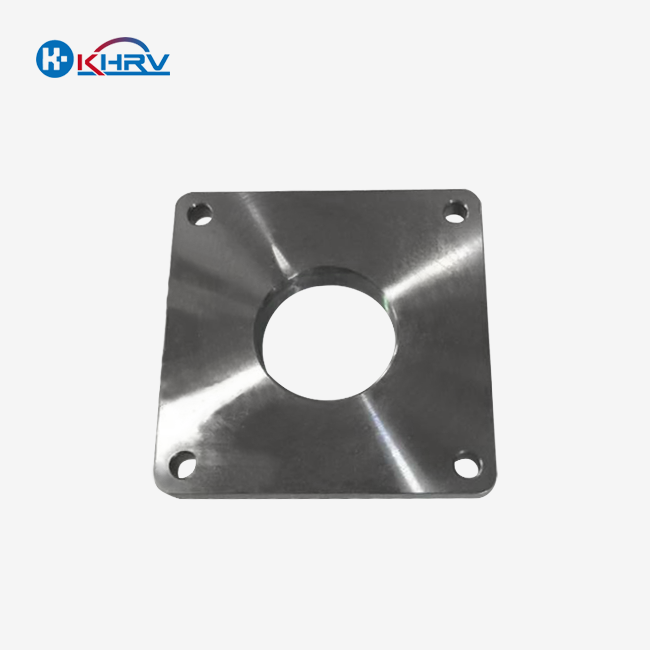
An aluminum robot mounting plate is a custom precision structural component that bridges robotic actuators — including servo motors, gearboxes and end-effectors — with the main equipment frame. Unlike standard generic brackets, these plates act as critical dimensional benchmarks for the entire robotic system. Every detail, from surface flatness and bolt hole positioning to edge perpendicularity, directly impacts end-effector positioning accuracy. On a standard one-meter robotic arm, even 20-micron flatness deviations on the mounting plate can multiply into substantial endpoint offset errors during high-speed operation.
Many buyers overlook that finished plate reliability depends more on process control than raw material quality alone. Aluminum alloys naturally release internal residual stress during cutting and material removal. Without scientific process control, parts that pass post-machining inspection can gradually deform after clamping release, triggering slow tolerance drift, misalignment and recurring calibration issues on production lines.
Professional CNC manufacturers resolve this with segmented rough and finish machining, paired with intermediate stress relief procedures to stabilize material structure before final finishing. This disciplined workflow ensures Aluminum Robot Mounting Plate dimensions stay consistent long after installation. Reliable robotic mounting plates must meet these core performance standards:
1. Dynamic Flatness Stability: Maintains ±0.01mm flatness under cyclic acceleration (2G+) and deceleration loads, preventing micro-deformation that causes endpoint drift.
2. Vibration Damping & Rigidity: Material and structural design that minimizes resonant amplification, ensuring consistent end-effector positioning across varying operational frequencies.
3. Repeatable Hole Positioning: Holds hole positional accuracy within ±0.01mm across thousands of assembly/disassembly cycles, critical for quick tool change applications.
Real-World Applications & Measurable Advantages of Optimized Robot Mounting Plates
The combination of application-specific alloy selection and stress-controlled CNC machining delivers tangible reliability improvements for high-demand automation scenarios. Below are two field-verified cases reflecting Wuxi Kaihan’s consistent processing standards.
1. High-Speed Pick-and-Place Robotic End Effector Mounting Plates
A professional electronics automation equipment manufacturer required high-stability mounting plates for high-speed pick-and-place robot end effectors. Working conditions involve frequent 2G+ acceleration and up to 200 operating cycles per minute, demanding strictly controlled ±0.01mm flatness to avoid vacuum gripper misalignment and component picking failures.
We adopted certified 7075-T6 aerospace aluminum with outstanding strength and fatigue resistance, processed entirely on four-axis CNC machining centers. The production workflow adopted segmented rough machining, artificial stress relief and precision finish machining to completely release internal material stress and lock in dimensional accuracy. A 300-unit batch was delivered within 15 working days, with full dimensional inspection reports verifying consistent tolerance compliance across all units. The customer recorded zero gripper alignment failures caused by mounting plate deformation throughout 18 months of continuous mass production.
2. Collaborative Robot Sensor & Joint Mounting Bases
A collaborative robot system integrator needed customized 6061-T6 aluminum mounting plates for joint sensors and base connection structures. The equipment operates in moderately humid, temperature-variable workshop environments, requiring precise hole positioning accuracy and stable anti-corrosion performance.
We adopted three-axis CNC optimized toolpath processing to eliminate burrs and ensure uniform hole accuracy. All finished parts underwent standardized hard anodizing treatment to enhance surface wear resistance and environmental stability. The full 500-unit batch was delivered with complete material certification, dimensional test data and surface treatment compliance documents, fully adapting to long-term stable operation of lightweight assembly robots.
These practical project cases deliver consistent, quantifiable value for automation manufacturers:
- Genuine ±0.01mm long-term dimensional stability, eliminating post-installation tolerance drift via professional stress relief workflows
- Significantly extended calibration intervals (up to 2x longer between scheduled alignments), reducing unplanned downtime and maintenance labor costs
- Stable 10–20 working day lead times, with pre-production sample confirmation to eliminate batch specification deviations
- Complete traceable batch documentation to support customer incoming quality inspection and long-term equipment quality management
Sourcing & Specification Best Practices for Aluminum Robot Mounting Plates
For engineering and procurement teams focused on robotic equipment stability, standardized alloy specification and supplier qualification processes effectively avoid performance gaps and unnecessary cost waste.
Match aluminum alloy grades to actual load scenarios. For conventional light-load structures including sensor brackets, auxiliary fixing plates and cable management mounts, 6061-T6 aluminum delivers the ideal balance of machinability, corrosion resistance and cost efficiency. For high-frequency, high-load core scenarios such as robot joint interfaces and end effector mounting surfaces, 7075-T6 high-strength aerospace aluminum effectively resists fatigue deformation and dynamic impact, justifying its targeted application value. Precise alloy matching at the design stage prevents both insufficient performance and over-specification waste.
Verify standardized stress relief processing capabilities. The biggest hidden risk of aluminum mounting plates is latent deformation after delivery. Reliable suppliers must adopt segmented rough and finish machining with intermediate stress relief aging to stabilize material internal structure. Procurement teams should actively request process records and stress treatment certification as core qualification verification materials.
Customize surface treatments based on operating environments. Climate-controlled clean workshops only require precise finishing and basic anti-oxidation protection. For humid, dusty and temperature-fluctuating production lines, hard anodizing forms a dense protective layer to enhance wear resistance and anti-corrosion performance, avoiding interface loosening and friction damage during long-term robotic operation.
Evaluate total lifecycle value instead of unit price. Low-cost mounting plates without stress control may save upfront costs but lead to frequent calibration, unexpected downtime and premature replacement losses. Total cost of ownership assessment based on dimensional stability, fatigue resistance and environmental adaptability is the most reliable standard for long-term robotic component procurement.
Conclusion
Robotic system operational stability hinges entirely on the precision and durability of its underlying structural components. As the core positioning benchmark for automated equipment, the Aluminum Robot Mounting Plate directly determines motion accuracy, assembly consistency and long-term operational reliability. Blindly pursuing low prices or single-dimensional precision cannot meet the iterative and high-stability demands of modern automation manufacturing.
Wuxi Kaihan integrates scenario-based aluminum alloy selection, professional stress-relief CNC machining based on three-axis and four-axis equipment, and targeted surface treatment solutions to deliver high-precision robot mounting plates that maintain original accuracy through millions of operating cycles. For automation enterprises coping with market demand fluctuations and product iteration upgrades, standardized, traceable and process-driven Aluminum Robot Mounting Plate customization effectively stabilizes equipment performance and reduces long-term operational and maintenance costs.
FAQ
1. What is the core function of an Aluminum Robot Mounting Plate?
It is a high-precision structural interface connecting robotic actuators and equipment frames. Its flatness, hole position accuracy and surface finish serve as the dimensional benchmark for the entire robotic system, directly affecting positioning accuracy, motion repeatability and overall operational stability.
2. How to choose between 6061-T6 and 7075-T6 aluminum for robot mounting plates?
6061-T6 is ideal for conventional light-load, low-frequency auxiliary mounting structures with superior cost performance and corrosion resistance. 7075-T6 is suitable for high-load, high-cycle core parts such as joint and end effector mounting plates, relying on higher tensile strength and fatigue resistance to adapt to intensive robotic operation.
3. Why does stress-managed machining improve mounting plate service stability?
Aluminum materials retain internal residual stress after extrusion and rolling. Conventional one-time forming machining leads to gradual stress release post-production, causing slow deformation and tolerance drift. Segmented machining and intermediate stress relief thoroughly stabilize the material structure, locking in long-term dimensional accuracy.
4. What precision can Wuxi Kaihan achieve for custom robot mounting plates?
We stably control critical feature tolerances within ±0.01mm, including flatness, hole positional accuracy and perpendicularity. Every batch comes with complete calibrated inspection reports, material certificates and full process traceability documents.
Partner with KHRV for Precision Robot Mounting Plate Machining | KHRV
If you need stable, high-precision Aluminum Robot Mounting Plate solutions for industrial or collaborative robotic equipment, Wuxi Kaihan Technology Co., Ltd. delivers reliable customized machining services tailored to automation industry scenarios. Our ISO 9001:2015 certified workshop relies on mature three-axis and four-axis CNC machining capabilities, matched with scientific material selection and standardized stress relief processes, to consistently achieve ±0.01mm precision.
We support full OEM non-standard customization according to your technical drawings, with specific expertise in industrial and collaborative robot applications. Our ±0.01mm precision and stress-relief machining help automation customers achieve longer calibration cycles and higher production uptime.
Contact our professional engineering team at service@kaihancnc.com to customize your structural component solutions and get an accurate project quote.
References
1. Wang, L. J., & Zhang, H. T. (2023). Material Selection and Performance Optimization of Aluminum Structural Parts for Industrial Robots. Journal of Robotics and Mechanical Engineering, 48(6), 156–171.
2. White, S. R., & Carter, M. K. (2022). Precision CNC Machining Standards for Custom Robot Mounting Components. Industrial Precision Manufacturing, 20(10), 302–318.
3. Liu, Y., & Evans, T. D. (2023). Fatigue Resistance and Surface Treatment Technology of Aluminum Robot Mounting Plate.Advanced Materials and Process Engineering, 81(4), 211–226.
4. Green, R. P., & Johnson, S. M. (2022). Cost-Benefit Analysis of Flexible CNC Production for Robotic Component Customization. Automation Manufacturing Review, 30(5), 98–112.
5. Taylor, B. J., & Lee, C. W. (2023). Quality Control and Dimensional Stability Management of High-Precision Aluminum Robotic Parts. Precision Manufacturing & Quality Assurance, 35(2), 45–60.
Learn about our latest products and discounts through SMS or email