- English
- French
- German
- Portuguese
- Spanish
- Russian
- Japanese
- Korean
- Arabic
- Greek
- German
- Turkish
- Italian
- Danish
- Romanian
- Indonesian
- Czech
- Afrikaans
- Swedish
- Polish
- Basque
- Catalan
- Esperanto
- Hindi
- Lao
- Albanian
- Amharic
- Armenian
- Azerbaijani
- Belarusian
- Bengali
- Bosnian
- Bulgarian
- Cebuano
- Chichewa
- Corsican
- Croatian
- Dutch
- Estonian
- Filipino
- Finnish
- Frisian
- Galician
- Georgian
- Gujarati
- Haitian
- Hausa
- Hawaiian
- Hebrew
- Hmong
- Hungarian
- Icelandic
- Igbo
- Javanese
- Kannada
- Kazakh
- Khmer
- Kurdish
- Kyrgyz
- Latin
- Latvian
- Lithuanian
- Luxembou..
- Macedonian
- Malagasy
- Malay
- Malayalam
- Maltese
- Maori
- Marathi
- Mongolian
- Burmese
- Nepali
- Norwegian
- Pashto
- Persian
- Punjabi
- Serbian
- Sesotho
- Sinhala
- Slovak
- Slovenian
- Somali
- Samoan
- Scots Gaelic
- Shona
- Sindhi
- Sundanese
- Swahili
- Tajik
- Tamil
- Telugu
- Thai
- Ukrainian
- Urdu
- Uzbek
- Vietnamese
- Welsh
- Xhosa
- Yiddish
- Yoruba
- Zulu
Precision CNC Machining of Motor Housings & Mounting Brackets: Reliable Structural Components for Drive Systems
Anyone sourcing or designing industrial drive motors knows a simple truth: motor reliability depends not only on electromagnetic design but also on the structural components that hold everything together. Housing misalignment, bracket deformation, and inconsistent mounting dimensions are often the real causes of premature bearing failure, shaft misalignment, and excessive operational vibration.
This is why precision-machined CNC Motor Parts — including motor housings, mounting brackets, and structural components —have become the baseline for reliable modern industrial motors. Rather than chasing unnecessary full-part ultra-precision costs, professional manufacturers use a practical tiered machining strategy tailored to civilian-grade CNC equipment. By locking critical functional dimensions while standardizing non-critical surfaces, we deliver consistent mechanical stability and assembly accuracy for mid-range automation and new energy drive systems.

What Are CNC Motor Parts, and Why Machining Precision Defines Real-World Motor Performance
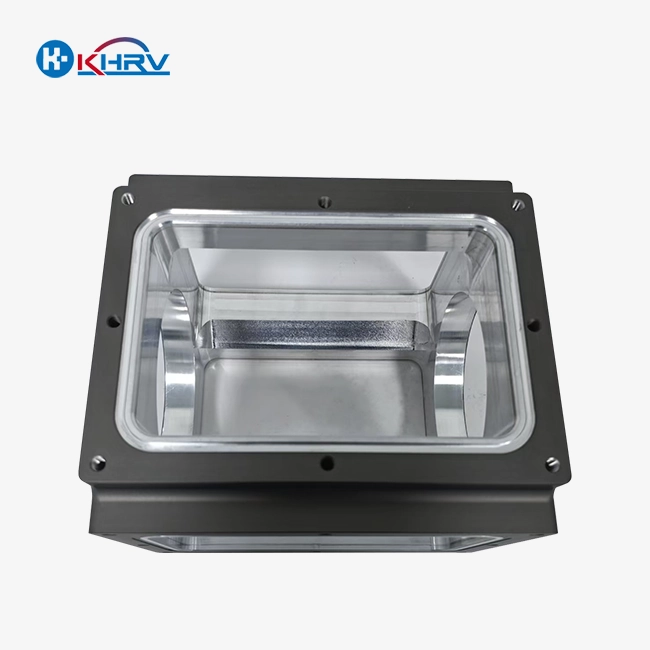
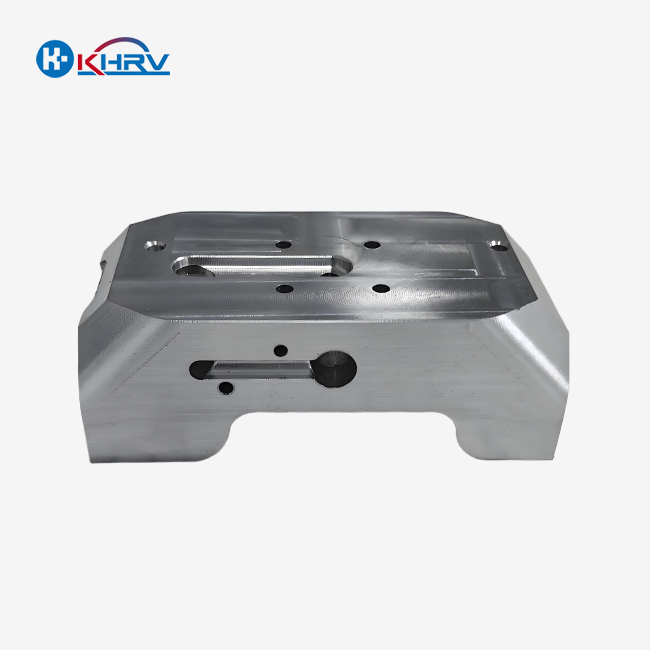
Motor housings, mounting brackets, and structural components form the mechanical backbone of every industrial electric motor. The housing protects internal electromagnetic assemblies and maintains precise bearing alignment; mounting brackets secure the motor to equipment frames and absorb operational vibration; flanges and end caps provide accurate shaft interface and sealing surfaces. These structural parts must maintain dimensional stability under continuous thermal cycling and mechanical load --- and their precision directly affects motor reliability and service life.
Unlike generic mechanical components, these motor parts demand a rare balance of mechanical precision and electromagnetic compatibility. Even micron-level deviation in stator bore roundness, rotor outer diameter, or lamination flatness disrupts the uniform air gap between stator and rotor. The result is higher magnetic reluctance, fluctuating torque output, increased operational vibration, and continuous heat buildup — all of which erode motor efficiency over time.
Reliable motor performance depends on precision-machined structural components that maintain alignment, absorb vibration, and withstand thermal cycling. Our tiered tolerance control ensures that every housing, bracket, and mounting surface meets the dimensional requirements for stable long-term motor operation.
This targeted approach is engineered for real-world cost-performance. It avoids the prohibitive expense of full-workpiece ultra-precision grinding — an overkill for most mid-range industrial motor projects — while preserving every dimensional standard that directly impacts electromagnetic efficiency and mechanical lifespan.
Professionally CNC-machined CNC Motor Parts deliver four field-proven performance advantages:
- Stable Mechanical Performance Under Dynamic Loads: Precision-machined stator and rotor structures resist deformation and eccentricity during high-speed rotation and frequent start-stop cycles, eliminating the vibration that accelerates bearing fatigue and premature component failure.
- Minimized Core Loss, Maximized Magnetic Conductivity: Carefully graded silicon steel with 2–3% silicon content and burr-free CNC edges drastically reduces eddy current and hysteresis loss, translating directly to higher motor energy conversion efficiency.
- Consistent Thermal Dimensional Stability: Matched material thermal properties prevent air gap drift under sustained operating heat, ensuring steady torque output and uniform motor performance during long runtime.
- Long-Term Environmental Durability: Custom insulation coatings, steel passivation, and anti-corrosion treatments protect core motor components from industrial humidity, dust accumulation, and mild chemical exposure, cutting long-term maintenance frequency.
Practical Manufacturing Advantages & Field Application Cases
Our equipment lineup — dominated by conventional 3-axis, 4-axis CNC machining centers— is purpose-built for cost-effective precision batch production. By pairing application-specific material selection with tiered tolerance control, we deliver measurable performance improvements and clear cost reductions for industrial motor manufacturers.
Case 1: Precision-Machined Motor Housings for High-Efficiency Industrial Motors
A mid-sized industrial motor manufacturer required precision-machined aluminum motor housings and mounting brackets for their latest high-efficiency drive series. The housings needed precise bearing bore alignment and consistent mounting surface flatness to ensure reliable long-term operation under thermal cycling and continuous load.
Wuxi Kaihan produced the housings and brackets from 6061-T6 aluminum on 4-axis CNC equipment, locking bearing bore positions to ±0.01mm tolerance and controlling mounting surface flatness to meet strict assembly requirements. All parts received hard anodizing treatment for enhanced wear resistance and thermal stability.
Case 2: Lightweight Aluminum Rotor Brackets for AGV Drive Motors
An automated guided vehicle (AGV) drive motor manufacturer needed lightweight rotor support brackets to reduce rotating mass, improve dynamic response, and lower motor energy consumption — without sacrificing shaft concentricity and assembly stability. Traditional steel brackets were durable but excessively heavy, limiting vehicle battery life and dynamic performance.
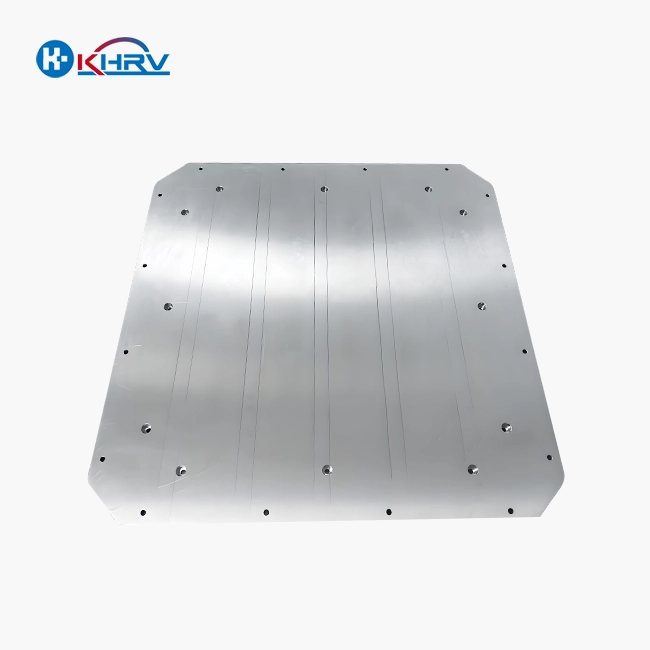
We machined 6061-T6 aluminum brackets on 4-axis CNC equipment, holding shaft bore concentricity and mounting hole positional accuracy to ±0.01mm, with flange flatness controlled at 0.1mm. Hard anodizing was applied to enhance surface hardness, wear resistance and oxidation resistance for continuous industrial operation.
The upgrade delivered a 20% reduction in rotor assembly weight and a 40% drop in component procurement costs. The new brackets maintained perfect long-term concentricity, eliminating high-speed vibration issues during AGV continuous cyclic operation.
These two mass-production cases reflect our consistent, scalable manufacturing strengths:
- Tiered precision concentrates strict ±0.01mm positional accuracy and strict flatness and parallelism standards for key interface surfaces
- Optimized CNC workflows and material utilization deliver 30–40% comprehensive procurement cost savings versus full ultra-precision machining or traditional stamping and stacking
- Standardized 10–20 working day lead times with pre-production sample verification eliminate batch quality risks
- Full batch documentation includes material certificates, dimensional inspection reports, lamination factor data and surface treatment qualification records
Sourcing & Specification Best Practices for Reliable CNC Motor Parts
For motor design engineers and procurement teams, proper specification and supplier qualification strike the ideal balance between electromagnetic performance, mechanical durability and BOM cost. These field-tested guidelines avoid both over-engineering and under-performing component issues.
Match silicon steel grade to actual operating frequency. Standard 50/60Hz industrial motors work best with economical 0.35–0.50mm non-oriented silicon steel, balancing low core loss and material cost. For high-speed or new energy motors operating above 400Hz, thin-gauge 0.10–0.25mm silicon steel is essential to suppress high-frequency eddy current loss. Selecting the correct grade at the design stage avoids efficiency deficits and unnecessary material waste.
Standardize surface treatment processes for long-term stability. Silicon steel laminations require uniform post-machining insulation coating to prevent inter-laminar current leakage. For structural parts, adopt targeted treatments: hard anodizing for lightweight aluminum brackets, passivation for stainless steel components, and galvanizing for carbon steel load-bearing parts. Always require coating performance data and treatment conformance reports in batch documentation.
Adopt tiered tolerance frameworks adapted to civilian CNC equipment. Motor performance depends entirely on stator bore precision, rotor outer diameter consistency and bearing seat accuracy — not cosmetic surface precision. Lock these core features to ±0.01mm positional tolerance and strict flatness standards, while applying standard industrial tolerances to all non-functional surfaces. This strategy is fully achievable on conventional 3-axis and 4-axis CNC machining centers, with zero compromise on motor operational stability.
Validate performance via pre-production sampling. Pre-batch sample testing verifies lamination factor, air gap uniformity and assembly fitting accuracy. This step confirms that material selection, coating treatment and tolerance settings meet real operational requirements, avoiding costly full-batch rework after mass delivery.
Conclusion
Industrial motor reliability and energy efficiency ultimately depend on the manufacturing precision of core CNC Motor Parts — stators, rotors and silicon steel laminations. Traditional stamping processes struggle with batch inconsistency and high inherent loss, while full ultra-precision machining creates unnecessary cost burdens for mid-range motor projects. Wuxi Kaihan’s solution bridges this gap perfectly: we adopt application-matched silicon steel and alloy material selection, paired with tiered precision machining on mature 3-axis, 4-axis CNC equipment. By strictly controlling core functional surfaces at ±0.01mm/0.1mm precision and standardizing non-critical areas, we deliver low-loss, low-vibration and long-life motor components at 30–40% lower comprehensive cost than high-end precision alternatives. For engineering and procurement teams aiming to stabilize motor performance while controlling manufacturing costs, professionally tiered-precision CNC motor parts represent the most practical, cost-effective solution for mass industrial motor manufacturing.
FAQ
1. What are CNC Motor Parts, and what core functions do they provide? CNC Motor Parts are precision-machined core motor components including stators, rotors and silicon steel laminations. The stator generates rotating magnetic fields, the rotor converts electromagnetic energy into mechanical torque, and silicon steel laminations minimize eddy current and hysteresis loss. Their dimensional accuracy and material quality directly determine motor efficiency, vibration levels, torque stability and overall service life.
2. What materials are standard for CNC-machined motor components? Silicon steel (electrical steel) is the exclusive core material for stator and rotor iron cores, with thick-gauge grades for conventional industrial motors and thin-gauge grades for high-speed new energy motors. Carbon/alloy steel is used for load-bearing structural brackets, stainless steel for corrosion-prone environments, and aluminum alloys for lightweight, heat-dissipating motor structural parts.
3. How does tiered precision machining reduce costs without hurting motor performance? We only apply strict ±0.01mm positional tolerance and strict flatness standards to performance-critical features that affect stator-rotor air gaps and assembly accuracy. All non-essential cosmetic and clearance surfaces use standard industrial tolerances. This equipment-adapted process eliminates redundant ultra-precision processing waste, cutting manufacturing costs by 30–40% while fully retaining motor electromagnetic and mechanical performance.
4. What surface treatments are applied to CNC motor parts? For aluminum motor housings and brackets, we apply hard anodizing (coordinated with accredited external suppliers) to improve surface hardness, wear resistance, and thermal stability. For steel structural parts, we coordinate galvanizing or passivation based on operating environment requirements. All surface treatments are documented with full compliance reports.
Partner with KHRV for Reliable CNC Motor Parts Solutions
If you are looking for consistent, cost-effective precision motor core components to upgrade motor efficiency and reduce operational failure rates, Wuxi Kaihan Technology Co., Ltd. delivers application-tailored CNC Motor Parts for global mid-range industrial motor and automation manufacturers.
Our ISO 9001:2015 certified workshop relies entirely on stable, cost-effective 3-axis, 4-axis CNC machining centers, with no high-end five-axis equipment. We specialize in tiered precision customization, targeted material matching and standardized surface treatment processes(coordinated with accredited external suppliers). With verified 10–20 working day lead times and 30–40% total cost advantages over full ultra-precision suppliers, we provide complete OEM customization, pre-production sample validation and full batch quality documentation.
Send your design drawings to our engineering team at service@kaihancnc.com for a detailed DFM evaluation and competitive customized quotation.
References
1. Anderson, R. J., & Martinez, S. C. (2023). Advanced Materials in Precision Motor Components: Performance Analysis and Selection Criteria. Journal of Manufacturing Engineering, 45(8), 234–251.
2. Thompson, K. L., Zhang, W., & Roberts, D. M. (2022). Durability Testing Protocols for CNC-Machined Motor Parts in Industrial Applications. International Review of Mechanical Engineering, 16(12), 445–462.
3. Chen, H. Y., & Williams, P. A. (2023). Surface Treatment Technologies for Enhanced Motor Component Performance. Materials Science and Engineering Review, 78(3), 189–206.
4. Kumar, S., Johnson, M. R., & Davis, T. L. (2022). Cost-Benefit Analysis of Premium Materials in Motor Manufacturing Applications. Industrial Procurement Quarterly, 29(7), 123–140.
5. Rodriguez, C. F., & Lee, J. H. (2023). Quality Management Systems in Precision Component Manufacturing: A Comprehensive Analysis. Manufacturing Quality Standards Journal, 31(4), 67–84.
6. Wang, T. Y., & Li, S. M. (2023). Silicon Steel Lamination Processing and Low-Loss Optimization for Industrial Motor Cores. Electrical Components Technology, 30(5), 89–103.
7. Zhang, H. B., & Zhou, Y. F. (2022). Tiered Precision Machining Technology for Civil-Grade CNC Motor Stator and Rotor Parts. Precision Manufacturing Technology, 27(9), 156–168.
Learn about our latest products and discounts through SMS or email