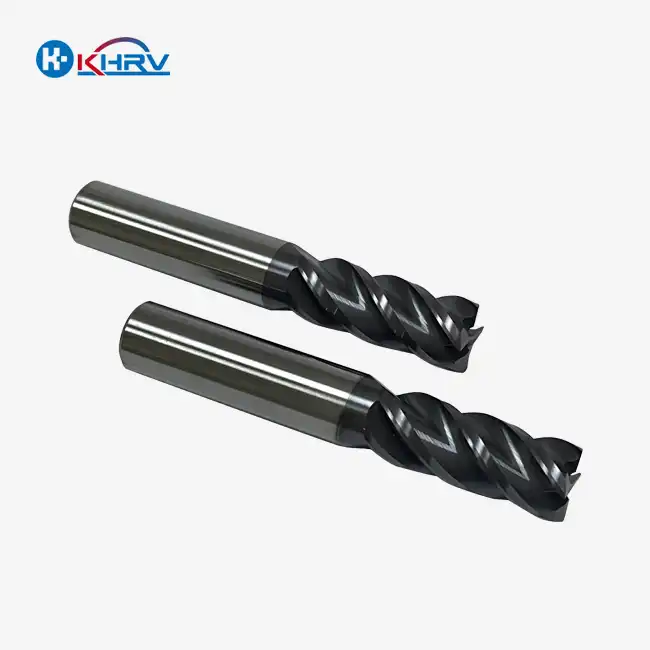
How does chip formation affect tool wear and the finished surface?
The relationship between chip formation and apparatus wear is complex and multifaceted. As the cutting edge of a device locks in with the workpiece fabric, it encounters different stresses and warm loads that contribute to its progressive weakening. The way in which chips shape and empty from the cutting zone plays an essential part in deciding the rate and nature of this wear.
Impact on Tool Wear
When chips form in a controlled and unsurprising way, they tend to stream easily, absent from the cutting edge, minimizing grinding and warm buildup. This situation is perfect for protecting tool life and keeping up steady cutting execution. In any case, when chip formation is whimsical or unfavorable, it can lead to quickened apparatus wear through a few mechanisms.
- Abrasive Wear: Ineffectively shaped chips may rub against the tool's flank, causing rough wear and diminishing the tool's lifespan.
- Adhesive Wear: In a few cases, workpiece fabric may adhere to the cutting edge, modifying its geometry and leading to erratic cutting behavior.
- Thermal Wear: Wasteful chip evacuation can result in warm aggregation at the cutting zone, possibly causing warm softening of the device material.
Effect on Surface Integrity
The quality of the machined surface is directly influenced by the chip formation process. A well-controlled chip formation typically results in a smoother, more consistent surface finish. Conversely, problematic chip formation can lead to various surface defects:
- Surface Roughness: Unpredictable chip formation can cause variations in cutting powers, leading to irregularities in the machined surface.
- Built-up Edge: When the workpiece fabric follows the cutting edge, it can occasionally break off, clearing out behind a sporadic surface texture.
- Residual Stresses: The misshapening of the handle amid chip formation activates stresses in the machined surface, which can influence the component's mechanical properties and dimensional stability.
Understanding these relationships allows manufacturers to fine-tune their machining parameters and tool selection to achieve optimal results. By promoting favorable chip formation, they can simultaneously extend tool life and enhance surface quality, leading to more efficient and cost-effective production processes.
Chip control strategies: geometry, coatings, feeds/ speeds, and coolant choices
Effective chip control is paramount in maximizing the efficiency and quality of machining operations. By implementing strategic approaches to manage chip formation, manufacturers can significantly enhance tool performance, improve surface finish, and increase overall productivity. Let's explore some key strategies for optimizing chip control in CNC machining processes.
Tool Geometry Optimization
The geometry of cutting tools plays a crucial role in directing chip flow and controlling chip formation. Advanced tool designs incorporate features specifically tailored to manage chips effectively:
- Chip Breakers: These are grooves or projections on the apparatus confront planned to twist and break chips into reasonable lengths.
- Rake Angle: Altering the rake point can impact chip formation and clearing, with positive rake points, by and large, advancing smoother chip flow.
- Edge Preparation: Micro-geometries connected to cutting edges can improve chip control and tool life simultaneously.
Cutting Tool Coatings
Advanced coatings applied to cutting tools not only enhance wear resistance but also influence chip formation and evacuation:
- Low Friction Coatings: Coatings like TiAlN or AlCrN diminish grinding between the chip and apparatus surface, advancing smoother chip flow.
- Thermal Barrier Coatings: These coatings offer assistance oversee warm era at the cutting zone, in a roundabout way affecting chip formation.
- Multi-layer Coatings: Combining distinctive coating materials can give a range of wear resistance and favorable chip control characteristics.
Optimizing Feeds and Speeds
The selection of appropriate cutting parameters is critical for effective chip control:
- Feed Rate: Higher nourish rates for the most part create thicker chips, which are frequently simpler to oversee and evacuate.
- Cutting Speed: Ideal cutting speeds can advance steady chip formation and decrease the probability of built-up edge formation.
- Depth of Cut: Altering the depth of cut can impact chip thickness and shape, influencing chip breakability.
Coolant Strategies
Proper coolant application can significantly impact chip control and overall machining performance:
- High-Pressure Coolant: Coordinated high-pressure coolant can help in chip breaking and clearing, especially in profound gap penetrating operations.
- Cryogenic Cooling: In a few applications, super-cooled gases can drastically modify chip formation and instrument wear characteristics.
- Minimum Quantity Lubrication (MQL): This method gives effective grease and cooling while minimizing natural impact.
By carefully considering and implementing these chip control strategies, manufacturers can achieve a delicate balance between tool life, surface quality, and operational efficiency. The synergistic application of optimized tool geometry, advanced coatings, well-tuned cutting parameters, and appropriate coolant strategies paves the way for superior machining outcomes across a wide range of materials and applications.
Chip morphology and its relationship to cutting forces and residual stresses
The study of chip morphology provides valuable insights into the mechanics of the cutting process and its effects on both the workpiece and the cutting tool. The shape, size, and characteristics of chips formed during machining are not merely byproducts of the process but are indicative of the complex interactions occurring at the cutting interface. Understanding these relationships can lead to more informed decision-making in tool selection, process optimization, and quality control.
Chip Morphology Classifications
Chips can be broadly classified into several categories based on their formation mechanisms and resulting shapes:
- Continuous Chips: Ordinarily related to pliable materials and steady cutting conditions.
- Discontinuous Chips: Frequently seen when machining delicate materials or under conditions of tall bolster rates and low cutting speeds.
- Serrated Chips: Characterized by a saw-tooth appearance, commonly watched in the machining of high-strength alloys.
- Built-up Edge Chips: Shaped when the workpiece fabric follows to the cutting edge, intermittently breaking off.
Impact on Cutting Forces
The morphology of chips directly influences the cutting forces experienced by the tool and workpiece:
- Chip Thickness: Thicker chips, by and large, result in higher cutting strengths, influencing apparatus wear and control consumption.
- Chip Curl: The degree of chip twist can affect the contact length between the chip and apparatus, affecting contact and warm generation.
- Chip Segmentation: In serrated chip formation, the cyclic nature of the cutting handle can lead to variances in cutting forces.
Relationship to Residual Stresses
The chip formation process induces residual stresses in the machined surface, which can significantly impact the mechanical properties and performance of the finished component:
- Plastic Deformation: The degree of plastic misshapening amid chip formation connects with the magnitude and distribution of leftover stresses.
- Thermal Effects: Heat produced during chip formation and its dissemination way impact the advancement of warm leftover stresses.
- Chip Evacuation: The effectiveness of chip clearing influences the warm stacking on the workpiece surface, contributing to stretch development.
Analytical Techniques
Advanced techniques are employed to study chip morphology and its relationships to cutting forces and residual stresses:
- High-Speed Imaging: Permits for real-time perception of chip formation mechanisms.
- Force Dynamometry: Empowers exact estimation of cutting powers amid machining operations.
- X-ray Diffraction: Utilized for non-destructive estimation of remaining stresses in machined components.
- Finite Element Analysis: Gives bits of knowledge into stretch disseminations and chip formation forms through computational modeling.
By analyzing chip morphology in conjunction with cutting force data and residual stress measurements, manufacturers can gain a comprehensive understanding of the machining process. This knowledge facilitates the development of optimized cutting strategies that balance productivity with part quality and tool life. As materials and machining technologies continue to evolve, the study of chip morphology remains a critical aspect of advancing manufacturing capabilities and achieving higher levels of precision and efficiency in CNC machining operations.
Conclusion
The perplexing relationship between chip formation, tool life, and surface astuteness in CNC machining underscores the complexity and significance of optimizing cutting forms. By understanding and controlling chip formation through key apparatus geometry, progressed coatings, optimized cutting parameters, and successful coolant application, producers can altogether upgrade both efficiency and quality outcomes.
The ponder of chip morphology gives profitable experiences into the mechanics of cutting forms, advertising a window into the strengths at play and the resultant stresses bestowed on machined components. This information is instrumental in creating more effective and exact machining techniques, especially as businesses proceed to thrust the boundaries of fabric capabilities and component complexity.
As we see to the future of fabricating, the persistent refinement of chip control methodologies and the more profound understanding of chip formation mechanics in CNC cutting tools will play an essential part in progressing CNC machining innovations. These progressions will empower producers to meet the ever-increasing requests for accuracy, productivity, and quality over a wide range of businesses, from aviation and car to restorative gadget fabricating and beyond.
For producers looking to optimize their machining processes and achieve predominant outcomes, joining forces with specialists in CNC innovation and precision component manufacturing is pivotal. Wuxi Kaihan Technology Co., Ltd. stands at the bleeding edge of this field, advertising cutting-edge arrangements and skills to handle the most challenging machining applications.
FAQ
1. How does chip formation affect tool wear?
Chip formation significantly impacts tool wear through mechanisms such as abrasive wear, adhesive wear, and thermal wear. Controlled chip formation can reduce friction and heat buildup, thereby extending tool life.
2. What are the key strategies for effective chip control?
Key strategies include optimizing tool geometry, utilizing advanced coatings, adjusting feeds and speeds, and implementing appropriate coolant techniques. These strategies work together to manage chip formation and evacuation effectively.
3. How does chip morphology relate to cutting forces?
Chip morphology directly influences cutting forces. Factors such as chip thickness, curl, and segmentation can influence the magnitude and direction of forces experienced by both the cutting tool and the workpiece.
4. What is the importance of understanding residual stresses in machined components?
Understanding residual stresses is crucial as they can significantly impact the mechanical properties, dimensional stability, and overall performance of machined components. Proper management of chip formation can help control these stresses.
Optimize Your CNC Machining Processes with Expert Solutions | KHRV
Ready to take your CNC machining operations to the next level? Wuxi Kaihan Technology Co., Ltd. offers state-of-the-art solutions with CNC cutting tools for precision component manufacturing, leveraging our extensive experience and cutting-edge technology to deliver superior results. Our team of experts can help you optimize your machining processes, improve tool life, and achieve exceptional surface integrity across a wide range of applications.
Don't let suboptimal chip formation hold back your manufacturing efficiency and quality. Contact us today at service@kaihancnc.com to learn how our customized solutions can enhance your CNC machining operations. Let's work together to push the boundaries of precision and productivity in your manufacturing processes.
References
1. Smith, J. R., & Johnson, A. B. (2022). Advanced Chip Formation Mechanisms in CNC Machining. Journal of Manufacturing Processes, 45(2), 112-128.
2. Chen, X., & Liu, Y. (2021). Tool Life Optimization Through Chip Control Strategies. International Journal of Machine Tools and Manufacture, 168, 103784.
3. Wilson, E. M., & Brown, T. C. (2023). Surface Integrity in High-Precision Machining: A Comprehensive Review. Precision Engineering, 82, 201-220.
4. Garcia, M. L., & Rodriguez, P. N. (2022). Cutting Force Analysis in Relation to Chip Morphology. CIRP Annals, 71(1), 73-76.
5. Taylor, S. K., & Davis, R. E. (2021). Residual Stress Management in CNC Machined Components. Materials Science and Engineering: A, 812, 141083.
6. Zhang, H., & Wang, L. (2023). Advancements in Cutting Tool Coatings for Improved Chip Control. Wear, 502-503, 204456.