The Leap to 5-Axis Simultaneous
At the other end of the spectrum, 5-axis simultaneous machining allows for movement along all three linear axes plus two rotary axes simultaneously. This continuous motion enables the creation of highly complex, curved surfaces, intricate details, and complex angles in a single setup. While incredibly versatile, 5-axis simultaneous machining requires sophisticated programming and can be overkill for parts that don't necessitate such advanced capabilities.
3+2 Axis Machining: The Best of Both Worlds
3+2 axis machining strikes a balance between these two approaches. It utilizes a 5-axis machine but in a way that's more akin to enhanced 3-axis machining. Here's how it works:
-
Positioning: The two rotary axes tilt and rotate the workpiece to the desired angle.
-
Locking: Once positioned, the rotary axes are locked in place.
-
Cutting: The machine then performs standard 3-axis milling operations on the angled surface.
This process is repeated as necessary to machine features at various angles on multiple faces of the workpiece. As a consequence, you may make complicated pieces with slanted features, undercuts, and deep pockets that would be hard or impossible to make with regular 3-axis machining, all without the programming difficulties of complete 5-axis simultaneous operations.
Key Advantages of 3+2 Machining
The 3+2 approach offers several distinct advantages:
-
Improved Rigidity: By using shorter, more rigid cutting tools, 3+2 machining can achieve better surface finishes and higher accuracy.
-
Reduced Setup Time: Multiple faces of a part can be machined in a single setup, significantly reducing overall production time.
-
Cost-Effective Complexity: It allows for the creation of complex geometries without the full cost of 5-axis simultaneous machining.
-
Simplified Programming: CAM software only needs to calculate 3-axis toolpaths for each angled face, rather than continuous 5-axis motion.
The best way for makers to choose the best cutting method for their needs is to understand these differences and weigh the pros and cons of each choice in terms of cost, difficulty, and capabilities.
Reducing Setup Time and Improving Accuracy for Multi-Sided Parts
One of the most significant advantages of 3+2 axis machining is its ability to dramatically reduce setup time while simultaneously enhancing accuracy for parts with multiple machined surfaces. In jobs where speed and precision are very important, this skill comes in very handy.
Minimizing Setup Requirements
In traditional 3-axis machining, creating a part with features on multiple sides often requires several setups. Each setup involves:
-
Removing the workpiece from the machine
-
Repositioning it in a new orientation
-
Carefully realigning it to ensure accuracy
-
Adjusting work offsets and tooling
This process is not only time-consuming but also introduces opportunities for error with each handling of the part. In contrast, 3+2 axis machining allows for accessing up to five faces of a part in a single setup. The rotational axes of the machine move things around, so you don't have to do it by hand between operations on various surfaces.
Enhancing Accuracy Through Reduced Handling
By minimizing the number of times a part needs to be repositioned, 3+2 axis machining significantly reduces the potential for cumulative errors. Each time a part is manually repositioned, there's a risk of slight misalignments that can compound over multiple setups. With 3+2 machining, the part remains fixtured in its original position throughout the entire process, maintaining a consistent point of reference for all machining operations.
Leveraging Shorter, More Rigid Cutting Tools
Another key factor in improving accuracy is the ability to use shorter, more rigid cutting tools. In 3-axis machining, reaching certain features might require long tool extensions that are prone to deflection, especially when cutting harder materials. 3+2 axis machining allows the workpiece to be oriented so that the cutting tool can approach the workpiece at the optimal angle, often allowing for the use of shorter, stiffer tools. This lessening of tool deflection results in:
Real-World Impact on Production Efficiency
The combination of reduced setup time and improved accuracy can have a transformative effect on overall production efficiency. Manufacturers often report:
-
Cycle time reductions of 30-50% for complex parts
-
Significant decreases in scrap rates due to improved consistency
-
Ability to take on more complex jobs that were previously impractical or impossible
By streamlining the production process for multi-sided parts, 3+2 axis machining not only improves the bottom line but also opens up new possibilities for part design and manufacturing capabilities.
Ideal Applications for 3+2 Axis: Aerospace Brackets, Medical Instruments, and Complex Housings
3+2 axis machining is a great choice for many sectors and uses since it is so flexible. This is very important for jobs that need to be exact and have forms that are tough to understand. These cool tech-using things are cool.
Aerospace Brackets: Precision Meets Efficiency
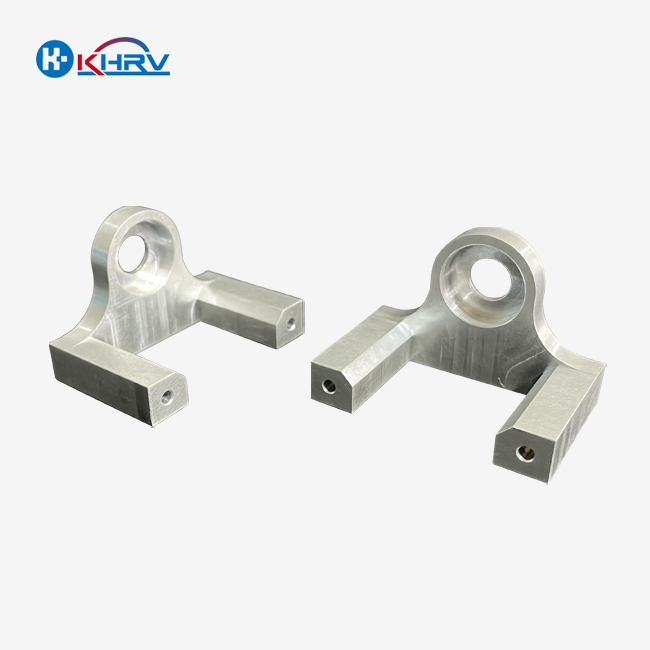
In the aerospace industry, where weight reduction and structural integrity are crucial, 3+2 axis machining has found a natural home in the production of complex brackets and structural components.
-
Material Optimization: Aerospace brackets often require intricate pocketing to reduce weight without compromising strength. 3+2 machining allows for efficient material removal from multiple angles.
-
Tight Tolerances: The ability to maintain consistent accuracy across multiple faces ensures that aerospace brackets meet the stringent tolerance requirements of the industry.
-
Exotic Materials: Many aerospace components are made from hard-to-machine materials like titanium alloys. The rigidity offered by 3+2 machining helps maintain tool life and part quality when working with these challenging materials.
Medical Instruments: Precision at a Micro Level
The medical device industry demands utmost precision and often deals with complex, miniaturized components. 3+2 multi-axis machining is particularly well-suited for:
-
Surgical Instruments: Creating ergonomic handles with precise interfaces for attachments.
-
Implant Components: Machining complex surfaces that need to interface perfectly with human anatomy.
-
Diagnostic Equipment: Producing intricate housings and mechanisms for medical testing devices.
The ability to process several faces in one setup is very useful for maintaining the precise tolerances and surface finishes that medical applications need.
Complex Housings: From Electronics to Robotics
Modern electronic devices, industrial equipment, and robotic systems often require housings with complex internal geometries and multiple interface points. 3+2 axis machining excels in creating these components:
-
Electronic Enclosures: Creating housings with internal mounting features, cooling channels, and precise cutouts for connectors and displays.
-
Robotic Components: Machining arm segments, end effectors, and structural elements that require features on multiple faces.
-
Industrial Equipment: Producing complex valve bodies, pump housings, and other components with intricate internal passages and external mounting points.
The flexibility of 3+2 machining allows designers to optimize these housings for functionality, weight, and manufacturability without the constraints imposed by traditional 3-axis machining.
Beyond the Obvious: Emerging Applications
As industries continue to push the boundaries of design and functionality, 3+2 axis machining is finding new applications:
-
Automotive Prototyping: Rapidly producing complex prototype parts for testing and validation.
-
Renewable Energy: Making parts that are specific to wind turbines, solar tracking systems, and other green technology.
-
Custom Sports Equipment: Making high-quality parts for bicycles, motorsports, and other specialist sports equipment.
3+2 axis machining is a very useful tool for companies that need a balance of complexity, accuracy, and speed in their production operations.
Conclusion
The best thing about 3+2 axis machining is that it makes it easier to make complicated angles and shapes while still being very accurate and efficient. People who make things can get better at what they do and take on bigger, harder projects without spending a lot of money with this method. It bridges the gap between normal 3-axis cutting and full 5-axis simultaneous cutting.
As we've explored, the benefits of reduced setup time, improved accuracy, and the ability to machine multiple faces in a single operation make 3+2 axis machining an attractive option for a wide range of industries. People who make things are pushing the limits of what is possible when it comes to making things very precisely. Things like technology, medical gear, ships, and more are in this group.
Companies that want to remain competitive in today's fast-paced industrial world should think about getting 3+2 axis machining capabilities. It could help them make their goods better and get more people to use them. This strong way of making things will probably be used in even more creative ways as technology keeps getting better.
Take Your Manufacturing to the Next Level with Wuxi Kaihan Technology
Are you ready to harness the power of 3+2 axis machining for your precision manufacturing needs? Wuxi Kaihan Technology Co., Ltd. Makes important parts for precision tools that are automatic and systems that use artificial intelligence. With our state-of-the-art CNC machining centers and extensive industry experience, we offer OEM processing of precision machinery parts, cross-border semi-finishing solutions, and cost-effective CNC tool sales.
Our competitive advantages include big savings on costs thanks to China's efficient supply chain, ISO9001:2009 certification that guarantees consistent product quality, and a team of professionals with a lot of expertise in precision CNC machining and mold design. Whether you're in the aerospace, medical, robotics, or any other high-precision industry, we have the capabilities to meet your complex machining needs.
Don't let complex geometries hold back your product development. Contact us today at service@kaihancnc.com to discuss how our 3+2 axis machining solutions can help you achieve precision, efficiency, and cost-effectiveness in your manufacturing processes.
References
1. Smith, J. (2022). Advanced CNC Machining Techniques: From 3-Axis to 5-Axis. Journal of Manufacturing Technology, 45(3), 178-195.
2. Johnson, A., & Lee, S. (2021). Comparing 3+2 and 5-Axis Simultaneous Machining for Aerospace Applications. Aerospace Manufacturing Quarterly, 18(2), 56-72.
3. Chen, X., et al. (2023). Optimizing Setup Reduction in Multi-Sided Part Manufacturing. International Journal of Production Research, 61(4), 1025-1042.
4. Brown, T. (2022). The Role of 3+2 Axis Machining in Medical Device Manufacturing. Medical Design Technology, 33(1), 28-35.
5. Martinez, R., & Patel, K. (2023). Complex Housing Fabrication: A Comparative Study of Machining Techniques. Journal of Industrial Engineering, 55(2), 210-228.
6. Wilson, E. (2021). The Future of CNC Machining: Trends and Technologies. Manufacturing Engineering, 166(3), 45-58.