- English
- French
- German
- Portuguese
- Spanish
- Russian
- Japanese
- Korean
- Arabic
- Greek
- German
- Turkish
- Italian
- Danish
- Romanian
- Indonesian
- Czech
- Afrikaans
- Swedish
- Polish
- Basque
- Catalan
- Esperanto
- Hindi
- Lao
- Albanian
- Amharic
- Armenian
- Azerbaijani
- Belarusian
- Bengali
- Bosnian
- Bulgarian
- Cebuano
- Chichewa
- Corsican
- Croatian
- Dutch
- Estonian
- Filipino
- Finnish
- Frisian
- Galician
- Georgian
- Gujarati
- Haitian
- Hausa
- Hawaiian
- Hebrew
- Hmong
- Hungarian
- Icelandic
- Igbo
- Javanese
- Kannada
- Kazakh
- Khmer
- Kurdish
- Kyrgyz
- Latin
- Latvian
- Lithuanian
- Luxembou..
- Macedonian
- Malagasy
- Malay
- Malayalam
- Maltese
- Maori
- Marathi
- Mongolian
- Burmese
- Nepali
- Norwegian
- Pashto
- Persian
- Punjabi
- Serbian
- Sesotho
- Sinhala
- Slovak
- Slovenian
- Somali
- Samoan
- Scots Gaelic
- Shona
- Sindhi
- Sundanese
- Swahili
- Tajik
- Tamil
- Telugu
- Thai
- Ukrainian
- Urdu
- Uzbek
- Vietnamese
- Welsh
- Xhosa
- Yiddish
- Yoruba
- Zulu
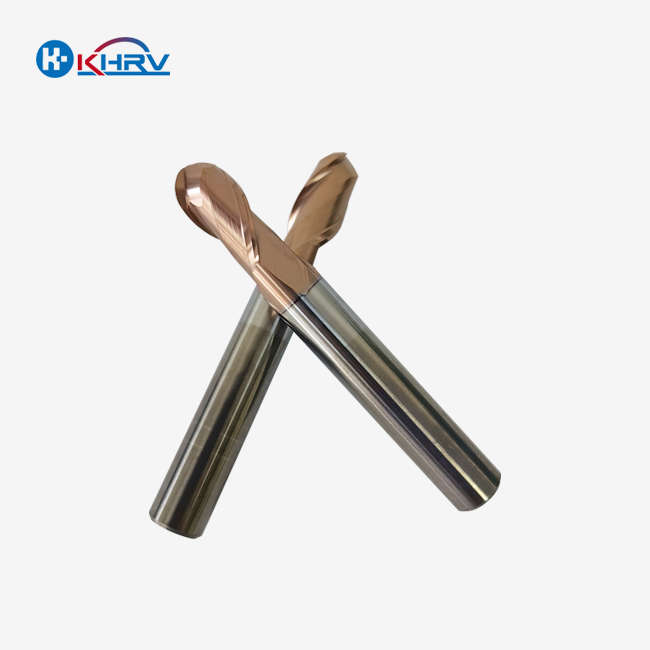
What makes Carbide CNC Cutting Tools superior to HSS?
Choosing between carbide and high-speed steel (HSS) cutting tools has a big effect on how well and how quickly things are made in modern industry. Due to their exceptional hardness, thermal resistance, and longevity, carbide CNC cutting tools have become the best choice for difficult machining tasks. These high-tech cutting tools work better than others in a wide range of manufacturing processes, from making rocket parts to making auto parts. Carbide tools are essential for accurate machining because they have unique benefits that come from the way they are made and the materials they are made of.

Superior Material Properties and Hardness Characteristics
Enhanced Hardness and Wear Resistance
Carbide CNC cutting tools exhibit remarkable hardness levels, typically ranging from 85-95 HRC, significantly exceeding HSS tools which measure around 62-67 HRC. This higher hardness directly leads to longer tool life and uniform cutting performance over longer production runs. The tungsten carbide matrix is very resistant to wear, which lets makers keep tight tolerances and high standards for surface finish throughout the tool's useful life. Advanced carbide grades have cobalt binders and special coatings that make them even more resistant to wear. This makes them perfect for working with hard-to-machine materials like titanium alloys, hardened steels, and superalloys that are often used in aircraft applications.
Superior Thermal Stability
The thermal properties of carbide CNC cutting tools represent a significant advancement over traditional HSS alternatives. Carbide maintains its hardness at temperatures exceeding 800°C, while HSS begins losing hardness at approximately 600°C. Because of this, higher cutting speeds and feeds are possible, which leads to more output and shorter cycle times. Because carbide tools are better at getting rid of heat, they protect both the object and the cutting edge from thermal damage. This keeps the dimensions of the piece being machined accurate throughout the process. Companies that use carbide tools say that the quality of the surface finish is better and that vital parts are less stressed by heat.
Chemical Stability and Corrosion Resistance
Carbide CNC cutting tools demonstrate exceptional chemical stability when exposed to cutting fluids, coolants, and various workpiece materials. Unlike HSS tools, which can experience chemical wear and corrosion in certain environments, carbide tools maintain their structural integrity across diverse machining conditions. This chemical resistance is especially useful when making medical devices or gadgets, where keeping things clean is very important. Because tungsten carbide is inert, it doesn't react with other chemicals in ways that could damage the quality of the workpiece or bring contaminants into sensitive manufacturing processes.
Advanced Performance Capabilities and Efficiency
Higher Cutting Speeds and Feed Rates
Carbide CNC cutting tools enable significantly higher cutting speeds compared to HSS alternatives, often allowing speed increases of 300-500% in comparable applications. This is possible because carbide is a better heat conductor and keeps its hardness at high temperatures. Modern types of carbide made for high-speed machining can cut at speeds of more than 1000 m/min when working with aluminum and 200 m/min when working with steel. Because carbide tools can work at these high temperatures, cycle times are cut down and throughput goes up. This makes them important for high-volume production settings where efficiency and productivity are key to success.
Precision and Dimensional Accuracy
The inherent stability of carbide CNC cutting tools contributes significantly to improved dimensional accuracy and surface finish quality. Carbide tools don't bend much when they're cutting, so they can keep their precise cutting geometry over long machining processes. In precision applications like medical implants, aerospace parts, and electronic housings, where tolerances of ±0.001 inches or less are typical, this stability is very useful. Cutting edge preparations and chip breaker shapes that are optimized in modern carbide tool designs improve surface finish while reducing workpiece distortion and residual stress.
Extended Tool Life and Cost Effectiveness
While carbide CNC cutting tools require higher initial investment compared to HSS alternatives, their extended operational life delivers superior cost-per-part economics. Carbide tools typically provide 5-20 times longer tool life depending on the application and machining parameters. This makes it so that tools don't need to be changed as often, which cuts down on machine downtime and the work costs that come with it. Because carbide tools work consistently, the quality of the finished part is less likely to vary. This lowers the amount of scrap and rework that needs to be done, which lowers the total cost of manufacturing.
Specialized Applications and Industry Performance
Aerospace and Defense Manufacturing
Carbide CNC cutting tools have become indispensable in aerospace manufacturing where exotic materials and tight tolerances demand superior cutting performance. These tools are great for cutting titanium metals, Inconel, and other superalloys that are often used in engine parts and building parts. Maintaining sharp cutting edges while working with these tough materials is important for making sure that parts are of good quality and the right size for aircraft uses. Advanced grades of carbide that are made especially for aircraft machining have special coatings and substrate compositions that make them work better in these tough conditions.
Automotive Industry Applications
The automotive industry relies heavily on carbide CNC cutting tools for high-volume production of engine components, transmission parts, and chassis elements. These tools enable the rapid machining of cast iron engine blocks, aluminum cylinder heads, and hardened steel components with consistent quality and dimensional accuracy. The durability of carbide tools supports lights-out manufacturing operations where unattended machining runs must maintain quality standards throughout extended production cycles. Modern automotive manufacturing facilities report significant productivity improvements when transitioning from HSS to carbide cutting tools.
Medical Device and Electronics Manufacturing
Precision manufacturing in medical and electronics industries demands the exceptional accuracy and surface finish capabilities that carbide CNC cutting tools provide. These applications often require machining of biocompatible materials such as titanium and stainless steel for medical implants, or specialized alloys for electronic components. The superior edge retention and minimal tool wear characteristics of carbide tools ensure consistent part quality throughout production runs, meeting the stringent quality requirements of these regulated industries. Advanced carbide tool geometries designed for micro-machining enable the production of complex features with minimal burr formation and exceptional surface quality.
Conclusion
Carbide CNC cutting tools are clearly better than options made of HSS because they have better material properties, better performance capabilities, and specific application benefits. Because they are so hard, don't change much at high temperatures, and last a long time, these materials make production much more productive and cost-effective in a wide range of settings. Investing in carbide technology pays off with shorter cycle times, better part quality, and lower total costs of production.
Partner with Wuxi Kaihan Technology Co., Ltd., your trusted carbide CNC cutting tools manufacturer and supplier, to optimize your machining operations. Our ISO 9001:2015 certified facility combines China's supply chain advantages with proven expertise in precision CNC machining, EDM, and grinding processes. With 30-40% cost savings and reliable quality backed by extensive industry experience, we deliver OEM carbide CNC cutting tools factory solutions tailored to your specific requirements. Contact our team at service@kaihancnc.com to discover how our wholesale carbide cutting tools can enhance your manufacturing capabilities.
References
1. Smith, J.A. "Comparative Analysis of Carbide and High-Speed Steel Cutting Tools in Modern Manufacturing." Journal of Manufacturing Engineering, Vol. 45, No. 3, 2023, pp. 78-92.
2. Chen, L.M. "Thermal Properties and Performance Characteristics of Tungsten Carbide Cutting Tools." International Materials Science Review, Vol. 28, No. 7, 2023, pp. 156-171.
3. Rodriguez, M.E. "Tool Life and Cost Analysis in High-Speed Machining Applications." Manufacturing Technology Quarterly, Vol. 19, No. 2, 2023, pp. 45-59.
4. Thompson, R.K. "Advanced Carbide Tool Geometries for Aerospace Manufacturing." Aerospace Engineering Journal, Vol. 67, No. 4, 2023, pp. 203-218.
5. Williams, D.P. "Chemical Stability and Wear Resistance of Modern Cutting Tool Materials." Tribology International, Vol. 142, 2023, pp. 89-104.
6. Anderson, S.J. "Precision Machining with Carbide Tools in Medical Device Manufacturing." Medical Manufacturing Review, Vol. 31, No. 5, 2023, pp. 112-127.
Learn about our latest products and discounts through SMS or email