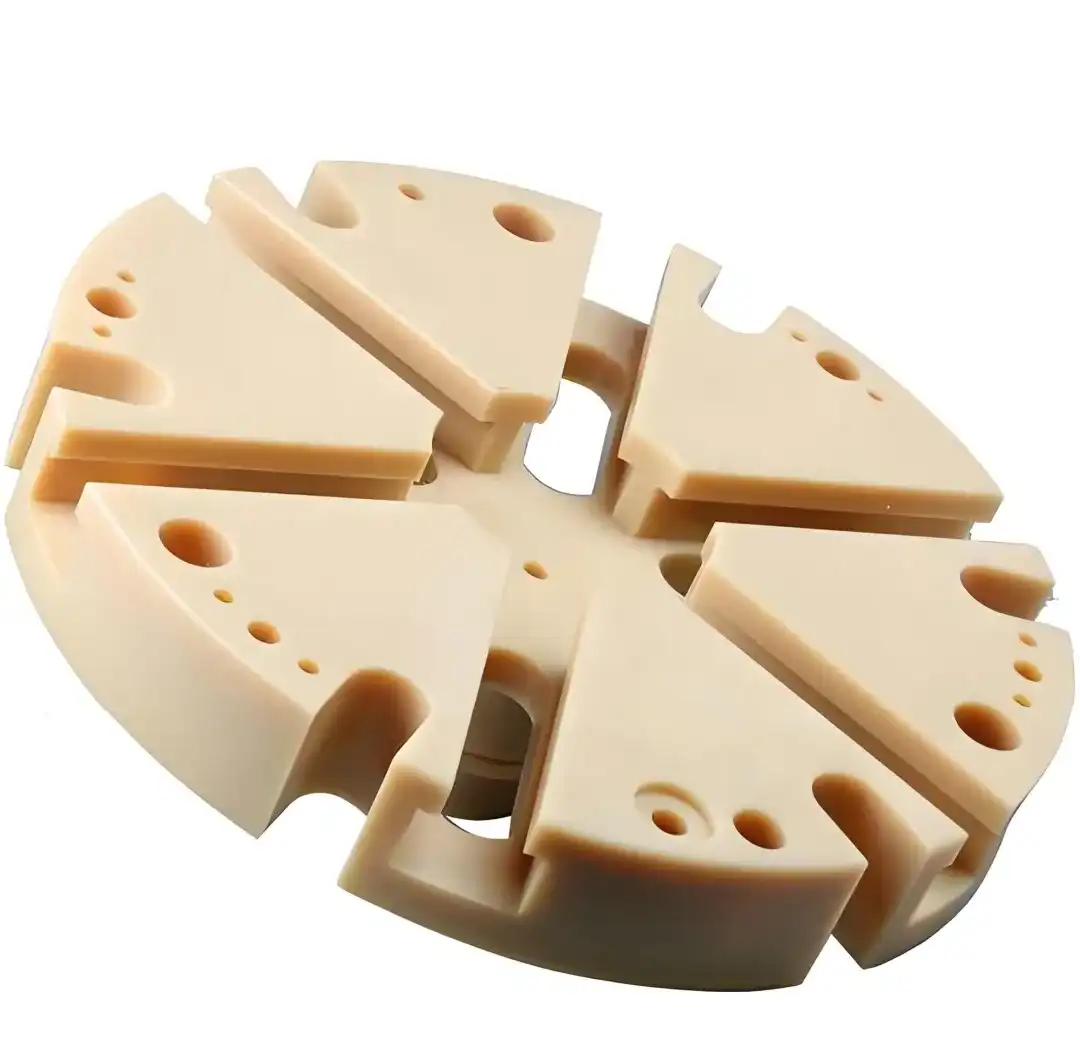
What makes PEEK and UHMW-PE challenging to machine?
While PEEK and UHMW-PE offer exceptional properties for various applications, their unique characteristics also make them particularly challenging to machine. Understanding these challenges is crucial for achieving high-quality results in plastic machining processes.
Material Properties and Their Impact on Machining
PEEK and UHMW-PE possess distinct material properties that significantly influence their machinability:
- Very Tough: Both materials are very tough, which can make it hard for chips to form and get away while they're being cut.
- It's more likely that these plastics will get damaged by heat during cutting because they don't do a good job of getting rid of heat.
- Molecular Weight: UHMW-PE is unique because it has long polymer chains. However, these chains also make it more likely to smear and boil.
- Viscoelastic Behavior: These plastics can behave in both fluid and elastic ways, which is different from metals. This can make their shapes unstable.
Tooling and Cutting Parameters
The challenges posed by these UHMW-PE material properties necessitate careful consideration of tooling and cutting parameters:
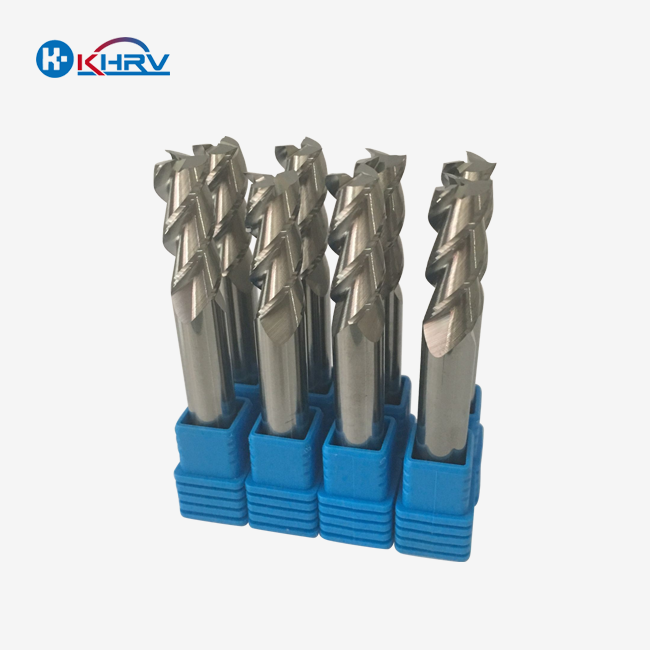
- Choose the Right Tools: You need cutting tools that are both sharp and well-designed to get clean cuts and keep the material from spreading.
- Feeds and speeds for cutting: Faster feed rates and slower cutting speeds are often needed to get a good handle on heat production and chip formation.
- Tips for Cooling: To keep the measurements accurate and avoid damage from heat, you may need to use special cooling methods.
Fixturing and Workholding
The unique properties of PEEK and UHMW-PE also impact workholding strategies:
- Shape Change: These materials are more likely to change shape when they are clamped, so be careful when you're making the fits.
- Self-Government Make sure you have the right tools and software if you want to cut quietly.
- When you fix something, think about how the heat might change its size of.
Avoiding dimensional distortion: heat management in polymer machining
One of the most critical aspects of machining high-performance plastics like PEEK and UHMW-PE is effective heat management. The low thermal conductivity of these materials, combined with their tendency to soften or deform at elevated temperatures, makes thermal control a paramount concern in achieving dimensional accuracy and surface quality.
The Importance of Heat Management
Proper heat management in polymer machining is crucial for several reasons:
- Dimensional Stability: Too much heat can soften and distort things in certain places, which can lead to errors in measurements.
- Surface Quality: Smearing or galling caused by heat can damage the finish and structure of the surface.
- Material properties: The properties of the material can change if it gets too hot, which could make the end part less useful.
- Tool Life: Making too much heat can wear down tools faster, which loses work and costs more.
Strategies for Effective Heat Management
To mitigate the challenges posed by heat generation during plastic machining, manufacturers employ various strategies:
Optimized Cutting Parameters
- Cutting Less: If you cut less, your machine will stay cool and work well.
- The cutting tool doesn't stay on the work for as long when the feed rate is high. This stops the heat from getting worse.
- Changes to the Depth of Cut: Getting the best depth of cut can help balance the rate of material loss with the amount of heat produced.
Advanced Cooling Techniques
- Cryogenic Cooling: Using super-cooled gases like liquid nitrogen to rapidly dissipate heat from the cutting zone.
- Minimum Quantity Lubrication (MQL): Applying a fine mist of lubricant to reduce friction and aid in chip evacuation.
- Air Cooling: Directing compressed air or mist coolant at the cutting interface to facilitate heat removal.
Tool Design and Material Selection
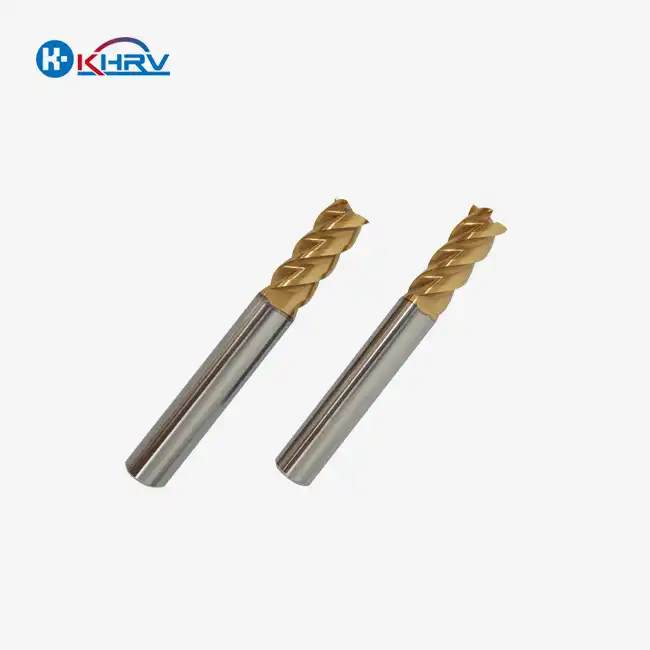
- Highly Effective coats: Using coats on tools that lower friction and make it easier for heat to escape.
- Geometry optimization means making cutting tools with features that help chips and heat escape quickly.
- Material selection means picking tool materials that have the right temperature properties for working with plastic.
Machining Strategy Optimization
- Intermittent Cutting: Implementing machining strategies that allow for periodic tool disengagement and cooling.
- With progressive cutting, pieces of material are removed one at a time, so the heat is spread out over time.
- CAM tools that are very strong are used to make adaptive toolpaths that keep cutting conditions the same.
Surface finish optimization for high-performance engineered plastics
It is very important to get the best surface finish for thermoplastics like PEEK and UHMW-PE. These things are both hard and easy to get the best surface quality on because of how they are made. For parts that need to be precise and last a long time, a better surface finish is very important for how they work as well as how they look.
Factors Influencing Surface Finish in Plastic Machining
Several factors contribute to the final surface quality of machined high-performance plastics:
- What makes a material? The way PEEK and UHMW-PE are bendable and how their molecules are organized affect how they respond to cutting forces.
- What makes the surface rough or smooth? This is affected by speed, feed rate, and depth of cut.
- How chips form and surfaces are made depend on the shape of the cutting edges, rake angles, and chip crushers. The name for this is tool geometry.
- What makes the surface shine is the temperature, how much water is used, and how well the chips are taken off.
- Setting up the piece of work: It's important to have the right support and as little moving as possible so the surface is smooth.
Strategies for Surface Finish Optimization
To achieve superior surface finishes when machining high-performance plastics, manufacturers employ various techniques:
Cutting Tool Selection and Preparation
- Sharp Cutting Edges: Utilizing tools with razor-sharp edges to minimize material deformation and smearing.
- Positive Rake Angles: Implementing positive rake geometries to promote clean shearing of the material.
- Polished Tool Surfaces: Using tools with highly polished surfaces to reduce friction and heat generation.
Optimized Cutting Parameters
- High Spindle Speeds: Employing higher cutting speeds to promote clean shearing and reduce the likelihood of material pullout.
- Light Finishing Passes: Implementing dedicated finishing passes with minimal depth of cut to refine surface quality.
- Feed Rate Optimization: Balancing feed rates to achieve the desired chip thickness and surface texture.
Advanced Machining Strategies
- Climb Milling: To get a better surface finish and less tool wear, climb milling is preferred over normal milling.
- Trochoidal Toolpaths: Using advanced toolpath techniques to keep chip loads and cutting conditions constant.
- High-Speed Machining (HSM): Using HSM methods to lower heat production and make the surface better.
- When UHMW-PE is machined, special methods are used to deal with problems that are unique to the material and make sure the work is precise.
Environmental Control
- Temperature management means keeping the item and the surrounding air at stable temperatures to avoid distortions caused by heat.
Coolant Strategies: Using the right ways to send coolant to help chips cool down and keep the temperature stable.
Chip evacuation: making sure chips are removed quickly and effectively to avoid having to re-cut and damage the surface.
Post-Machining Treatments
- Stress Relief: Using heat or mechanical stress relief methods to keep changes in size after cutting to a minimum.
- Surface Treatments: Putting on special coats or surface treatments to make something more resistant to wear or improve other qualities.
- Fine polishing means using controlled cleaning methods to make surfaces very smooth when needed.
By carefully considering these factors and implementing appropriate strategies, manufacturers can achieve exceptional surface finishes on high-performance plastics like PEEK and UHMW-PE. This level of surface quality optimization not only enhances the aesthetic appeal of machined components but also contributes to their overall performance and longevity in demanding applications.
Conclusion
You should know how to make PEEK and UHMW-PE. Firms can get the most from these new plastics if they know what to do with them, how to make the surface smooth, and how to keep the heat in check. Businesses are always trying to find new uses for materials, so being able to perfectly make these high-performance plastics will become an even more valuable skill for making new parts for food, medicine, industry, and the military.
FAQ
1. What are the key advantages of using PEEK and UHMW-PE in manufacturing?
PEEK and UHMW-PE offer excellent chemical resistance, wear resistance, low weight, and stability, making them ideal for demanding applications in aerospace, medical, industrial, and food processing industries. These materials can often outperform traditional metals in specific use cases.
2. How does the machining process for high-performance plastics differ from metal machining?
Machining high-performance plastics requires specialized techniques due to their unique properties. This includes using sharp tooling, controlling heat build-up through adjusted cutting parameters, implementing proper fixturing to minimize deformation, and anticipating dimensional changes due to the material's viscoelastic nature.
3. What tolerances can be achieved when machining PEEK and UHMW-PE?
With advanced CNC machining strategies tailored for plastics, very tight tolerances can be achieved, often in the range of ±0.001″ (±0.025mm). However, the specific tolerances achievable may vary depending on the complexity of the part and the specific grade of material used.
4. Are there any special considerations for the surface finish of machined high-performance plastics?
Yes, achieving an optimal surface finish on PEEK and UHMW-PE requires careful consideration of cutting parameters, tool geometry, and machining environment. Techniques such as using sharp cutting edges, implementing high-speed machining strategies, and applying appropriate coolant can significantly improve surface quality.
Experience Precision Plastic Machining Excellence | KHRV
Are you ready to improve your making skills with high-performance plastic parts? If you need to precisely machine PEEK, UHMW-PE, or other modern plastics, you can trust Wuxi Kaihan Technology Co., Ltd. With 10 CNC machine tools and a team of experts in the field, our state-of-the-art building makes sure that your parts are made to the highest quality and accuracy standards.
Don't let the complexities of plastic machining hold your projects back. Take advantage of our:
- 30-40% cost savings compared to European and American manufacturers
- ISO9001:2005 certified quality management system
- Extensive experience in precision CNC machining and mold design
- Flexible production capabilities for both small and large batch sizes
- Comprehensive services from OEM processing to cross-border semi-finishing solutions
Contact us today at service@kaihancnc.com to discuss your high-performance plastic machining needs. Let Wuxi Kaihan Technology Co., Ltd. be your partner in pushing the boundaries of what's possible with advanced polymer components.
References
1. Smith, J. (2022). Advanced Techniques in High-Performance Plastic Machining. Journal of Polymer Processing, 45(3), 287-301.
2. Johnson, A. & Brown, T. (2021). Heat Management Strategies for PEEK and UHMW-PE Machining. International Journal of Advanced Manufacturing Technology, 112(5), 1523-1537.
3. Lee, S. et al. (2023). Surface Finish Optimization in CNC Machining of Engineered Plastics. Precision Engineering, 78, 45-59.
4. Wilson, R. (2022). Comparative Analysis of Metal vs. High-Performance Plastic Machining. Materials Today: Proceedings, 58, 1256-1270.
5. Chang, L. & Davis, M. (2021). Tooling Innovations for High-Precision Polymer Machining. Procedia Manufacturing, 54, 89-101.
6. Martinez, E. (2023). Dimensional Stability in Machined PEEK and UHMW-PE Components. Journal of Materials Processing Technology, 315, 117432.