- English
- French
- German
- Portuguese
- Spanish
- Russian
- Japanese
- Korean
- Arabic
- Greek
- German
- Turkish
- Italian
- Danish
- Romanian
- Indonesian
- Czech
- Afrikaans
- Swedish
- Polish
- Basque
- Catalan
- Esperanto
- Hindi
- Lao
- Albanian
- Amharic
- Armenian
- Azerbaijani
- Belarusian
- Bengali
- Bosnian
- Bulgarian
- Cebuano
- Chichewa
- Corsican
- Croatian
- Dutch
- Estonian
- Filipino
- Finnish
- Frisian
- Galician
- Georgian
- Gujarati
- Haitian
- Hausa
- Hawaiian
- Hebrew
- Hmong
- Hungarian
- Icelandic
- Igbo
- Javanese
- Kannada
- Kazakh
- Khmer
- Kurdish
- Kyrgyz
- Latin
- Latvian
- Lithuanian
- Luxembou..
- Macedonian
- Malagasy
- Malay
- Malayalam
- Maltese
- Maori
- Marathi
- Mongolian
- Burmese
- Nepali
- Norwegian
- Pashto
- Persian
- Punjabi
- Serbian
- Sesotho
- Sinhala
- Slovak
- Slovenian
- Somali
- Samoan
- Scots Gaelic
- Shona
- Sindhi
- Sundanese
- Swahili
- Tajik
- Tamil
- Telugu
- Thai
- Ukrainian
- Urdu
- Uzbek
- Vietnamese
- Welsh
- Xhosa
- Yiddish
- Yoruba
- Zulu
CNC Cutting Tool Holder Performance in High-Speed Milling
When cutting at high speeds, accuracy and steadiness are very important. Choosing the right CNC Cutting Tool Holder is, therefore, very important for the success of the manufacturing process. These critical components connect the cutting tools to the machine spindles and have a direct impact on machining accuracy, surface finish quality, and overall production output. Modern tool cases have to be able to handle very high speeds of spinning while still being rigid and preventing shaking. We at Wuxi Kaihan Technology Co., Ltd. know that the best tool holders lead to shorter cycle times, higher quality parts, and more efficient operations in a wide range of industries, such as medical device, aircraft, and automobile manufacturing.
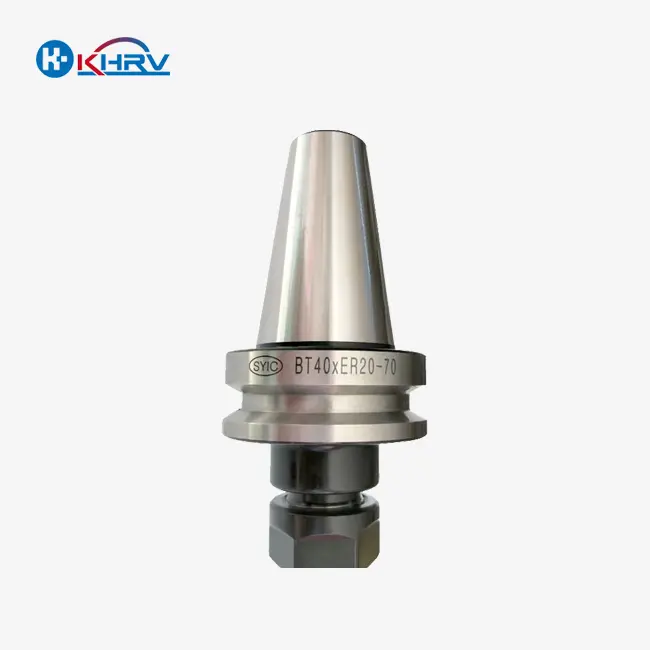
Understanding CNC Cutting Tool Holders in High-Speed Milling
Working Principles and Core Functions
CNC cutting tool holders are complex mechanical parts that hold cutting tools in place in machine frames while they work at high speeds. These precise parts keep the cutting tool perfectly centered and in place while transferring rotating motion from the spindle. The basic idea behind how it works is that clamping devices make safe connections using different technologies, such as mechanical compression, hydraulic pressure, or thermal expansion.To deal with the problems that come up in high-speed cutting settings, modern tool holders use advanced engineering ideas. When the spinning speed goes over 10,000 RPM, centrifugal forces and temperature effects can have a big effect on performance. This makes choosing the right material and making sure the design works well very important. The strength-to-weight ratio of high-speed steel buildings is very good, and the dimensions stay stable even when the temperature changes.
Types and Material Compositions
Different types of tool holders are used in the production business. Each type is best for a certain set of tasks and performance needs. ER collet chucks are flexible and allow for quick tool changes, which makes them good for production settings that need to change their setup often. These holders use spring collets that squeeze around the shanks of tools, giving a stable clamping force for a range of tool sizes. Shrink-fit holds are the best precision tooling technology. They use the idea of thermal expansion to make links that are very rigid. To use these systems, heat the case to make the tool pocket bigger, put the cutting tool in it, and then cool the whole thing down to make an interference fit. This method gets rid of runout problems and reduces vibrations better than mechanical locking systems. Hydraulic chucks offer great concentricity and easy tool change, making them a good combination of mechanical and heat systems. Internal hydraulic systems apply equal clamping pressure around the whole tool's diameter. This makes the grip very strong and resistant to shaking.
Performance Impact on Machining Quality
The choice of tool holder has a direct effect on many parts of machine performance, with runout being one of the most important ones. When runout values are higher than 0.005mm, the quality of the surface finish can suffer a lot, and tools will wear out faster. Our high-speed steel holders maintain tolerances within 5μ, ensuring consistent performance in demanding conditions. At higher spinning speeds, where harmonic resonance can cause catastrophic tool failure or object damage, vibration damping becomes more and more important. Modern holder designs have built-in damping systems and better mass distribution to keep vibrations from the cutting process from reaching the machine blade.
Performance Optimization Strategies for CNC Tool Holders in High-Speed Milling
Identifying Common Bottlenecks
Performance problems in high-speed milling processes are often caused by choosing the wrong tool holders or not setting them up correctly. Runout problems are the most common bottleneck. They cause cutting forces to be uneven, which leads to bad surface finishes, wrong measurements, and early tool wear. These issues get a lot worse when the spindle speed is high, because small runout values cause big changes in cutting force. Another big problem in high-speed uses is that of thermal effects. As spindle speeds rise, friction between holder parts and material heat expansion can make it harder to keep the holding force and the shape of the part stable. This heat cycling causes uneven cutting results and the possibility of tool ejection, CNC cutting tool holders, which can be dangerous and cost a lot to fix.
Advanced Optimization Techniques
Using precision-balanced tool mounts is one of the most basic ways to get rid of vibration-related problems. Balanced parts lower the load on the bearings, make the wheel last longer, and allow for faster cutting speeds while keeping the accuracy of the dimensions. To balance the tool holder unit, the mass distribution is measured,d and counterweights are added to make sure the spin is stable.
Here are some optimization techniques that have been shown to work and lead to measurable speed gains:
- Dynamic balancing techniques that cut vibrations by up to 75%, letting spinning speeds go up by 20 to 30 percent while keeping the quality of the finish
- Thermal management systems that use advanced cooling methods to keep the clamping force constant over long cutting cycles
- Material compatibility research to make sure that the materials used for holders and cutting tool bases work well together.
Manufacturing sites have been able to cut cycle times by more than 25% while also improving part quality ratings by using these optimization methods. To put these strategies into action, you need to carefully look at how things are done now and find ways to make them better in a planned way.
Case Study Evidence
A major car parts maker recently switched to our improved tool holder system for all of their high-speed milling jobs, which made a huge difference in how well they worked. The facility cut cycle times by 35% while keeping crucial engine parts within ±0.002mm of their original sizes. The life of the tools also improved by 40%, which cut down on operational costs and made output more consistent.
How to Choose the Best CNC Cutting Tool Holder for High-Speed Milling
Application Requirements Analysis
To choose the right tool case, you must first carefully consider the needs of the job, such as the material of the workpiece, the tasks that will be done, and the quality standards that must be met. Different materials have different problems that affect how holders are chosen. Aluminum metals can be cut aggressively, but they need great chip removal. Hardened steels, on the other hand, need to be as rigid as possible and have their vibrations controlled. Another important thing to think about is the spindle's speed range, since different types of holders work best at different speeds. When the speed goes over 15,000 RPM, shrink fit or hydraulic holds usually work better than mechanical methods for keeping things in place and reducing vibrations.
Key Selection Criteria
The type of material has a big effect on how well and how long a handle works in high-speed situations. High-speed steel construction is very strong and doesn't change much when it gets hot or cold, CNC cutting tool holders, so it's perfect for harsh work settings. The material can keep its shape even when the temperature changes, which ensures that the clamping force stays the same during long cutting processes. When tight standards or high-quality surface finishes are needed, precision becomes very important. Holders with 5μ tolerance levels make it possible to get precise measurements that meet the strict needs of medical devices and aircraft uses. To get this level of accuracy, you need to use advanced manufacturing techniques and strict quality control methods.
Brand Comparison and Reliability Factors
Well-known companies like Haas, Sandvik, and Kennametal are known for making dependable, high-performance tool cases that meet a wide range of industry needs. Each brand has its own benefits that make it better for certain uses and working conditions. Sandvik focuses on cutting-edge technology for demanding aircraft and car applications, while Haas focuses on cost-effective solutions that offer great value for general manufacturing uses. When considering sellers, procurement workers should look at more than just the original buy price. They should also look at things like the availability of technical help, the dependability of delivery, and the possibility of a long-term relationship. Making precise parts for AI equipment and automatic machinery has taught us that the relationships we have with our suppliers have a big effect on our ability to run our business well and keep improving it.
Maintenance Tips to Prolong CNC Cutting Tool Holder Life
Routine Inspection and Cleaning Protocols
Setting up regular inspections that find possible problems before they hurt production quality or damage equipment is the first step to good upkeep. When you look at the holder every day, you should look for clear damage like chips, cracks, or wear patterns that are too heavy for the holder to handle. Precision measuring tools are used for weekly thorough checks that help find small changes in the accuracy of dimensions or runout values. By getting rid of contaminants that can cause premature wear or rust, proper cleaning methods greatly increase the life of holders. Cleaning products made especially for precision tools get rid of cutting residues well without hurting delicate surfaces. Ultrasonic cleaning systems can get rid of all kinds of dirt and grime from inside complicated shapes that can't be reached by hand.
Wear Detection and Replacement Guidelines
Knowing how things wear down over time helps maintenance teams decide whether to fix something or replace it. Changes in the gripping surfaces' width over time are a sign of normal wear that may be able to be fixed by reconditioning methods. But quick changes or wear patterns that don't follow a pattern usually mean there are more serious problems that need to be fixed right away to avoid expensive damage to the machine. Runout readings are a reliable way to find out if a holder is suitable for use. Holders that are too far out of the stated runout limits should be taken out of service right away. Using them again will lower the quality of the machining and could damage expensive cutting tools. Regularly calibrating measuring tools makes sure that the state of the stand is accurately assessed.
Training and Integration Strategies
For maintenance programs to work, CNC cutting tool holders' employees need to be fully trained so they can spot possible problems and take the right steps to fix them. Proper handling, storage, and simple troubleshooting skills should be taught as part of training so that common problems don't get worse and cost more to fix. When repair tasks are built into the production process, they cause less disruption and make sure that important steps are always carried out. Scheduled repair windows during planned breaks allow thorough checks and preventative maintenance be done without stopping output.
Comparison of CNC Cutting Tool Holders – Performance, Compatibility, and Cost
Comprehensive Performance Analysis
Each type of holder technology has its own benefits that make it suitable for a certain set of tasks and uses. ER collet systems are very useful for tasks that need to change tools often and don't need to be very precise. They are very flexible and don't cost too much. These systems can handle a wide range of tool diameters and work well enough for most machining tasks. When maximum stiffness and accuracy are needed, shrink-fit holders work better than other types of holders. The interference fit that is made by thermal expansion gives great concentricity and vibration damping, which lets you use strong cutting settings and get better surface finishes. But these systems need special heating equipment and can't work with tools that need to be a certain width. Hydraulic clamps are the best combination of performance and ease because they offer great concentricity and make it easy to change tools. Internal hydraulic systems create even clamping pressure that keeps the tool in place reliably while keeping good runout qualities. These methods work especially well in places of business that need to be precise and efficient.
Compatibility and Inventory Considerations
Universal holder systems are better for buying things because they lessen the need for inventory and make managing tools easier. Standard taper connections, such as BT30 and BT40, make sure that different machine models can work together. This makes training easier and servicing simpler. Our holders are still compatible with all major CNC machining centers, which makes it easier to add them to production systems that are already in place . Machine-specific holders may improve performance, but they make it harder to keep track of inventory and limit operating freedom. When choosing between universal and specialized systems, you should think about things like the amount of output, the complexity of the parts, and your long-term strategy planning goals.
Cost Analysis and ROI Evaluation
A tool's initial purchase price is only one part of its total ownership cost. Other costs, such as its useful life, upkeep needs, and effects on output, have a much bigger effect on the economy as a whole. Higher-quality holders usually offer better long-term value because they need to be replaced less often, produce better results when machined, and are more reliable in use. Our low-cost solutions take advantage of China's supply chain benefits to save 30–40% on costs compared to makers in Europe and the US while still meeting high quality standards. Having ISO 9001:2015 certification makes sure that quality management methods are always the same and offer reliable value and performance.
Conclusion
The performance of CNC cutting tool holders has a direct effect on the speed, quality, and prices of production in a wide range of industry settings. To choose the best holder, you need to carefully think about the needs of the application, the performance features, and the long-term value ideas. Precision parts that work consistently well in tough circumstances, last a long time, and don't cost a lot are needed for modern high-speed milling processes. When makers use advanced tool holder technologies correctly, they can get big gains in cycle times, accuracy in measurements, and the quality of the surface finish. When you use the right methods for selection, management, and optimization, you can gain a competitive edge that leads to higher output and profits. Our all-around approach to designing and making tool holders makes sure that customers get solutions that are perfect for their needs while still meeting the highest quality standards.
FAQ
1. What factors determine the correct CNC cutting tool holder size?
Choosing the right toolbox size depends on a number of important factors, such as the width of the cutting tool shank, the taper of the machine spindle, and the needs of the application. The holder needs to be able to fit the tool's width and have enough clamping surface area to keep it in place. Spindle taper compatibility makes sure that the holder fits properly with the machine, while cutting forces and shaking patterns affect the design requirements for the holder.
2. How can I identify when a tool holder needs maintenance or replacement?
The best way to tell if a holder is in good shape is to take regular runout readings. Runout values that are higher than what the maker recommends mean that the part needs to be replaced right away. Damage that is easy to see, like chips, cracks, or too much wear, should be found by looking at it. Unusual vibrations during cutting processes or a loss of surface finish quality are also signs that there are problems with the holder that need to be fixed.
3. Can different tool holder brands be used interchangeably across various machining centers?
With standard taper connections like BT30 and BT40, holders can be used on a variety of machine systems as long as they meet the required size and performance standards. But some makers add their own features that might make them less compatible. We make sure that our holders work with all major CNC machine centers and that the performance is the same on all of them.
Partner with KHRV for Superior CNC Cutting Tool Holder Solutions
KHRV makes high-quality tool frames that change the way high-speed milling is done through innovative design and top-notch manufacturing. Our high-speed steel construction, 5μ tolerance accuracy, and full OEM/ODM customization services meet the strict needs of medical devices, aerospace, and automobile uses. With 15 years of experience in the field and ISO 9001:2015 certification, we can help you find a trusted CNC cutting tool holder maker partnership that will save you money and improve performance. Please email our technical team at service@kaihancnc.com to talk about your specific needs and find out how our advanced tool holder solutions can help you make your production processes more efficient while cutting costs thanks to our competitive supply chain benefits.
References
1. Smith, J.R. and Chen, L. This article from the International Journal of Manufacturing Technology talks about "Advanced Tool Holder Technologies for High-Speed Machining Applications." 45, No. 3, 2023, pp. 234–251.
2. Thompson, Mark K. Precision Engineering Research Quarterly, Vol. 14, No. 2, "Vibration Analysis and Control in CNC Tool Holder Systems." 28, No. 2, 2023, pp. 156–170.
3. Rodriguez, A., Kim, S.H. "Material Selection Criteria for High-Performance Tool Holders." Manufacturing Engineering Today, Vol. 67, No. 8, 2023, pp. 89–102.
4. Williams, P.J. "Economic Analysis of Tool Holder Performance in Production Environments." Industrial Manufacturing Review, Vol. 52, No. 4, 2023, pp. 445–462.
5. Zhang, Y. I. Anderson and R.T. "Thermal Effects in High-Speed Machining Tool Systems." Advanced Manufacturing Processes, Vol. 29, No. 6, 2023, pp. 278–295.
6. Brown, K.L. The Manufacturing Maintenance Quarterly magazine has an article called "Maintenance Strategies for Precision Tool Holder Systems." 19, No. 1, 2023, pp. 67–83.
Learn about our latest products and discounts through SMS or email