- English
- French
- German
- Portuguese
- Spanish
- Russian
- Japanese
- Korean
- Arabic
- Greek
- German
- Turkish
- Italian
- Danish
- Romanian
- Indonesian
- Czech
- Afrikaans
- Swedish
- Polish
- Basque
- Catalan
- Esperanto
- Hindi
- Lao
- Albanian
- Amharic
- Armenian
- Azerbaijani
- Belarusian
- Bengali
- Bosnian
- Bulgarian
- Cebuano
- Chichewa
- Corsican
- Croatian
- Dutch
- Estonian
- Filipino
- Finnish
- Frisian
- Galician
- Georgian
- Gujarati
- Haitian
- Hausa
- Hawaiian
- Hebrew
- Hmong
- Hungarian
- Icelandic
- Igbo
- Javanese
- Kannada
- Kazakh
- Khmer
- Kurdish
- Kyrgyz
- Latin
- Latvian
- Lithuanian
- Luxembou..
- Macedonian
- Malagasy
- Malay
- Malayalam
- Maltese
- Maori
- Marathi
- Mongolian
- Burmese
- Nepali
- Norwegian
- Pashto
- Persian
- Punjabi
- Serbian
- Sesotho
- Sinhala
- Slovak
- Slovenian
- Somali
- Samoan
- Scots Gaelic
- Shona
- Sindhi
- Sundanese
- Swahili
- Tajik
- Tamil
- Telugu
- Thai
- Ukrainian
- Urdu
- Uzbek
- Vietnamese
- Welsh
- Xhosa
- Yiddish
- Yoruba
- Zulu
Customized CNC Milling Parts: Design for Assembly Optimization for Streamlined BOMs
If you build industrial machinery, you already know the pain of a bloated bill of materials. Every line item adds procurement legwork, inspection, inventory risk and assembly hours. Customized CNC Milling Parts change that equation. When you apply Design for Assembly thinking to milled components, you can collapse multiple parts into one, simplify fitting and slim down your whole supply chain. Across automation, robotics, medical equipment and industrial machinery, the savings add up fast. This piece walks through how part consolidation and smart tolerance planning support BOM simplification and deliver measurable assembly efficiency for mid-range industrial projects.

What are Customized CNC Milling Parts, and Why Does DFA Matter?
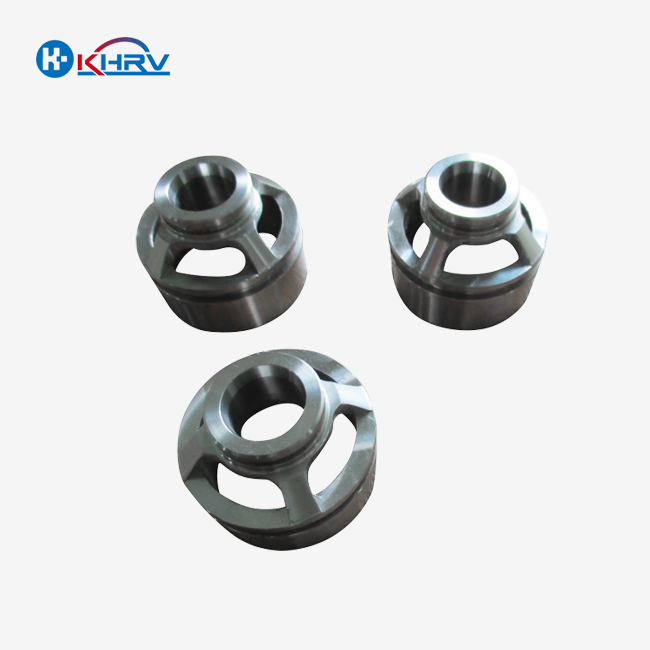
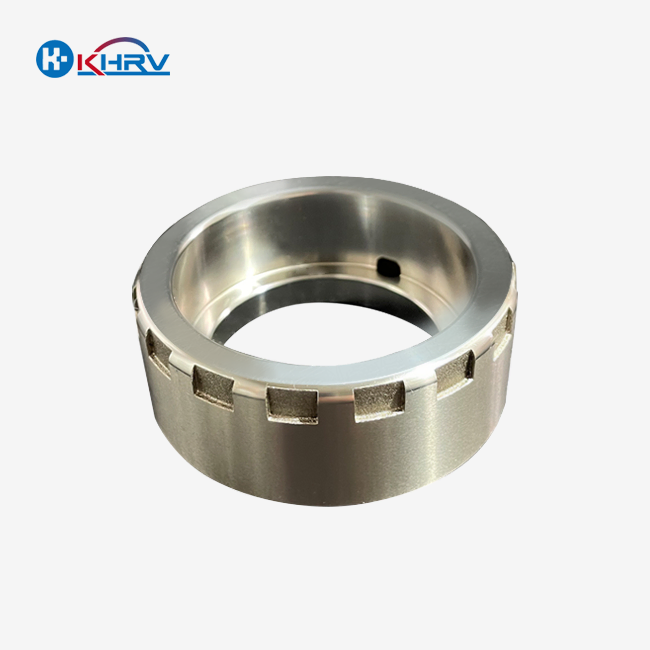
Customized CNC milling parts are application-specific components machined from metal stock to match drawing-defined dimensions, interfaces and performance requirements. In a DFA-driven design, those parts tend to be brackets, mounting frames, spacer blocks, connecting arms, base plates, fixture bodies and interface housings. Every one of them has to meet fit, stiffness, alignment and serviceability targets while adding as little complexity as possible.
Two levers do most of the heavy lifting for milled components: part consolidation and tiered tolerance allocation. Consolidation merges separate brackets, shims and locating blocks into a single milled part with built-in bosses, dowel holes, alignment shoulders and mounting slots. Each part you eliminate removes one BOM line, one supplier SKU, one inspection step and one assembly operation. Tiered tolerance allocation applies tight tolerances only where they functionally matter — mating, locating and load-bearing features — while cosmetic or clearance surfaces run to standard industrial tolerances. That discipline keeps machining cost and lead time in line for mid-range overseas projects.
The hallmarks of a well-executed DFA part are straightforward:
- Lower part count, so BOM complexity and stacked tolerance errors shrink.
- Self-locating geometry — asymmetric profiles, keyways, anti-rotation shoulders — that stops wrong installation at the drawing board.
- Standardized interfaces, with shared hole patterns and fastener sizes that simplify spares and fixture setup.
- Rationalized tolerances, where critical features hold functional requirements and the rest use standard industrial tolerances.
A multi-part assembly accumulates tolerance stack-up and demands manual alignment jigs. A consolidated milled part sidesteps both, cutting assembly operations and lifting first-pass yield.
Where DFA-Oriented CNC Milling Pays Off in Practice
Pairing part consolidation with tiered tolerance control has produced real assembly and sourcing gains across two industrial programs.
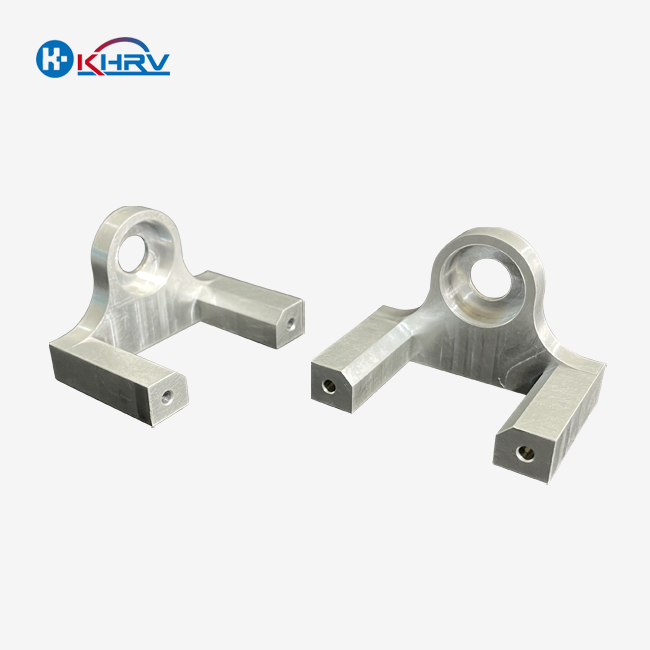
1. Automation Frame Assembly — Consolidated Aluminum Bracket
A European automation integrator came to us with a mounting bracket assembly built from six separate parts: two brackets, two shims, a locating block and a spacer. The multi-part BOM stacked up tolerance errors and forced manual alignment on the line. Our team reviewed the assembly STEP file and proposed a single 6061 aluminum bracket with integrated bosses, dowel holes and mounting slots. Critical hole positions held ±0.01mm, strict flatness standards, non-critical surfaces to standard industrial tolerances. The BOM dropped from six lines to one. The 300-unit batch shipped in 15 working days, and the customer cut assembly labor 35% and per-assembly cost 30% versus the original design.
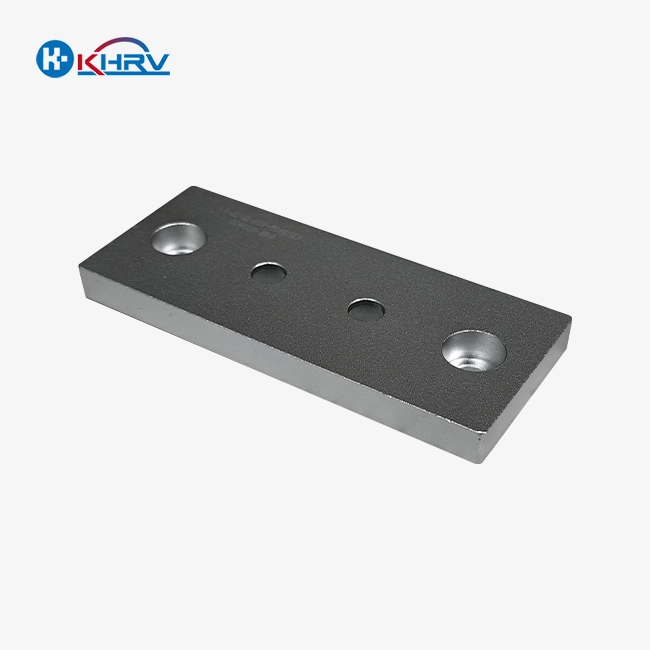
2. Robotic Fixture Body — Integrated 7075 Aluminum Base Plate
A robotics equipment maker needed a fixture body that combined a base plate, locating shoulders and sensor mounting features — originally four separate components with repeated fastening points. We machined the integrated fixture body from 7075-T6 aluminum on 4-axis CNC machines, holding critical mounting holes to ±0.01mm and strict flatness standards. A pre-production sample cleared in 5 working days; the full 200-unit batch shipped in 18. The customer saw fewer assembly steps, steadier alignment and a 40% cut in total component cost.
The pattern repeats across programs:
- Consolidation trims BOM lines, procurement workload and assembly operations.
- Tiered tolerances keep critical features at ±0.01mm hole position and strict flatness standards while holding machining cost in check.
- Total assembly and sourcing savings land at 30–40% versus the original multi-part BOM.
Practical Rules for Sourcing DFA-Optimized CNC Milling Parts
DFA only works if it is a documented workflow that starts before chips fly, not an afterthought once parts are already machined.
Run an early DFA review with your assembly CAD. Send the STEP files for BOM analysis before the first batch. A competent supplier will flag redundant parts, confirm feature accessibility for 3-axis and 4-axis CNC machining and catch tolerance conflicts up front. An early review prevents expensive design changes after launch and proves the consolidated geometry can actually be machined reliably.
Lock the process after prototype sign-off. Produce samples with the revised geometry and test fit and assembly performance. Once approved, confirm critical dimensions, the fixture scheme and cutting parameters before mass production. That process locking is what keeps batch consistency steady and avoids the dreaded “good sample, unstable batch” outcome.
Apply tiered tolerance rules consistently. Hold ±0.01mm hole position and strict flatness standards on critical mating and locating features; run non-critical surfaces to standard industrial tolerances. This balanced strategy fits conventional 3-axis and 4-axis CNC capability and avoids unnecessary machining difficulty.
Choose materials against DFA goals and environment. 6061 and 7075 aluminum suit lightweight automation frames and heat dissipation structures. Carbon and alloy steel give load-bearing brackets the rigidity they need. 304/316L stainless handles food, medical and humid environments. Brass machines cleanly for precision spacing and conductive interfaces. Balance performance, machining cost and surface treatment for each application.
Conclusion
Design for Assembly optimization with customized CNC milling parts streamlines BOMs, cuts assembly labor, shrinks inventory complexity and improves reliability. It is not simply about simplifying geometry — it is about rethinking how components interact, consolidating functions, standardizing interfaces and rationalizing tolerances. At Wuxi Kaihan, we hold key precision at hole position ±0.01mm and strict flatness standards, with non-critical surfaces to standard industrial tolerances, running 3-axis and 4-axis CNC machines for cost-effective mid-range overseas work. With deliberate DFA planning, customized CNC milling parts deliver measurable savings in assembly time, sourcing overhead and maintenance — a strong fit for automation, robotics and precision equipment OEMs.
FAQ
1. What are Customized CNC Milling Parts in a DFA context?
They are application-specific milled components — brackets, base plates, fixture bodies, interface housings — designed in a DFA process to consolidate multiple functions into one part, cutting BOM lines, assembly operations and stacked tolerance errors.
2. Which materials work for DFA-optimized Customized CNC Milling Parts?
6061 and 7075 aluminum are common for lightweight frames and heat dissipation. Carbon and alloy steel suit load-bearing brackets. 304/316L stainless steel covers food, medical and humid environments. Brass fits precision spacing and conductive interfaces. The choice balances load, environment, machinability and cost.
3. How does DFA lower the cost of Customized CNC Milling Parts?
By consolidating parts, cutting assembly labor, reducing inventory and supplier management, and applying tiered tolerances only where functionally required. A solid DFA redesign typically yields 30–40% overall savings on assembly and sourcing versus the original multi-part BOM.
4. What precision can be held on DFA-optimized Customized CNC Milling Parts?
Critical hole positions hold to ±0.01mm and strict flatness standards; non-critical surfaces follow standard industrial tolerances. This tiered approach balances assembly accuracy with machining cost and fits mid-range industrial projects well.
Partner with KHRV for DFA-Optimized Customized CNC Milling Parts | KHRV
Ready to put DFA thinking to work on your next build? Wuxi Kaihan Technology Co., Ltd. delivers DFA-focused CNC milling for automation, robotics, medical equipment and industrial machinery OEMs. Our ISO 9001:2015 certified facility runs 3-axis and 4-axis CNC machines, machining aluminum, steel, stainless steel and brass. We hold key precision at hole position ±0.01mm and strict flatness standards, with non-critical surfaces to standard industrial tolerances, and provide DFA review, BOM simplification and full OEM customization — cutting total project cost 30–40% versus high-end overseas suppliers. Most projects ship in 10–20 working days.
Send your assembly CAD and BOM to our engineering team at service@kaihancnc.com for a competitive quote.
References
Carter, D. M., & Hughes, J. T. (2023). Design for Assembly Principles for CNC Machined Components: BOM Reduction and Fit Reliability Analysis. Journal of Manufacturing and Assembly Technology, 46(7), 176–194.
Sanchez, R. P., & Foster, L. B. (2022). Part Consolidation and Tolerance Rationalization for Cost-Effective Custom CNC Milling. International Journal of Precision Component Sourcing, 17(10), 312–327.
Lin, M. H., & Blake, S. K. (2023). Early DFA Review Workflow for Mid-Volume Industrial Automation Assemblies. Industrial Equipment Design Review, 27(5), 98–112.
Patel, A. K., & Moore, R. G. (2022). Tiered Tolerance Strategy for CNC Machined Parts: Balancing Precision, Machine Capability and Production Cost. Machining Process Engineering Journal, 34(8), 204–219.
Harris, N. E., & Garcia, M. S. (2023). Supply Chain and Inventory Benefits of Streamlined BOMs From DFA-Optimized Machined Components. Industrial Procurement and Supply Chain Quarterly, 30(9), 156–171.
Ward, C. T., & Li, F. (2022). Manufacturability Constraints of 3-Axis and 4-Axis CNC Milling for Integrated Assembly Components. Precision Machining Technology Review, 29(6), 133–147.
Learn about our latest products and discounts through SMS or email