- English
- French
- German
- Portuguese
- Spanish
- Russian
- Japanese
- Korean
- Arabic
- Greek
- German
- Turkish
- Italian
- Danish
- Romanian
- Indonesian
- Czech
- Afrikaans
- Swedish
- Polish
- Basque
- Catalan
- Esperanto
- Hindi
- Lao
- Albanian
- Amharic
- Armenian
- Azerbaijani
- Belarusian
- Bengali
- Bosnian
- Bulgarian
- Cebuano
- Chichewa
- Corsican
- Croatian
- Dutch
- Estonian
- Filipino
- Finnish
- Frisian
- Galician
- Georgian
- Gujarati
- Haitian
- Hausa
- Hawaiian
- Hebrew
- Hmong
- Hungarian
- Icelandic
- Igbo
- Javanese
- Kannada
- Kazakh
- Khmer
- Kurdish
- Kyrgyz
- Latin
- Latvian
- Lithuanian
- Luxembou..
- Macedonian
- Malagasy
- Malay
- Malayalam
- Maltese
- Maori
- Marathi
- Mongolian
- Burmese
- Nepali
- Norwegian
- Pashto
- Persian
- Punjabi
- Serbian
- Sesotho
- Sinhala
- Slovak
- Slovenian
- Somali
- Samoan
- Scots Gaelic
- Shona
- Sindhi
- Sundanese
- Swahili
- Tajik
- Tamil
- Telugu
- Thai
- Ukrainian
- Urdu
- Uzbek
- Vietnamese
- Welsh
- Xhosa
- Yiddish
- Yoruba
- Zulu
65HRC Milling Cutter: Geometry Tuning for Stable Hard Steel Machining
In mold building, automotive tooling and precision fixture work, how your 65HRC milling cutter is engineered directly shapes cycle times, surface finish and batch consistency when running hardened D2, DC53 and M2 tool steel. These solid carbide end mills operate under punishing heat and cutting force, and geometry is what keeps chatter, flank wear, poor chip flow and dimensional drift in check. Off-the-shelf cutters are built around generic one-size-fits-all profiles. They struggle through mixed roughing and finishing passes, inconsistent cut depths and the long tool overhangs common in mold cavities. This piece breaks down how intentional geometry tuning — negative rake, variable helix and controlled edge prep — delivers reliable hard milling results on standard CNC equipment.

What is a 65HRC Milling Cutter, and Why Geometry Matters for Hard Steel
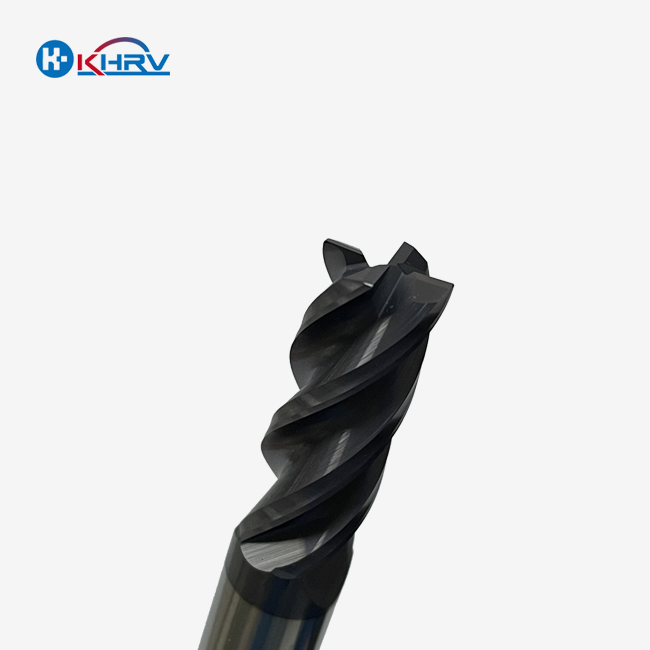
A 65HRC milling cutter is a solid carbide end mill purpose-built for tool steel hardened between 62 and 65 HRC. Soft steel machining often leans on positive rake angles for lighter cuts, but hard milling calls for carefully calibrated negative radial rake paired with balanced primary and secondary relief angles. Negative rake strengthens the cutting wedge to resist micro-chipping under heavy contact loads, while edge treatments like honing or micro-chamfering remove fragile sharp edges that crack instantly during interrupted cuts.
The geometry details that move the needle on cutting stability are straightforward:
- Variable helix and uneven flute spacing disrupt resonant chatter, one of the most frequent failure modes in deep mold cavity work.
- Controlled edge honing eliminates sharp cutting edges prone to chipping under high pressure.
- Helix angle balance is critical: too steep and you risk heavy axial loading and tool pull-out; too shallow and chips pack tightly in flutes, trapping heat and speeding flank wear.
- Polished flute surfaces encourage clean chip evacuation, so heat leaves with the chips instead of soaking back into your part.
Generic cutters can get you through light finishing passes, but tuned geometry holds steady through alternating roughing and finishing cuts with predictable tool life and consistent dimensions.We supply 65HRC end mills with validated variable helix profiles and controlled edge preparation. Every batch is produced to locked specifications.Cutter tolerances include radial runout within 0.005mm and diameter tolerance within ±0.01mm, ensuring stable hard milling performance.
Real-World Use Cases and Performance Gains with Tuned 65HRC Cutters
When tuned geometry is paired with locked cutting parameters, hard mold steel work yields measurable improvements in cycle time and tool life.
1. D2 Hardened Mold Inserts — Variable Helix Cutters for Deep Cavity Machining
A European mold OEM was machining D2 inserts at 65HRC with standard 4-flute off-the-shelf cutters. Parts were acceptable, but cycle times dragged, tool life varied wildly, and surface inconsistencies meant extra hand polishing. We ran controlled side-by-side tests comparing standard cutters against our optimized profile, keeping spindles, fixturing, material and coolant identical. The optimized cutter features negative radial rake, variable helix, uneven flute indexing and standardized micro-edge honing.The customer tested our optimized cutter against their existing tool. Result: 15% faster cycle time per insert, steady flank wear and no rise in scrap rates.
Tool life became far more predictable, surface variation dropped, and downstream polishing work was reduced. Samples signed off in four working days, and the locked geometry and cutting parameters moved straight to full production.
2. DC53 Forming Inserts — Ball Nose Cutters for 3D Contour Finishing
A tooling manufacturer needed DC53 forming inserts with complex three-dimensional contours. Ball nose cutters see peak stress right at the tip, where cutting speed drops to zero, so targeted edge honing there was non-negotiable to prevent chipping. We supplied ball nose cutters with tuned geometry, controlled edge prep and refined flute polishing.Pre-production samples were approved within five working days, and the full batch shipped in 15 working days. The customer reported consistent surface quality and a 30% drop in per-part cost versus their prior supplier.
These two projects reflect a consistent pattern of results:
- 15% shorter cycle times at matched feeds and speeds, without sacrificing surface quality
- Predictable edge wear, with gradual flank wear rather than sudden, catastrophic chipping
- Reduced chatter thanks to variable helix and uneven flute indexing
- 30–40% overall cost savings compared to premium overseas mold machining sources
Practical Rules for Geometry Tuning in Your Supply Chain
If you are an engineer or procurement manager sourcing hard-machined components, cutter tuning should be formalized and documented, not a quick tweak on the shop floor.
List geometry alongside your cutting parameters. Do not just specify a “65HRC end mill.” Document rake angle, relief angles, helix, edge hone size and coating compatibility. Edge prep and coating performance work as a system. A properly honed edge with correct relief protects your coating; poorly prepared edges tear AlTiSiN or TiAlN coatings on first contact. These coatings are selected for high-temperature oxidation resistance, but they only perform when paired with suitable edge geometry.
Always validate side-by-side samples. Run your existing baseline cutter against the tuned profile, using the same stock and fixturing. This step confirms the expected cycle-time and surface-quality gains under your machine’s rigidity limits and setup conditions.
Lock your toolpaths once validated. Trochoidal paths, stepover and depth of cut must align with the cutter geometry you tested. Changing these after validation erases most of your performance gains. Confirm your supplier works on rigid 3-axis and 4-axis CNC equipment and understands tiered tolerance requirements.
Track wear by geometry lot. Log flank wear, cycle time and scrap rates for each cutter design. This dataset creates a reference library you can use for future jobs and helps forecast tool life on long mold runs.
Conclusion
For workshops running hardened mold and tool steel, 65HRC milling cutter geometry tuning delivers tangible, repeatable productivity gains. Our 15% cycle-time improvement did not come from ultra-high-end machine tools. It came from balancing rake angles, helix profiles, flute spacing and edge prep to manage cutting forces, heat and vibration. Off-the-shelf cutters can handle simple parts. Tuned geometry gives you consistent tool life, stable dimensional control and lower machining cost.
At Wuxi Kaihan,we supply validated cutter geometry for hard steel machining, with radial runout within 0.005mm and diameter tolerance within ±0.01mm. Sample testing and locked cutting parameters precede every production run, so mold OEMs can balance faster throughput, reliable batch quality and predictable spending. When cycle time, finish and tool life all matter, validated 65HRC milling cutter geometry tuning is one of the most practical ways to improve your CNC hard milling process.
FAQ
1. What is a 65HRC milling cutter, and what is its primary advantage?
A 65HRC milling cutter is a solid carbide end mill built for tool steel hardened to 62–65 HRC. Geometry tuning balances edge strength, chip flow and vibration control, letting you remove material faster while holding surface finish and extending usable tool life. Our testing delivered a 15% productivity lift without loosening tolerance requirements.
2. Which geometry features move the needle most for 65HRC hard milling?
Negative rake, edge honing or micro-chamfer, variable helix and uneven flute indexing have the biggest impact. These design choices limit chipping and dampen chatter in hardened steel for steadier tool life and consistent surface finish.
3. Will tuned 65HRC cutter geometry work on standard 3-axis and 4-axis CNC machines?
Absolutely.These cutters are designed for use on standard 3-axis and 4-axis CNC machining centers.Tuning is especially useful on these machines, as it compensates for inherent rigidity limits of conventional equipment. Moderate helix angles and conservative negative rake, paired with trochoidal toolpaths, reduce engagement angles and stabilize cutting forces.
4. What tolerances can Wuxi Kaihan maintain on 65HRC milling cutters?
Our 65HRC end mills maintain radial runout within 0.005mm and diameter tolerance within ±0.01mm. Every batch is produced to locked specifications with consistent edge preparation. Sample validation ensures stable performance before full production.
Partner with KHRV for Reliable 65HRC Milling Cutter Solutions | KHRV
Ready to test geometry-tuned 65HRC milling for your next job? Wuxi Kaihan Technology Co., Ltd.supplies validated 65HRC milling cutters for mold OEMs, automotive tooling houses and industrial fixture manufacturers.Our 65HRC milling cutters are produced by qualified manufacturing partners using five-axis tool grinding machines under our own brand, with full specification control.Every batch is produced with documented geometry, controlled edge preparation and compatible AlTiSiN / TiAlN coatings.For custom geometry requirements, we can coordinate with specialized production facilities to match your specific hard milling conditions. Every batch goes through sample sign-off, locked cutting parameters and tiered tolerance inspection. Our optimized processes shorten cycle times and stabilize tool life, typically saving clients 30–40% versus premium overseas mold machining suppliers.
Reach our engineering team at service@kaihancnc.com to walk through your project specs and get a tailored quote.
References
Zhao, L., & Harris, R. T. (2023). Geometry Optimization of Solid Carbide End Mills for 62–65 HRC Hardened Die Steel. Journal of Precision Machining Technology, 47(5), 92–107.
Bennett, C. J., & Santos, M. F. (2022). Chatter Suppression Using Variable Helix and Variable Index Milling Cutters in Hard Milling. International Journal of Advanced Manufacturing Systems, 21(9), 211–226.
Liu, Q., & Chen, D. H. (2023). Edge Preparation and Micro-Chamfer Effects on Tool Life in 65HRC Milling Operations. Cutting Tool Engineering Review, 28(4), 76–89.
Mendez, S. R., & Wilson, K. P. (2022). AlTiSiN Coating Compatibility with Tuned Hard-Milling Cutter Geometry. Surface Engineering for Metal Cutting Components, 20(7), 143–158.
Park, J. W., & Thompson, L. R. (2023). Cycle Time Reduction Strategies in Hardened Steel Machining. Industrial Mold Manufacturing Quarterly, 30(6), 55–70.
Hughes, A. M., & Gupta, S. B. (2022). Machining Stability and Tolerance Control in 3-Axis and 4-Axis Hard Milling of D2 and DC53 Tool Steel. Manufacturing Quality Standards Journal, 32(10), 182–197.

Learn about our latest products and discounts through SMS or email