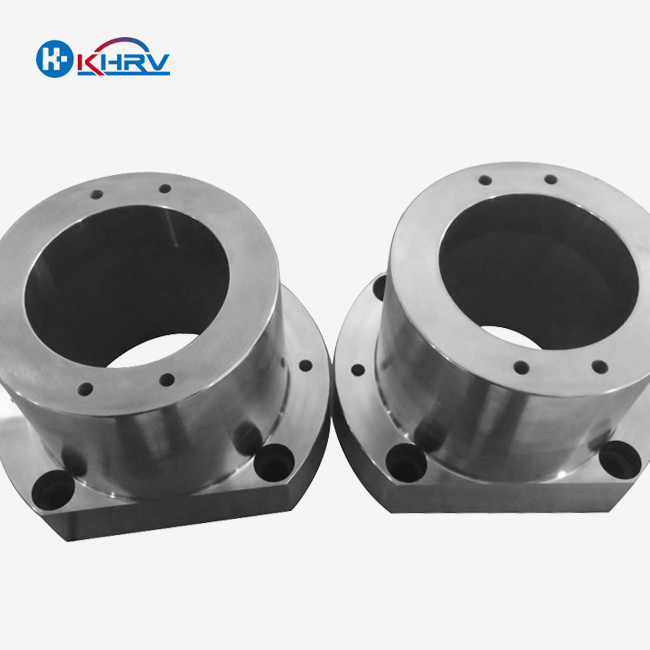
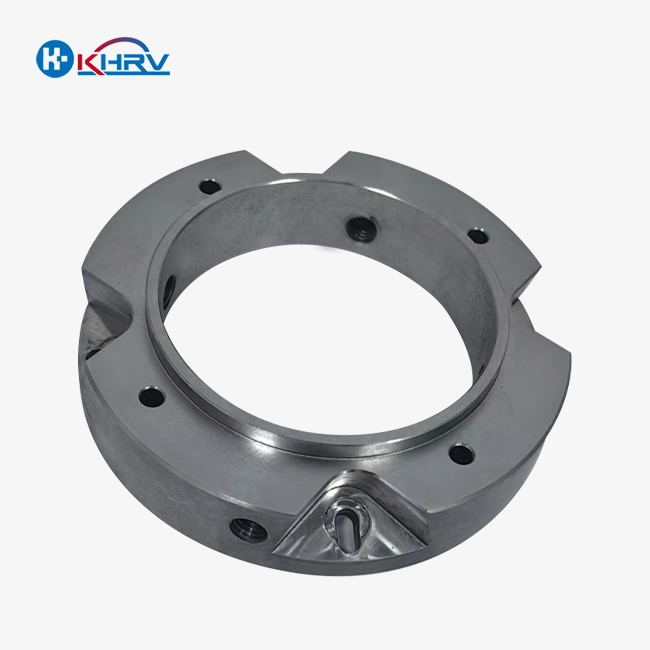
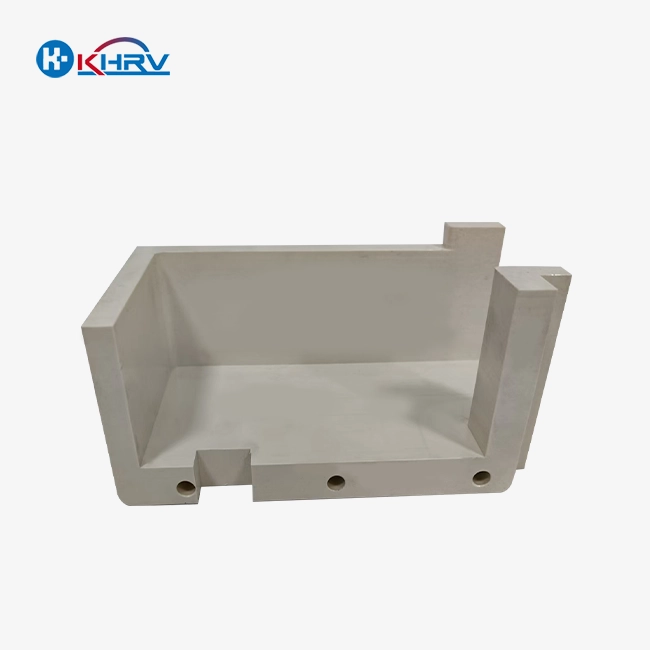
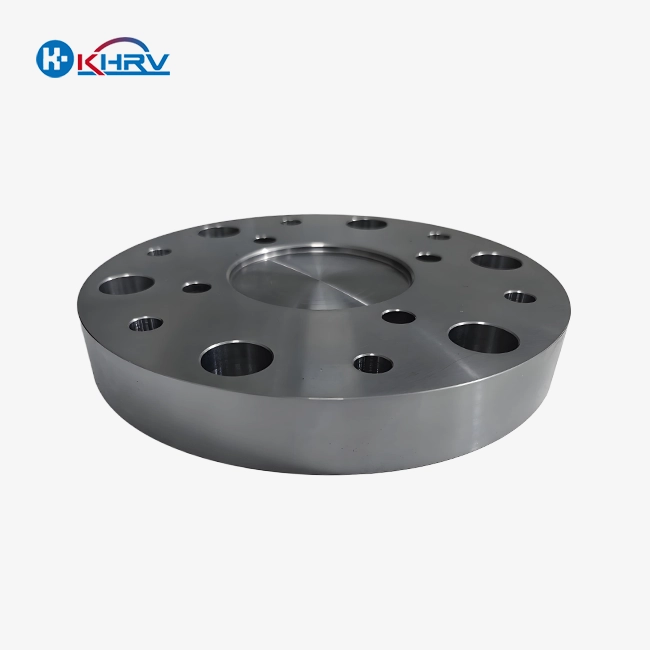
Precision Components
In applications where maintaining tight tolerances is crucial, such as in high-end CNC machine tools or medical devices, the hard anodizing surface treatment can be advantageous. While it does cause some dimensional growth, this can be precisely controlled and accounted for in the design phase.
On the other hand, standard anodizing remains an excellent choice for:
Aesthetic Applications
When the primary goal is to enhance appearance or allow for coloration, standard anodizing offers a wider range of dyeing options and a more uniform finish.
Cost-Sensitive Projects
For components that don't require extreme wear resistance or corrosion protection, standard anodizing provides a more economical solution without compromising on quality.
Large-Scale Production
The simpler process of standard anodizing makes it more suitable for high-volume production runs where processing time and cost are significant factors.
Hard anodized coatings: wear resistance, thickness and performance metrics
Hard anodized coatings stand out for their exceptional performance characteristics, particularly in terms of wear resistance, coating thickness, and overall durability. Let's go into the details of these performance metrics:
Wear Resistance
The hallmark of hard anodized coatings is their superior wear resistance. This property is quantified by:
-
Taber Abrasion Test Results: Hard anodized coatings typically show weight loss of less than 10 mg per 1000 cycles, compared to 20-30 mg for standard anodizing.
-
Hardness Ratings: Hard anodized surfaces can achieve hardness values of 60-70 on the Rockwell C scale, or 350-450 Vickers. This is comparable to some hardened steels.
Coating Thickness
The thickness of hard anodized coatings significantly contributes to their performance:
-
Typical Range: 25 to 100+ μm (microns)
-
Customizable: Thickness can be tailored to specific application needs
-
Comparison: Standard anodizing typically ranges from 5 to 25 μm
Performance Metrics
Beyond wear resistance and thickness, hard anodized coatings excel in several key areas:
-
Corrosion Resistance: Offers superior protection against chemical attack and saltwater exposure
-
Thermal Insulation: The thick oxide layer provides better insulation properties
-
Electrical Insulation: Higher dielectric strength compared to standard anodizing
-
Lubricity: Can be impregnated with PTFE for even lower friction coefficients
These enhanced properties make hard anodized coatings ideal for components in demanding environments, such as aerospace actuators, high-performance engine parts, or precision medical devices. In robotics and automation equipment, where constant performance is very important, being able to tolerate abrasive wear while keeping dimensional stability is quite useful.
How does hard anodized affect fatigue and dimensional tolerances?
Hard anodizing has many advantages, but you need to know how it affects fatigue strength and dimensional tolerances since these things may have a big effect on how well a part works and how it is designed.
Impact on Fatigue Strength
The effect of hard anodizing on fatigue strength is complex and depends on several factors:
-
Stress Concentration: The hard anodized layer can introduce surface irregularities that may act as stress concentration points, potentially reducing fatigue life.
-
Residual Stress: The anodizing process can induce compressive residual stresses in the surface layer, which may actually improve fatigue resistance in some cases.
-
Thickness Considerations: Thicker coatings generally have a more pronounced effect on fatigue properties. Optimizing coating thickness can help balance wear resistance and fatigue performance.
To mitigate potential negative impacts on fatigue strength, consider:
-
Shot Peening: Applying this treatment before anodizing can improve fatigue resistance.
-
Stress Relief: Heat treatment prior to anodizing can help reduce internal stresses.
-
Coating Thickness Optimization: Balancing wear resistance requirements with fatigue considerations.
Dimensional Tolerances
Hard anodizing affects dimensional tolerances due to the growth of the oxide layer:
-
Growth Direction: Approximately 50% inward into the base material and 50% outward.
-
Dimensional Change: Typically, the total dimensional increase is about 1/3 of the total coating thickness.
-
Tolerance Considerations: For precision components, this growth must be accounted for in the design phase.
Strategies for managing dimensional changes include:
-
Pre-Machining: Designing parts with slightly undersized dimensions to accommodate coating growth.
-
Selective Anodizing: Masking areas where tight tolerances are critical.
-
Post-Processing: In some cases, light machining or grinding after anodizing can achieve final dimensions.
These things should be known by engineers and designers who work on precise parts. For instance, in the production of robotic arm joints or high-precision medical devices, accounting for these dimensional changes ensures that the final anodized parts meet the required specifications without compromising on the wear resistance and protective benefits of the hard anodized coating.
Conclusion
Choosing between hard anodized and regular anodizing is a very important choice that may have a big effect on how well aluminum parts work and how long they last. Hard anodizing is great for tough jobs in robotics, aerospace, and high-precision manufacturing because it is harder, more resistant to wear and corrosion, and more durable. But you need to think carefully about things like changes in size and how they could affect fatigue strength.
Most of the time, standard anodizing is the best choice for simple tasks because it is cheap and can be used in many ways. The trick is to know what your individual application demands are and find a balance between performance needs and processing needs.
For businesses that need high-performance parts, such sophisticated manufacturing, medical device manufacture, and robotics, the advantages of hard anodizing usually exceed the extra work it takes to do it. Engineers and designers may make smart choices about how to improve the performance, durability, and cost-effectiveness of their parts by carefully thinking about the things spoken about in this article.
Will you use cutting edge surface techniques to make your precise parts work better? Wuxi Kaihan Technology Co., Ltd. Is a company that makes the most cutting-edge parts for AI and automating the most precise tools. We can provide you the best hard anodizing services since we have state-of-the-art equipment and are experts in precise CNC machining. No matter what industry you're in—robotics, airplanes, or medical devices—our staff can help you find the best mix between cost-effectiveness, wear resistance, and precise dimensions.
FAQ
1. What is the main difference between hard anodizing and standard anodizing?
Hard anodizing produces a thicker, denser oxide layer (25-100+ μm) compared to standard anodizing (5-25 μm), resulting in significantly higher wear resistance and hardness.
2. How does hard anodizing affect the dimensional tolerances of a part?
Hard anodizing causes dimensional growth, with approximately 50% inward and 50% outward expansion. The total dimensional increase is typically about 1/3 of the total coating thickness.
3. Can hard anodized parts be color-dyed like standard anodized parts?
While hard anodized parts can be dyed, the color options are more limited compared to standard anodizing, and the resulting colors are generally darker and less vibrant.
4. How does hard anodizing impact the fatigue strength of aluminum components?
Hard anodizing can potentially reduce fatigue strength due to surface irregularities and stress concentrations. But you may lessen this by using methods like shot peening or making the coating thickness just right.
Elevate Your Component Performance with Expert Surface Treatment | KHRV
Ready to take your precision components to the next level? At Wuxi Kaihan Technology Co., Ltd., we offer industry-leading hard anodized services that can significantly enhance the wear resistance, durability, and overall performance of your critical parts. Surface techniques can be used in high-tech, robot, and airplane fields thanks to the skills of our experts.
We make sure that your parts get the best surface treatment possible so that they can work well in even the toughest conditions. Don't allow bad surface treatments to stop your product from reaching its full potential. Contact us today at service@kaihancnc.com to discuss your specific needs and discover how our advanced hard anodizing solutions can drive innovation and reliability in your products. Let's work together to push the boundaries of what's possible in precision engineering!
References
1. Johnson, R. (2022). Advanced Surface Treatments for Aerospace Components: A Comprehensive Guide. Journal of Aerospace Engineering, 45(3), 267-285.
2. Smith, A., & Brown, B. (2021). Comparative Analysis of Hard and Standard Anodizing Processes in Industrial Applications. Surface and Coatings Technology, 389, 125-140.
3. Lee, C. H., & Park, S. Y. (2023). Impact of Anodizing Parameters on Wear Resistance and Dimensional Tolerances in Precision Manufacturing. Journal of Materials Processing Technology, 312, 117-131.
4. Williams, E., & Taylor, F. (2020). Fatigue Behavior of Hard Anodized Aluminum Alloys in High-Stress Applications. Materials Science and Engineering: A, 775, 138-152.
5. Garcia, M., & Lopez, N. (2022). Optimization of Hard Anodizing Processes for Enhanced Corrosion Resistance in Marine Environments. Corrosion Science, 195, 109-124.
6. Chen, X., & Zhang, Y. (2021). Advanced Surface Treatments for Next-Generation Robotic Components: A Review. Robotics and Computer-Integrated Manufacturing, 68, 102-118.