Fin Geometry and Spacing
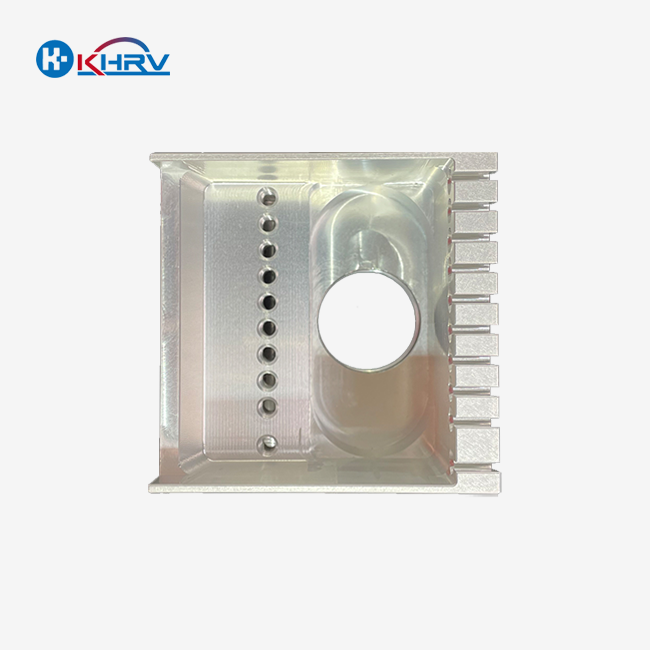
The shape and spacing of fins play a critical role in heat sink efficiency. CNC machining can make a variety of fin shapes, such as straight, pin, and wavy ones. There are pros and downsides to each kind, and the best one for you will depend on things like the direction of the air flow and the amount of room you have. Proper fin spacing is essential to allow adequate air flow while maximizing surface area.
Base Thickness and Flatness
The base of the heat sink is crucial for heat spreading and transfer. CNC machining lets you adjust the thickness of the base exactly, which makes sure that heat moves quickly from the heat source to the fins. Also, keeping the surface as flat as possible is important for getting the best contact with the heat-generating part and lowering the thermal resistance at the interface.
How does CNC machining enable advanced heat sink architectures (micro-channels, fins)?
CNC machining has changed the way heat sinks are designed by making it feasible to make complex structures that were formerly either hard or too expensive to make. These sophisticated designs significantly enhance cooling performance in compact electronic systems:
Microchannel Heat Sinks
CNC machining allows for the creation of microchannel structures within heat sinks. These tiny channels, often less than a millimeter in width, dramatically increase the surface area for heat transfer while maintaining a compact form factor. CNC machines are very accurate, which ensures that the channels are always the same size. This is important for keeping the coolant flow and heat dissipation even over the whole heat sink.
High-Density Fin Arrays
Advanced CNC milling techniques enable the production of high-density fin arrays with extremely thin fins and narrow spacing for heat sink design. This form makes the best use of the room inside a given amount for getting rid of heat. The capacity to make fins as thin as 0.2mm means that they work very well for cooling in situations where space is limited.
Complex 3D Geometries
CNC machining's flexibility allows for the creation of complex 3D geometries that optimize air or liquid flow paths. Some of these designs are curved channels, fins that get smaller as they go up, or even shapes that look like the way heat moves in nature. By using these kinds of complex structures, turbulence and heat transfer may work much better.
Hybrid Designs
CNC technology facilitates the production of hybrid heat sink designs that combine different cooling mechanisms. A heat sink, for example, may include both air-cooled fins and liquid-cooled microchannels, making it a flexible way to cool high-performance electronics.
Electronics thermal management checklist: designing, machining, and validating heat sinks
To ensure the successful implementation of CNC-machined heat sinks in electronic thermal management, follow this comprehensive checklist:
Design Phase
-
Conduct thermal analysis to determine heat dissipation requirements
-
Select appropriate materials based on thermal conductivity and weight constraints
-
Optimize fin geometry and spacing for maximum heat transfer efficiency
-
Consider air flow patterns and potential obstructions in the final application
-
Utilize CFD (Computational Fluid Dynamics) simulations to refine the design
Machining Phase
-
Choose appropriate CNC machining techniques (e.g., milling, turning) based on heat sink design complexity
-
Set optimal cutting parameters to achieve the required surface finish and dimensional accuracy
-
Implement proper fixturing to minimize vibration and ensure precision
-
Consider post-machining treatments like anodizing or plating for enhanced heat sink performance
-
Implement quality control measures to ensure consistency across production runs
Validation Phase
-
Conduct dimensional inspections to verify adherence to design specifications
-
Perform thermal imaging tests to identify potential hot spots or uneven heat distribution
-
Measure thermal resistance to confirm heat dissipation efficiency
-
Test the heat sink in simulated operating conditions to verify performance
-
Conduct reliability testing to ensure long-term performance and durability
By adhering to these design principles and leveraging the capabilities of CNC machining, engineers can create highly efficient heat sinks tailored to the specific thermal management needs of modern electronics. The precision and flexibility offered by CNC technology enable the production of complex geometries that maximize heat dissipation while minimizing size and weight – crucial factors in today's compact and powerful electronic devices.
Conclusion
New ways to control heat in electronics have been made possible by the complicated link between heat sink design and CNC machining. Engineers may push the limits of what is feasible in cooling technology by using these new production methods. This will make sure that even the most demanding electronic systems work well and dependably. We have tech thoughts all the time. We can make better ways to deal with heat with the help of these tips and ideas.
FAQ
1. What materials are best for CNC-machined heat sinks?
Aluminum and copper are the most common materials for CNC-machined heat sinks. Aluminum is a good choice because it is light and good at transferring heat, but copper is better for high-performance uses. The option relies on your individual needs for managing heat and the weight limits you have.
2. How does fin design affect heat sink performance?
A lot of what makes the heat sink work is how the fins are made. The height, thickness, spacing, and shape of the fins are all very important. CNC machining lets you make fins that are as big as possible and let air flow better, which makes heat dissipation more efficient.
3. Can CNC machining create micro-channel heat sinks?
Yes, CNC machining is capable of creating micro-channel heat sinks. These designs feature very small channels, typically less than 1mm in width, which greatly increase the surface area for heat transfer. Because CNC technology is so precise, it makes sure that the channels are always the same size, which is important for keeping the coolant flowing and getting rid of heat.
4. How do I validate the performance of a CNC-machined heat sink?
Validating heat sink performance involves several steps: dimensional inspection to verify adherence to design specifications, thermal imaging to identify potential hot spots, measuring thermal resistance to confirm heat dissipation efficiency, and testing the heat sink under simulated operating conditions. Tests for dependability also make sure that something will last a long time and work well.
Elevate Your Thermal Management with Precision CNC-Machined Heat Sinks | KHRV
Ready to take your electronic thermal management to the next level? Wuxi Kaihan Technology Co., Ltd. is your partner in creating high-performance heat sink CNC machining tailored to your specific needs. We can keep your electronics cool and dependable even in the toughest situations since we have sophisticated CNC machining skills and know how to regulate heat. Don't let thermal issues limit your product's performance – contact us today at service@kaihancnc.com to discover how our precision-engineered heat sinks can optimize your thermal management strategy and drive your product's success.
References
1. Zhang, H., & Li, S. (2021). Advanced Heat Sink Design: Principles and Applications in Modern Electronics. Journal of Thermal Science and Engineering Applications, 13(4), 041007.
2. Chen, Y., & Wang, Q. (2020). CNC Machining Techniques for High-Performance Heat Sinks: A Comprehensive Review. International Journal of Heat and Mass Transfer, 150, 119305.
3. Liu, X., & Zhao, C. (2019). Microchannel Heat Sinks: Fundamentals and Recent Advances. Renewable and Sustainable Energy Reviews, 110, 229-246.
4. Johnson, M., & Smith, R. (2022). Thermal Management Strategies for Next-Generation Electronics: From Design to Manufacturing. IEEE Transactions on Components, Packaging and Manufacturing Technology, 12(3), 456-469.
5. Brown, A., & Davis, T. (2020). Optimization of Heat Sink Designs Using Computational Fluid Dynamics and CNC Machining. Applied Thermal Engineering, 175, 115331.
6. Lee, S., & Park, J. (2021). Advanced Materials and Manufacturing Processes for Electronic Thermal Management. Journal of Materials Science & Technology, 79, 154-173.