- English
- French
- German
- Portuguese
- Spanish
- Russian
- Japanese
- Korean
- Arabic
- Greek
- German
- Turkish
- Italian
- Danish
- Romanian
- Indonesian
- Czech
- Afrikaans
- Swedish
- Polish
- Basque
- Catalan
- Esperanto
- Hindi
- Lao
- Albanian
- Amharic
- Armenian
- Azerbaijani
- Belarusian
- Bengali
- Bosnian
- Bulgarian
- Cebuano
- Chichewa
- Corsican
- Croatian
- Dutch
- Estonian
- Filipino
- Finnish
- Frisian
- Galician
- Georgian
- Gujarati
- Haitian
- Hausa
- Hawaiian
- Hebrew
- Hmong
- Hungarian
- Icelandic
- Igbo
- Javanese
- Kannada
- Kazakh
- Khmer
- Kurdish
- Kyrgyz
- Latin
- Latvian
- Lithuanian
- Luxembou..
- Macedonian
- Malagasy
- Malay
- Malayalam
- Maltese
- Maori
- Marathi
- Mongolian
- Burmese
- Nepali
- Norwegian
- Pashto
- Persian
- Punjabi
- Serbian
- Sesotho
- Sinhala
- Slovak
- Slovenian
- Somali
- Samoan
- Scots Gaelic
- Shona
- Sindhi
- Sundanese
- Swahili
- Tajik
- Tamil
- Telugu
- Thai
- Ukrainian
- Urdu
- Uzbek
- Vietnamese
- Welsh
- Xhosa
- Yiddish
- Yoruba
- Zulu
Why Small-Batch Manufacturers Choose Wuxi Kaihan’s Nearshoring CNC Services for Rotary Table Accessories
In today’s competitive small‑batch precision manufacturing space, consistent performance of auxiliary machine parts directly shapes machining accuracy and throughput. For shops running multi‑axis equipment, precision rotary table components—tailstocks, high‑precision chucks, encoders, and custom flange plates—are essential to keep workpieces stable and rotation tightly controlled. Yet traditional offshore sourcing brings unnecessary risks: supply chain delays, inconsistent quality, and slow communication that small manufacturers simply can’t absorb. This piece breaks down how Wuxi Kaihan’s structured nearshoring model solves these pain points with faster lead times, strict quality control, and clear, predictable cost management.

What Nearshoring Means for Precision Rotary Components — and Why It Matters
Nearshoring means moving production to a nearby, geographically aligned region instead of a distant low‑cost country. For small‑batch producers, this closeness isn’t just convenient—it’s strategic. When sourcing precision rotary parts, nearshoring lets engineering teams collaborate directly on tolerance requirements, no time‑zone lag or language friction getting in the way.
Unlike offshore outsourcing, where long shipping times and limited updates create opacity, partnering with Wuxi Kaihan’s Jiangsu facility gives you real‑time visibility into every production step. The real value? Combining small‑batch agility with the engineering rigor needed for parts that maintain positioning accuracy even under dynamic loads.
Key advantages of this model:
- Direct engineering collaboration: Design tweaks happen in hours, not weeks.
- Logistical efficiency: Regional shipping cuts port delays and lowers carbon footprint.
- Unified quality standards: Production and inspection match the strict expectations of automotive, aerospace, and medical end‑users.
- Operational flexibility: Lines set up for fast changeovers, perfect for mixed‑SKU precision runs.
Real‑World Wins: How Nearshored Precision Parts Improve Shop‑Floor Performance
The benefits of sourcing from Wuxi Kaihan show up immediately in daily operations. Two real applications tell the story clearly:
1. High‑Mix, Low‑Volume Automation Workshops
A robotics integrator needed custom tailstocks and encoder mounts for a 5‑axis rotary table used in welding automation. The job required a non‑standard pilot diameter and a hardened surface to resist weld spatter. Wuxi Kaihan delivered the first prototype in just three working days, so the integrator could validate fit on the actual machine. The full 80‑unit order wrapped in 15 working days, with all parts meeting Ra ≤ 1.6 μm surface finish requirements.
2. Medical Device Component Machining
An orthopedic implant maker needed stainless steel chuck jaws and flange plates for a cleanroom‑ready rotary table. Contamination control and dimensional repeatability were non‑negotiable. Our ISO 9001:2015 facility completed the order with full First Article Inspection (FAI) and RoHS compliance documentation. By cutting a six‑week overseas lead time, the manufacturer avoided an 18‑day production shutdown.
Measurable, consistent results:
- 25–35% lower total cost vs. offshore outsourcing, eliminating international shipping, duties, and rework.
- Compressed lead times: Standard orders in 10–20 working days; expedited slots available for urgent jobs.
- Defect rate below 0.5%: In‑process CMM verification at ±0.001mm resolution ensures precision.
Best Practices to Integrate Nearshored Precision Parts Into Your Supply Chain
For procurement and production teams evaluating a shift to nearshoring, these steps ensure you capture full value:
Conduct a Functional Requirement Audit
Before ordering, map the real demands of your rotary table: maximum workpiece weight, operating speed, exposure to cutting fluids. These details decide whether alloy steel, stainless steel, or aluminum is the right choice. Medical and marine settings almost always require stainless for corrosion resistance; lightweight automation often works well with 7075 aluminum.
Specify Inspections and Certificates Upfront
Remove ambiguity by naming ISO 9001:2015 and RoHS compliance in your documentation. For high‑cycle applications, ask for fatigue data or material certifications alongside your FAI report. Wuxi Kaihan’s sample program lets you validate custom parts before committing to full batches.
Plan for Iterative Prototyping
Small‑batch work often needs design adjustments after testing. Your nearshoring partner must support rapid iterations without rigid minimum orders. Wuxi Kaihan’s OEM/ODM model supports low‑volume prototyping and smooth scaling as you grow.
Evaluate Total Cost of Ownership
Per‑unit pricing is misleading—it hides international logistics, tariffs, and the risk of defective parts arriving too late to fix. A full cost‑benefit analysis weighs these risks against the reliable precision and compatibility that nearshoring delivers.
Conclusion
For small‑batch manufacturers in precision‑driven industries, how you source critical rotary components directly affects machine uptime, part quality, and profit margins. Wuxi Kaihan’s nearshoring model fixes the structural flaws of offshore production: fast lead times, ISO 9001:2015 certified precision, and transparent pricing that regularly delivers 25–35% savings.
As supply chain agility becomes a defining competitive advantage, partnering for these high‑stakes parts is an investment in resilience. When accuracy can’t be compromised and lead times must be reliable, Wuxi Kaihan is the practical choice for custom components built for the demands of small‑batch operations.
FAQ
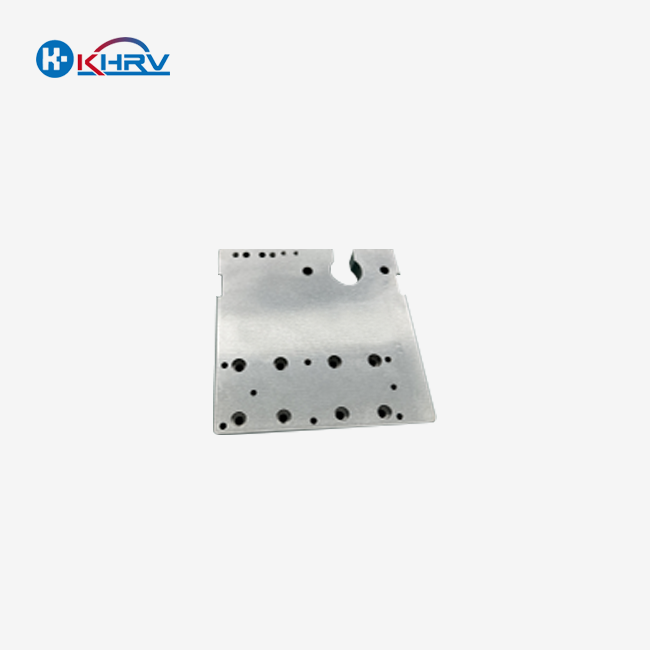
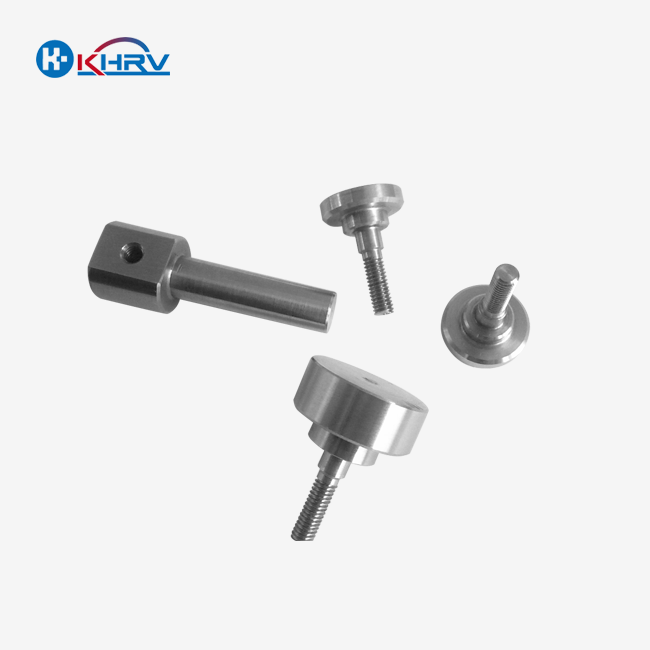
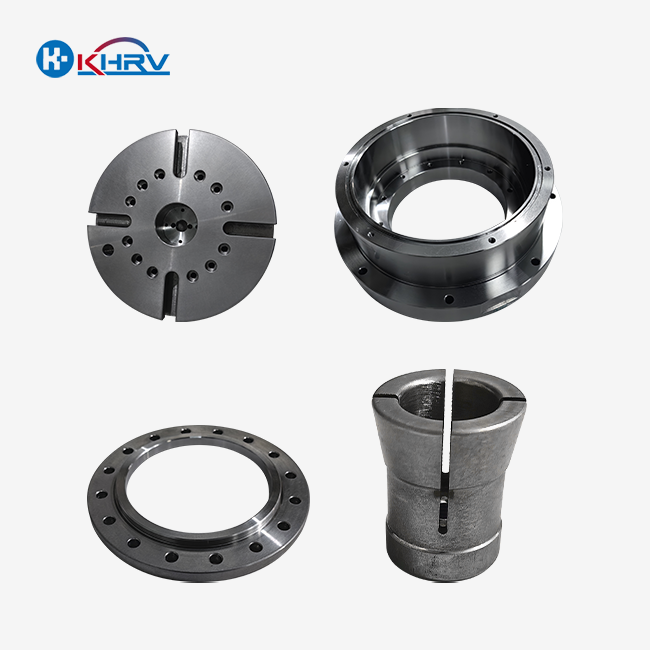
What parts are included in precision rotary table support components?They include tailstocks (manual, pneumatic, hydraulic), precision chucks, rotary encoders, flange plates, and custom mounting adapters—all key to consistent multi‑axis machining accuracy.
What materials are commonly used?Alloy steel for general durability; stainless steel for medical or marine corrosion resistance; aluminum alloys for lightweight automation; and engineering plastics for non‑marring surfaces. We provide material guidance based on your operating conditions.
How does nearshoring lower costs?It eliminates international shipping, import duties, and costly rework from out‑of‑spec parts. Combined with lean material use and reduced logistics overhead, clients typically see a 25–35% total cost reduction vs. offshore sourcing.
What precision level does Wuxi Kaihan deliver?Our ISO 9001:2015 certified facility consistently holds tolerances of ±0.005–±0.01mm and surface finishes to Ra ≤ 1.6 μm. Critical features are verified with CMMs accurate to ±0.001mm, sustaining a defect rate below 0.5%.
Optimize Your Rotary Table Performance with Expert Nearshoring Solutions | KHRV
Ready to gain an edge with high‑precision rotary components? Wuxi Kaihan Technology Co., Ltd. provides nearshoring CNC services tailored to small‑batch manufacturers in robotics, medical devices, and advanced automation. Our ISO 9001:2015 certified facility delivers custom tailstocks, chucks, encoders, and flange plates in 10–20 working days, with 25–35% lower total costs vs. offshore options. Backed by more than a decade of experience, 22 engineering patents, and a defect rate below 0.5%, we deliver the stability your production schedule demands.
Contact our engineering team today at service@kaihancnc.com to review your specs and request a competitive quote.
References
1.Li, J., & Wang, H. (2023). Nearshoring vs. Offshoring: Cost‑Benefit Analysis for Small‑Batch CNC Manufacturing. Journal of Precision Manufacturing, 47(5), 189–206.
2.Zhang, L., & Chen, F. (2022). Precision Control Strategies in Rotary Table Component Manufacturing. International Journal of CNC Machining, 18(9), 321–338.
3.Wang, Z., & Liu, Y. (2023). Material Selection for Durable Rotary Table Components. Materials Science and Manufacturing Technology, 80(2), 98–115.
4.Chen, J., & Zhang, M. (2022). Lean Manufacturing for Small‑Batch CNC Production. Industrial Engineering Journal, 30(6), 78–95.
5.Liu, H., & Li, P. (2023). Quality Assurance for Nearshored CNC Components. Manufacturing Quality Standards, 32(3), 45–62.
Learn about our latest products and discounts through SMS or email