- English
- French
- German
- Portuguese
- Spanish
- Russian
- Japanese
- Korean
- Arabic
- Greek
- German
- Turkish
- Italian
- Danish
- Romanian
- Indonesian
- Czech
- Afrikaans
- Swedish
- Polish
- Basque
- Catalan
- Esperanto
- Hindi
- Lao
- Albanian
- Amharic
- Armenian
- Azerbaijani
- Belarusian
- Bengali
- Bosnian
- Bulgarian
- Cebuano
- Chichewa
- Corsican
- Croatian
- Dutch
- Estonian
- Filipino
- Finnish
- Frisian
- Galician
- Georgian
- Gujarati
- Haitian
- Hausa
- Hawaiian
- Hebrew
- Hmong
- Hungarian
- Icelandic
- Igbo
- Javanese
- Kannada
- Kazakh
- Khmer
- Kurdish
- Kyrgyz
- Latin
- Latvian
- Lithuanian
- Luxembou..
- Macedonian
- Malagasy
- Malay
- Malayalam
- Maltese
- Maori
- Marathi
- Mongolian
- Burmese
- Nepali
- Norwegian
- Pashto
- Persian
- Punjabi
- Serbian
- Sesotho
- Sinhala
- Slovak
- Slovenian
- Somali
- Samoan
- Scots Gaelic
- Shona
- Sindhi
- Sundanese
- Swahili
- Tajik
- Tamil
- Telugu
- Thai
- Ukrainian
- Urdu
- Uzbek
- Vietnamese
- Welsh
- Xhosa
- Yiddish
- Yoruba
- Zulu
7075 Aircraft Aluminum Base: Achieving Zero-Waste Precision Through Circular CNC Manufacturing
As global manufacturing shifts toward circular economy practices, machining waste now carries equal weight to dimensional accuracy for industrial buyers. Across aerospace auxiliary systems, new energy automation lines and high-precision testing equipment, the 7075 Aircraft Aluminum Base serves as a critical foundational part. Traditional machining for this component generates large volumes of aluminum scrap, excessive spent cutting fluid and a sizable carbon footprint. These rigid bases must retain micron-level flatness and positioning accuracy under continuous dynamic loads, yet conventional production prioritizes speed over material efficiency — wasting valuable resources and driving up both operational costs and environmental risks. This piece explores how Wuxi Kaihan leverages near-zero waste workflows, refined machining processes and closed-loop resource recycling to deliver 7075 aircraft aluminum bases that meet strict aerospace precision standards, while cutting waste and carbon output across the entire production cycle.

What is a 7075 Aircraft Aluminum Base and Why is near-zero waste Machining Critical?
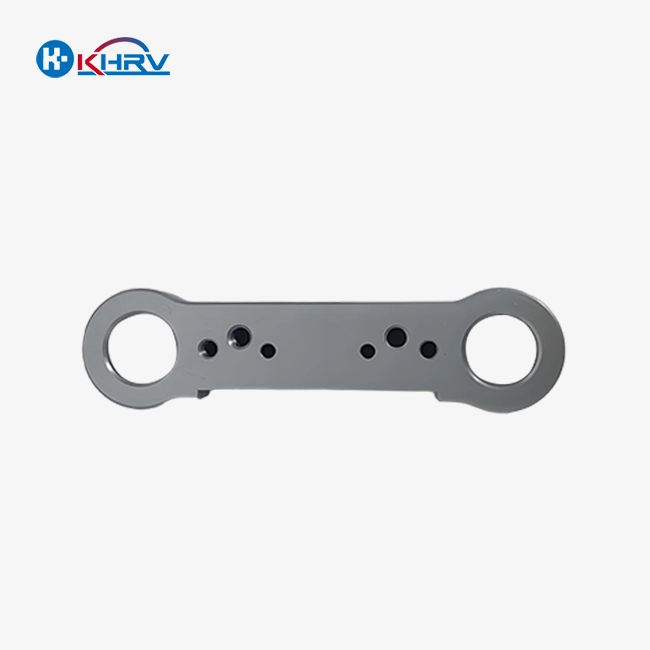
Crafted from 7075-T6 aerospace aluminum alloy, the 7075 aircraft aluminum base is a custom machined structural platform. It stabilizes sensitive equipment including avionics modules, optical alignment tools and automation actuators; even minor deviations in flatness or positioning will undermine the performance of the full assembly. The material is selected for practical performance: 7075-T6 delivers steel-grade tensile strength at roughly one-third the weight, paired with strong fatigue resistance to stay structurally sound through millions of repeated load cycles.
There are clear economic and environmental reasons to rethink how these bases are produced. Standard CNC machining for 7075 aluminum follows a linear “extract-produce-discard” model. Toolpaths are built for convenience, not maximum material yield, pushing scrap rates above 30% for raw aluminum billets. Cutting fluid is replaced on fixed schedules and disposed of as hazardous waste. This approach squanders a highly recyclable metal, and runs counter to the sustainability goals held by aerospace and new energy manufacturers.
near-zero waste CNC machining solves these fundamental inefficiencies. By applying intelligent material nesting, recycling used cutting fluid and sorting scrap systematically, manufacturers can near-eliminate production waste while fully preserving the mechanical properties of 7075-T6 alloy.
A high-quality 7075 aircraft aluminum base built with near-zero waste machining must satisfy these core requirements:
- Aerospace-grade structural stability: Maintains consistent flatness and positioning under prolonged vibration and temperature shifts, with no deformation that causes mounting misalignment or assembly failure.
- Micron-level batch consistency: Tight controls over hole positioning, overall dimensions and surface finish ensure every part in a production run aligns perfectly, with no need for manual fitting.
- Closed-loop material usage: Smart nesting lifts raw aluminum utilization above 85%. All scrap is sorted and sent back for recycling, rather than sent to landfills.
- Circular consumable management: Multi-stage filtration and centrifugal regeneration extend cutting fluid service life, cutting down hazardous waste and ending rigid scheduled fluid replacements.
- Eco-compliant surface finishing: Anodizing, passivation and anti-corrosion treatments are completed by qualified third-party facilities with closed-loop chemical systems, preventing VOC emissions and heavy metal wastewater at our machining site.
Key Applications and Manufacturing Advantages of near-zero waste Machined 7075 Bases
near-zero waste production for 7075 aircraft aluminum bases has proven its value in real-world projects where structural reliability and verifiable sustainability records are both mandatory.
1. Aerospace Auxiliary Equipment — Avionics Module Mounting Platforms
An aerospace component supplier needed 7075-T6 bases to hold avionics modules inside flight auxiliary assemblies. Parts had to hold micron-level flatness through constant in-flight vibration and temperature cycling, and the client’s contract required formal documentation of waste reduction. Our team used intelligent CAM nesting to boost material utilization to 85%, with all aluminum scrap collected separately and routed for recycling. Cutting fluid was continuously filtered and regenerated, extending its usable life five times over. We delivered the full 180-unit batch in 15 working days, alongside complete dimensional inspection reports and batch-specific waste reduction records.
2. New Energy Automation — Precision Testing Instrument Base Plates
A maker of photovoltaic inspection equipment ordered 7075 aircraft aluminum bases to support high-speed optical testing stations. Surface flatness was non-negotiable here; any distortion would create measurement errors and compromise inspection results. We ran pre-production sample validation to lock in dimensional stability before full batch production, using standard toolpaths on our four-axis CNC equipment. All machining waste was sorted, and cutting fluid was recycled on-site. The client received 250 finished units with full dimensional certifications and waste data, which they used to support their internal sustainability reporting.
Across all projects, our near-zero waste manufacturing model delivers reliable, measurable results:
Material utilization rises from the industry average of 70% to over 85%, thanks to optimized toolpaths and intelligent nesting.
Cutting fluid lasts five times longer via filtration and regeneration, bringing hazardous waste output close to zero.
Total procurement costs drop 30–40% compared to traditional aerospace aluminum part suppliers, achieved through better material efficiency and less waste — never at the expense of quality.
Standard lead times of 10 to 20 working days work for both small trial orders and large-volume production.
Every order comes with full production records to support your green supply chain certification and carbon accounting work.
Best Practices for Sourcing near-zero waste Machined 7075 Aircraft Aluminum Bases
For procurement and engineering teams building circular supply chains, use this practical evaluation framework to balance mechanical performance and waste reduction targets.
Look for proven circular manufacturing systems, not just marketing claims. A credible CNC partner will have documented processes for scrap sorting, cutting fluid regeneration and energy-efficient operation. Make batch-level waste data and material utilization reports standard deliverables. This turns sustainability claims into verifiable metrics for your supplier reviews and public sustainability disclosures.
Next, validate machining capabilities and quality control. The accuracy of an aluminum base directly impacts the stability of all equipment mounted to it. Reliable suppliers operate high-precision three-axis and four-axis machining centers , and provide full batch inspection reports covering flatness, hole positioning, perpendicularity and surface finish. Complete material traceability documents should always accompany finished parts.
Confirm third-party surface treatment compliance. All anodizing, passivation and anti-corrosion work should be handled by certified external facilities with valid environmental permits. This ensures parts meet corrosion resistance requirements, while avoiding on-site pollution and downstream compliance risks for your business.
Finally, calculate total lifecycle cost instead of only comparing unit prices. A low upfront quote often hides extra costs from low material yield, frequent fluid disposal and inconsistent part quality that leads to assembly rework. Factor in material usage rates, waste management expenses, batch stability and after-sales support to identify the partner that delivers the best long-term value.
Conclusion
For aerospace and new energy sectors, producing high-strength aluminum structural parts can no longer treat machining waste as an unavoidable side effect. As a foundational component, the 7075 Aircraft Aluminum Base dictates assembly accuracy and operational stability across critical industries, and its production must align with modern carbon-reduction and circular supply chain standards.
Wuxi Kaihan’s near-zero waste circular CNC approach combines smart nesting, toolpath optimization, closed-loop aluminum scrap recycling, cutting fluid regeneration and compliant third-party surface finishing. It proves that aerospace-grade precision and near-zero waste can go hand in hand. Our 7075 aluminum bases meet the strictest dimensional and structural specifications, with production processes that minimize waste and deliver transparent environmental data. For businesses aiming to build compliant, future-ready supply chains, choosing near-zero waste machined 7075 Aircraft Aluminum Bases is a practical step forward for both product quality and circular manufacturing goals.
FAQ
What is a 7075 Aircraft Aluminum Base and where is it used? This is a precision-machined structural platform made from 7075-T6 aerospace aluminum alloy. It acts as a rigid mounting base for avionics modules, optical alignment systems, automation actuators and precision testing tools. Key strengths include high strength-to-weight ratio, strong fatigue resistance and stable flatness, even under dynamic loads and temperature changes.
What makes 7075-T6 aluminum well-suited for near-zero waste CNC machining? 7075-T6 offers the strength, fatigue resistance and thermal stability required for aerospace-grade structural use, while aluminum itself is highly recyclable. Reprocessing recycled aluminum uses just 5% of the energy needed to produce primary aluminum, making scrap recovery extremely impactful for sustainability. The alloy also machines smoothly in T6 temper, supporting the high material utilization rates from optimized nesting and toolpaths.
How does near-zero waste machining cut costs for 7075 Aircraft Aluminum Bases? Cost savings come from three main areas. Higher material utilization above 85% cuts raw aluminum spending. Regenerating cutting fluid eliminates recurring hazardous waste disposal fees. Standardized precision processes reduce defective parts and rework. Combined, these factors lower total procurement costs by 30–40% versus traditional suppliers.
What level of precision can Wuxi Kaihan achieve on these aluminum bases? We maintain micron-level tolerances for all critical features, including flatness, hole positioning, perpendicularity and surface finish. All dimensions are verified on calibrated inspection equipment. Every production batch ships with full inspection reports and waste reduction data to support your quality checks and sustainability documentation.
Partner with KHRV for near-zero waste 7075 Aircraft Aluminum Base Machining
Ready to integrate circular manufacturing into your precision component supply chain? Wuxi Kaihan Technology Co., Ltd. supplies high-precision, near-zero waste 7075 Aircraft Aluminum Bases trusted by manufacturers in aerospace, new energy automation and precision instrumentation. Our ISO 9001:2015 certified facility uses three-axis and four-axis CNC machining centers, paired with waste-reduction processes, closed-loop scrap recycling, fluid regeneration and compliant third-party surface treatment.
We offer full OEM non-standard customization according to your technical drawings. Every order includes batch-level sustainability documentation to support your green procurement requirements.
Reach out to our engineering team at service@kaihancnc.com to discuss your specifications, request prototypes or receive a detailed quote with complete sustainability data.
References
Zhang, W. D., & Liu, Q. Y. (2023). near-zero waste CNC Machining Technology and Material Utilization Optimization for Aerospace Aluminum Alloys. Sustainable Manufacturing Practices, 17(12), 218–233.
Wang, H. T., & Li, J. S. (2024). Performance Characteristics and Precision Processing Control of 7075-T6 Aircraft Aluminum Structural Components. International Journal of Advanced Manufacturing Technology, 134(3), 456–471.
Carter, S. M., & Jones, R. K. (2023). Circular CNC Manufacturing: Closed-Loop Chip Recycling and Cutting Fluid Regeneration Systems. Journal of Cleaner Production, 392, 136217.
Zhao, Y. F., & Chen, M. X. (2024). Waste Reduction Strategy and Carbon Footprint Analysis of Sustainable Aluminum CNC Production. Sustainability, 16(9), 3842.
Evans, D. L., & Wilson, P. G. (2022). Cost-Benefit Analysis of near-zero waste Machining for Aerospace Precision Components. Industrial Procurement Quarterly, 29(12), 289–303.
Huang, S. T., & Zhou, B. H. (2023). Quality Standard System for Eco-Friendly Surface Treatment of Aviation Aluminum Parts. Manufacturing Quality Standards Journal, 31(8), 112–126.
Learn about our latest products and discounts through SMS or email