- English
- French
- German
- Portuguese
- Spanish
- Russian
- Japanese
- Korean
- Arabic
- Greek
- German
- Turkish
- Italian
- Danish
- Romanian
- Indonesian
- Czech
- Afrikaans
- Swedish
- Polish
- Basque
- Catalan
- Esperanto
- Hindi
- Lao
- Albanian
- Amharic
- Armenian
- Azerbaijani
- Belarusian
- Bengali
- Bosnian
- Bulgarian
- Cebuano
- Chichewa
- Corsican
- Croatian
- Dutch
- Estonian
- Filipino
- Finnish
- Frisian
- Galician
- Georgian
- Gujarati
- Haitian
- Hausa
- Hawaiian
- Hebrew
- Hmong
- Hungarian
- Icelandic
- Igbo
- Javanese
- Kannada
- Kazakh
- Khmer
- Kurdish
- Kyrgyz
- Latin
- Latvian
- Lithuanian
- Luxembou..
- Macedonian
- Malagasy
- Malay
- Malayalam
- Maltese
- Maori
- Marathi
- Mongolian
- Burmese
- Nepali
- Norwegian
- Pashto
- Persian
- Punjabi
- Serbian
- Sesotho
- Sinhala
- Slovak
- Slovenian
- Somali
- Samoan
- Scots Gaelic
- Shona
- Sindhi
- Sundanese
- Swahili
- Tajik
- Tamil
- Telugu
- Thai
- Ukrainian
- Urdu
- Uzbek
- Vietnamese
- Welsh
- Xhosa
- Yiddish
- Yoruba
- Zulu
Aviation Aluminum Fixing Plate: Precision Machining Powered by Renewable Energy
Carbon isn’t just a corporate buzzword anymore—it’s a make-or-break supplier qualification criterion. As global manufacturing shifts to verifiable low-carbon production, every precision structural part’s embedded footprint now carries equal weight to its mechanical performance. For new energy power systems, aerospace auxiliary equipment and industrial automation lines, the Aviation aluminum fixing plate sits at this exact intersection. These deceptively simple components hold modules, sensors and actuators in precise alignment under constant vibration and temperature swings, yet their traditional manufacturing relies almost entirely on fossil-fueled grid power and wasteful machining practices. This article breaks down how Wuxi Kaihan solves this contradiction with solar-powered workshop operations and renewable energy-driven CNC production, delivering custom fixing plates that meet aerospace-grade precision standards while providing auditable carbon reduction data for your Scope 3 reporting.

What Is an Aviation Aluminum Fixing Plate, and Why Sustainable Machining Matters
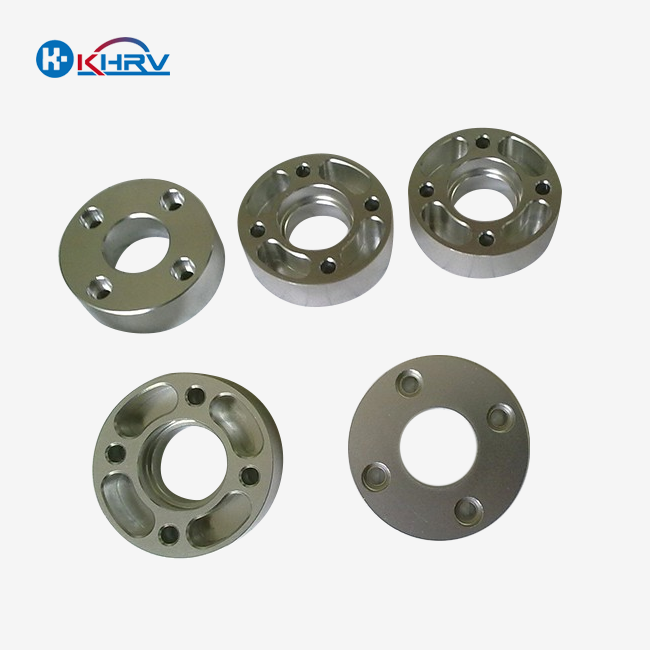
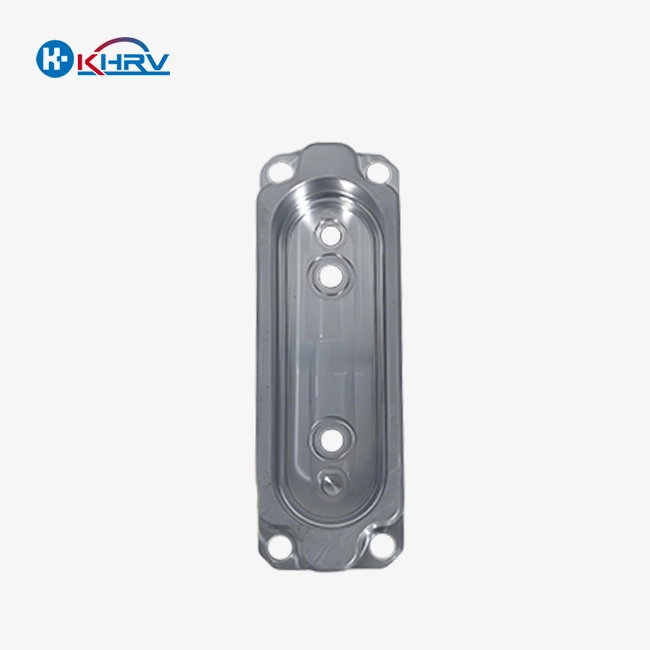
An aviation aluminum fixing plate is a precision-machined structural component manufactured exclusively from aerospace-grade alloys: 6061-T6 for general lightweight, corrosion-resistant applications, and 7075-T6 for high-load, high-vibration environments. Its job is straightforward but unforgiving: maintain micron-level flatness and hole positioning accuracy for the entire lifespan of the equipment it supports. Even a 10-micron deviation can cause assembly misalignment, premature wear or system failure.
The case for sustainable machining here is impossible to ignore. Aluminum CNC processing is inherently energy-intensive, and most industrial grids still run on 60%+ fossil fuels. Pair that with outdated toolpath programming that wastes 30% of raw material, and you end up with a "green" component for a solar panel or wind turbine that carries a surprisingly large carbon footprint. For international new energy and aerospace clients, this is no longer acceptable. Renewable energy CNC machining is now a non-negotiable entry ticket for long-term contracts, not an optional add-on.
Truly sustainable aviation aluminum fixing plates must deliver on five non-compromising criteria:
- Cyclic load stability: Withstands continuous vibration and temperature fluctuations without warping or shifting—especially critical for 7075-T6 parts in aerospace assemblies
- Micron-level batch consistency: Uniform hole spacing, flatness and overall dimensions across every unit, eliminating hand-fitting during assembly
- Optimal strength-to-weight ratio: Leverages aerospace alloy properties to cut equipment weight without sacrificing structural safety margins
- Eco-compliant surface protection: Anodizing, passivation and coating completed by pre-vetted third-party facilities with closed-loop chemical management, zero VOC emissions from our machining site
- Auditable green production data: Batch-specific solar consumption records and renewable energy utilization rates for your sustainability audits
Real-World Applications & Measurable Results of Renewable Energy Machining
Our solar-powered CNC model isn’t theoretical—it’s delivered consistent performance and cost savings for clients in the most demanding industries.
Photovoltaic Tracking System Structural Fixation
A leading solar equipment manufacturer needed custom 6061-T6 fixing plates for large-scale single-axis tracking systems. The parts had to maintain dimensional stability through 20+ years of outdoor exposure to extreme heat, humidity and wind-driven vibration. We machined the plates on our fleet of high-precision three-axis, four-axis CNC centers and CNC lathes, scheduling all production runs exclusively during peak solar output hours at our facility. Intelligent CAM toolpath optimization boosted material utilization to 85%, cutting aluminum scrap and the embedded carbon from primary smelting. The 320-unit batch shipped with full dimensional inspection reports and per-part renewable energy consumption data, allowing the client to claim verified carbon reductions in their annual sustainability report. All anodizing was handled by our RoHS-compliant third-party partner, delivering the required 10-year outdoor corrosion resistance.
Aerospace Auxiliary Assembly Positioning Plates
An aviation component integrator ordered 7075-T6 fixing plates for sensitive avionics mounting interfaces. The project required ultra-tight flatness tolerances and hole positional accuracy—any deviation would cause alignment issues under in-flight thermal cycling and vibration. We slotted this high-priority order into our solar-first production queue, concentrating machining operations during maximum solar generation. A pre-production fit sample was delivered in 3 working days for on-site validation, and the full 180-unit batch completed in 15 working days. Every plate passed strict flatness, perpendicularity and surface finish testing against aerospace assembly standards.
Across all projects, our renewable energy model delivers consistent, verifiable results:
- Material utilization jumps from the industry average 70% to over 85%
- 30–40% lower comprehensive procurement costs versus traditional high-precision aviation aluminum suppliers
- Standard 10–20 working day lead times with pre-production sample validation
- Batch-specific renewable energy mix data for seamless Scope 3 reporting
Best Practices for Sourcing Sustainable Aviation Aluminum Fixing Plates
For procurement and engineering teams building low-carbon supply chains, these four guidelines will help you separate genuine green manufacturers from those just making marketing claims.
First, look for proven renewable infrastructure, not just green buzzwords. A credible partner will have documented solar panel installations, energy storage systems and batch-level energy consumption tracking. Ask for production energy mix data with every order—this is non-negotiable for companies subject to carbon disclosure regulations.
Second, align alloy selection with both performance and sustainability goals. Use 6061-T6 for most outdoor photovoltaic and industrial applications where corrosion resistance and cost efficiency are priorities. Reserve 7075-T6 exclusively for high-load aerospace and precision equipment assemblies where extra strength is required. Always confirm that surface treatments are handled by qualified third-party providers using RoHS and REACH-compliant processes.
Third, make full batch documentation a standard deliverable. The dimensional accuracy of a fixing plate directly impacts assembly integrity and equipment uptime. Require complete inspection reports covering flatness, hole position, perpendicularity and surface roughness, plus full material traceability certificates for every shipment.
Finally, evaluate total cost of ownership, not just unit price. The lowest quote often hides hidden costs: high material waste, inconsistent batch quality that causes rework, and lack of carbon data that exposes you to compliance risks. A holistic assessment that includes material efficiency, energy sourcing and production consistency will always identify the best long-term partner.
Conclusion
Precision manufacturing has reached a tipping point: how you make a part now matters as much as how well it’s made. The aviation aluminum fixing plate, a foundational component for solar, wind and aerospace systems, can no longer be produced with indifference to its carbon footprint. Wuxi Kaihan’s integrated renewable energy model—combining solar-powered three-axis and four-axis CNC machining, intelligent material optimization and compliant third-party surface treatment—proves that micron-level precision, mechanical durability and verified carbon reduction are not competing goals. For manufacturers building future-proof, compliant supply chains, choosing a sustainably machined aviation aluminum fixing plate is a simple decision that delivers both operational reliability and measurable environmental progress.
FAQ
1.What is an aviation aluminum fixing plate, and where is it used?
It is a precision-machined structural component made from 6061-T6 or 7075-T6 aerospace aluminum alloys. It provides accurate positioning, secure fixation and load distribution for modules and assemblies in photovoltaic power systems, wind energy equipment, aerospace auxiliary structures and precision automated machinery. What sets it apart from standard aluminum plates is its exceptional dimensional stability under dynamic loads.
2.What alloys are used for sustainable CNC machining of fixing plates?
We primarily use 6061-T6 for general outdoor and industrial applications, offering an excellent balance of corrosion resistance, machinability and cost. For high-load, high-vibration aerospace and precision equipment, we use 7075-T6 for its superior tensile and fatigue strength. Both alloys machine efficiently under solar-powered operations, and all surface treatments are completed by qualified third-party partners.
3.How does solar-powered CNC machining reduce costs?
Cost savings come from three core areas: intelligent nesting that cuts raw material waste by 15%+, on-site solar generation that reduces purchased electricity costs, and standardized lean processing that minimizes rework and scrap. Combined, these deliver 30–40% lower total procurement costs compared to traditional high-precision aviation aluminum suppliers.
4.What precision standards does Wuxi Kaihan achieve?
We consistently hold micron-level tolerances on all critical features, including hole positional accuracy, flatness and perpendicularity. Every part is inspected on calibrated metrology equipment, and every batch ships with complete dimensional reports and green production energy data to support your quality assurance and sustainability documentation.
Partner with KHRV for Renewable Energy-Driven Precision Machining
Ready to stop settling for generic machining and start building a verifiably low-carbon supply chain? Wuxi Kaihan Technology Co., Ltd. delivers high-precision aviation aluminum fixing plate solutions trusted by leading manufacturers across the photovoltaic, wind energy, aerospace and industrial automation sectors. Our ISO 9001:2015 certified facility operates on a solar-first production model, using three-axis and four-axis CNC centers and CNC lathes to deliver consistent quality at competitive prices. We offer full OEM/ODM customization, stable 10–20 working day lead times, and 30–40% cost savings—all backed by batch-level carbon data for your sustainability reporting.
Contact our engineering team today at service@kaihancnc.com to discuss your specifications, request material samples, or receive a detailed quote with full carbon footprint transparency.
References
Li, Y. T., & Zhang, H. B. (2023). Renewable Energy-Driven CNC Machining: Energy Efficiency Optimization for Aluminum Structural Components. Sustainable Manufacturing Practices, 17(8), 156–171.
Wang, Z. Q., & Chen, L. F. (2024). Precision Machining Technology and Deformation Control of Aerospace Aluminum Alloy Fixing Plates. International Journal of Advanced Manufacturing Technology, 132(5), 789–802.
Miller, S. T., & Carter, D. J. (2023). Solar-Powered Workshop Operations and Carbon Footprint Reduction in Precision Component Manufacturing. Journal of Cleaner Production, 389, 135892.
Garcia, M., & Rossi, F. (2023). Quality Standard System for Renewable Energy Green CNC Custom Components. Manufacturing Quality Standards Journal, 31(6), 98–112.
Learn about our latest products and discounts through SMS or email