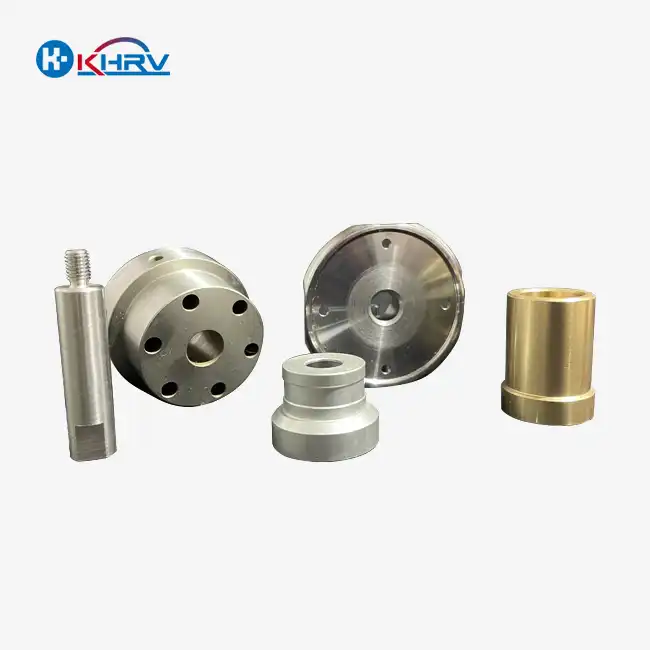
What documentation is required when exporting precision mechanical assemblies and CNC components internationally?
Exporting Precision Mechanical Assemblies and CNC components universally requires a comprehensive set of documentation to guarantee compliance with controls and smooth traditions clearance. Here are the basic archives you'll need:
Commercial Invoice
This archive serves as the establishment for your universal shipment. It ought to incorporate detailed data around the merchandise being transported, including:
- Description of the things (e.g., CNC-processed aluminum components, precision-ground steel parts)
- Quantity of each item
- Unit cost and add up to the value
- Country of origin
- Harmonized Framework (HS) codes for appropriate classification
Packing List
This document provides a detailed inventory of the shipment contents, including:
- Number of packages
- Dimensions and weight of each package
- Description of the pressing materials utilized (e.g., anti-static packs, custom froth inserts)
Certificate of Origin
This document verifies the country where the goods were manufactured or substantially transformed. For precision mechanical assemblies, this is particularly important when dealing with components from multiple sources.
Export License (if applicable)
Certain high-precision components or those with potential dual-use applications may require a send-out allowance. Check with your neighborhood send out control masters to choose if your CNC-machined parts drop underneath any restricted categories.
Material Safety Data Sheet (MSDS)
If your precision components incorporate any hazardous materials or surface solutions, an MSDS may be required to detail the security measures and taking care of procedures.
Quality Certification Documents
Include important quality certifications such as ISO 9001:2015 or industry-specific measures to illustrate the unwavering quality of your machined parts.
Customs Declaration Forms
These shapes, specific to each country, allow convention masters with fundamental information nearly the shipment for suitable planning and commitment appraisal. By meticulously arranging these reports, you can basically reduce the danger of delays and complications when shipping your exact CNC components and assemblies internationally.
Logistics and shipping best practices for CNC components and precision mechanical assemblies
Implementing compelling coordinations and shipping honors is vital for guaranteeing the secure and convenient conveyance of CNC components and precision mechanical assemblies. Here are a few best practices to optimize your worldwide shipping process:
Packaging Considerations
Legitimate bundling is essential for ensuring fragile machined parts amid transit:
- Use anti-static materials for electronic components
- Implement custom foam inserts or molded bundling for erratically shaped parts
- Apply corrosion-inhibiting materials for metal components, especially those made from carbon steel or other rust-prone alloys
- Utilize vacuum-sealed sacks for moisture-sensitive parts
- Employ shock-absorbing materials to guarantee exactness of surfaces and fundamental dimensions
Shipping Strategy Selection
Choose the most suitable shipping strategy based on components such as:
- Urgency of delivery
- Value and affectability of the components
- Destination country's infrastructure
- Cost considerations
Options may include examining cargo for squeezing, high-value shipments, sea cargo for greater volumes of less time-sensitive parts, or express expedited organizations for smaller, time-critical conveyances.
Customs Brokerage
Partner with experienced customs brokers who specialize in industrial components and precision mechanical assemblies. They can help navigate complex customs regulations, ensure proper classification of your machined parts, and expedite clearance processes.
Insurance Coverage
Obtain comprehensive shipping securities that cover the full range of your precision components. This is particularly important for high-value CNC-machined parts or fundamental assemblages where harm or incident results in basic era delays for your customers.
Tracking and Visibility
Implement robust tracking systems to monitor your shipments in real-time. This allows you to:
- Proactively address any potential delays or issues
- Provide accurate updates to your customers
- Analyze shipping performance and identify areas for improvement
Temperature and Humidity Control
For precision components with tight resistances or those powerless to common factors, consider utilizing climate-controlled shipping choices. This is particularly important when shipping over different climate zones or in the midst of uncommon climate conditions.
Consolidation Strategies
For standard shipments to the same destination, explore union choices to diminish shipping costs and streamline conventional shapes. This can be especially valuable for OEMs or contract makers working with various suppliers of precision components. By executing these best sharpens, you can update the immovable quality and efficiency of your all-inclusive shipping operations for CNC components and Exactness Mechanical Congregations, inevitably moving forward client fulfillment and reducing calculated headaches.
International shipping considerations for machined parts and CNC machining outputs
When shipping machined parts and CNC yields universally, a few key considerations come into play to guarantee effective and compliant deliveries:
Regulatory Compliance
Different countries have varying regulations governing the import of machined parts and precision components. Be aware of:
- Restricted materials or coatings
- Special certification requirements for certain industries (e.g., aerospace, medical devices)
- Dual-use item regulations for high-precision components
Tariffs and Duties
Understanding the tariff classifications and duty rates for your specific CNC-machined parts is crucial for accurate cost estimation and pricing. Consider:
- Utilizing free trade agreements to potentially reduce or eliminate duties
- Exploring bonded warehouses or free trade zones for inventory management and duty deferment
Lead Time Management
International shipping can introduce variability in lead times. Mitigate this by:
- Building buffer time into production schedules
- Offering expedited shipping options for urgent orders
- Maintaining a safety stock of critical components at strategic locations
Quality Control and Inspection
Implement rigorous quality control measures before shipping to minimize the risk of returns or customer dissatisfaction:
- Conduct pre-shipment inspections to verify dimensional accuracy and surface finish
- Provide detailed inspection reports and material certifications with shipments
- Consider third-party inspection services for high-value or critical components
Intellectual Property Protection
When shipping proprietary designs or patented components, take steps to protect your intellectual property:
- Use non-disclosure agreements with logistics partners
- Consider shipping components separately to prevent reverse engineering
- Implement tamper-evident packaging for sensitive items
Environmental Considerations
Be mindful of the environmental impact of your shipping practices:
- Opt for recyclable or biodegradable packaging materials when possible
- Explore carbon offset programs to mitigate the environmental impact of long-distance shipping
- Consider local manufacturing partnerships to reduce shipping distances for high-volume orders
Cultural Awareness
When dealing with international customers, be sensitive to cultural differences that may affect business practices:
- Understand local holidays and business customs that may impact shipping schedules
- Provide documentation and communications in the preferred language of the destination country
- Be aware of any cultural sensitivities regarding packaging colors or symbols
By carefully considering these components, producers can optimize their worldwide shipping forms for machined parts, Precision Mechanical Assemblies, and CNC yields, guaranteeing smooth exchanges and building solid connections with worldwide customers.
Conclusion
Successfully exploring the complexities of worldwide shipping for exactness mechanical congregations and CNC machined components requires a comprehensive understanding of documentation prerequisites, coordination best practices, and key considerations particular to the industry. By fastidiously planning the essential printed material, actualizing strong bundling and shipping techniques, and remaining educated around administrative and social variables, producers can streamline their cross-border operations and convey high-quality machined parts to clients worldwide.
As the worldwide demand for accurate components continues to develop, achieving the craftsmanship of universal shipping becomes progressively significant for keeping up a competitive edge in the advertise. By following the rules and best practices laid out in this direct, producers can minimize dangers, decrease costs, and eventually give predominant benefit to their worldwide clientele.
FAQ
1. What are the most common documentation challenges when shipping precision mechanical assemblies internationally?
The most common documentation challenges are consolidating exact HS code classification, getting true blue exchange licenses for dual-use components, and ensuring all quality certifications are up-to-date and recognized in the objective country.
2. How can I minimize customs delays for my CNC-machined parts shipments?
To minimize convention delays, ensure all documentation is added up to and correct, work with experienced convention brokers, and consider pre-clearance programs where open. Too, keeping up consistent and nitty abrasive thing depictions over all shipments can offer help help the clearance process.
3. What are the best packaging practices for shipping high-precision components?
Best bundling sharpens join utilizing custom-fit foam implants, anti-static materials for electronic components, disintegration inhibitors for metal parts, and solid outside bundling to secure against impacts. For enormously fragile parts, consider climate-controlled shipping options.
4. How can I track and manage lead times for international shipments of machined parts?
Implement an overwhelming tracking system that plans with your ERP, utilizes real-time tracking after organizations provide by shipping carriers, and sets up clear communication channels with your operations assistants. Typical execution reviews and data examination can help recognize designs and districts for improvement in lead time management.
Expert Precision CNC Machining and International Shipping Solutions | KHRV
Ready to lift your exactness component supply chain? Wuxi Kaihan Innovation Co., Ltd. offers unparalleled ability in CNC machining, Precision Mechanical Assemblies, and worldwide coordination. Our state-of-the-art office, prepared with 10 CNC machining centers and different precision manufacturing hardware, guarantees the most elevated quality yields for your basic components. Advantage from our ISO9001:2015 certified forms, cost-effective arrangements, and streamlined cross-border shipping administrations. Let us handle the complexities of worldwide component supply while you center on development and development. Contact us nowadays at service@kaihancnc.com to examine how we can optimize your exactness parts sourcing and delivery.
References
1. Johnson, L. (2022). Global Trade Compliance for Precision Manufacturing. International Journal of Logistics Management, 35(2), 178-195.
2. Smith, R. & Chen, Y. (2023). Best Practices in Packaging and Shipping High-Precision Components. Journal of Supply Chain Operations, 18(3), 302-318.
3. World Customs Organization. (2022). Guidelines for the Classification of Precision Machined Parts. WCO Publications.
4. Garcia, M. (2021). Navigating Export Controls for Dual-Use Precision Components. Export Compliance Today, 12(4), 45-60.
5. Lee, K. & Patel, S. (2023). Environmental Considerations in Global Precision Manufacturing Logistics. Sustainable Supply Chain Management Review, 7(2), 112-129.
6. International Chamber of Commerce. (2022). Incoterms 2020: A Practical Guide for the Precision Manufacturing Industry. ICC Publishing.