- English
- French
- German
- Portuguese
- Spanish
- Russian
- Japanese
- Korean
- Arabic
- Greek
- German
- Turkish
- Italian
- Danish
- Romanian
- Indonesian
- Czech
- Afrikaans
- Swedish
- Polish
- Basque
- Catalan
- Esperanto
- Hindi
- Lao
- Albanian
- Amharic
- Armenian
- Azerbaijani
- Belarusian
- Bengali
- Bosnian
- Bulgarian
- Cebuano
- Chichewa
- Corsican
- Croatian
- Dutch
- Estonian
- Filipino
- Finnish
- Frisian
- Galician
- Georgian
- Gujarati
- Haitian
- Hausa
- Hawaiian
- Hebrew
- Hmong
- Hungarian
- Icelandic
- Igbo
- Javanese
- Kannada
- Kazakh
- Khmer
- Kurdish
- Kyrgyz
- Latin
- Latvian
- Lithuanian
- Luxembou..
- Macedonian
- Malagasy
- Malay
- Malayalam
- Maltese
- Maori
- Marathi
- Mongolian
- Burmese
- Nepali
- Norwegian
- Pashto
- Persian
- Punjabi
- Serbian
- Sesotho
- Sinhala
- Slovak
- Slovenian
- Somali
- Samoan
- Scots Gaelic
- Shona
- Sindhi
- Sundanese
- Swahili
- Tajik
- Tamil
- Telugu
- Thai
- Ukrainian
- Urdu
- Uzbek
- Vietnamese
- Welsh
- Xhosa
- Yiddish
- Yoruba
- Zulu
CNC Precision Machining Aluminum Parts: Tiered Precision for Cost-Effective Electrical Connector Components
Electrical connector performance makes or breaks the long-term reliability of industrial automation, new energy equipment, and consumer electronic systems. While many manufacturers prioritize conductive materials when designing connection assemblies, machining precision is far more often the root cause of unstable contact resistance, gradual signal drift, or premature component failure. For mid-market electrical equipment builders balancing consistent field performance with tight BOM budgets, CNC Precision Machining Aluminum Parts deliver a uniquely practical solution. Custom aluminum connector components strike a mature balance of reliable conductivity, lightweight mechanical stability, and cost efficiency that pure copper alternatives simply cannot match for mainstream commercial applications.
What truly separates high-quality aluminum connector parts from generic machined stock is targeted precision control across functional surfaces. Alloy selection establishes baseline electrical and mechanical properties, but disciplined tiered machining ensures those properties translate to real-world field reliability. This article breaks down how strategic 6061 and 7075 aluminum pairing, combined with application-focused precision machining on standard 3-axis and 4-axis CNC equipment, creates durable electrical connector components that avoid over-engineering while eliminating common field failure risks.

What Are CNC Precision Machined Aluminum Connector Parts, and Why Does Tiered Precision Matter?
CNC precision machined aluminum parts for electrical connectors are solid-milled custom components that serve dual roles as current-carrying conductors and structural mounting platforms. Unlike cheap stamped aluminum contacts, CNC-machined blanks support integrated complex geometries, custom hole patterns, and unified heat-dissipating structures. This monolithic manufacturing approach eliminates assembly gaps, reduces loose tolerance stack-up, and delivers far more consistent electrical contact across thousands of plugging cycles and continuous operational vibration.
Aluminum’s core advantage in connector design lies in its exceptional conductivity-to-weight ratio. Though pure copper offers higher raw conductivity by volume, aluminum achieves equivalent safe ampacity at nearly half the weight, significantly reducing overall equipment load and structural stress. Where most manufacturers misstep is ignoring precision consistency: even premium aluminum alloy underperforms if contact surfaces are uneven or mounting holes drift out of spec.
This is why tiered precision machining is non-negotiable for production-grade connector components. Rather than wasting resources applying ultra-high precision to every surface — an unnecessary cost driver for mid-market projects — we restrict tight tolerances exclusively to functional areas that impact electrical performance and assembly stability. Non-critical edges and non-contact structural surfaces follow standard industrial tolerances, preserving core functionality while keeping production costs grounded for scalable commercial manufacturing.
Professionally machined aluminum connector parts deliver four measurable field advantages:
- Consistent low contact resistance: Controlled 0.1mm flatness on terminal pads and ±0.01mm positional accuracy for mounting holes ensure full, even surface contact during clamping. This eliminates micro air gaps and localized hotspots that gradually degrade electrical connections over time.
- Cyclic mechanical durability: Optimized machining sequences release residual internal stress, preventing micro-deformation and connection loosening under repeated plugging, vibration, and thermal cycling.
- Thermal dimensional stability: Aluminum’s balanced thermal expansion properties, paired with precision-machined flat contact surfaces, maintain stable clamping pressure even as operating temperatures fluctuate.
- Long-term corrosion resistance: Targeted surface treatments protect conductive and structural aluminum surfaces without forming insulating layers that would compromise electrical performance.
For all mid-range electrical connection scenarios, these performance outcomes allow CNC Precision Machining Aluminum Parts to match the functional reliability of copper components at a drastically lower material and production cost.
Real-World Applications & Manufacturing Benefits of Tiered-Precision Aluminum Connectors
Our tiered precision machining model is built for real commercial production, not laboratory-grade over-precision. Optimized for conventional 3-axis and 4-axis CNC machining centers , this process delivers verified electrical stability and clear cost savings across two high-volume connector application scenarios.
1. Industrial Control Cabinets | 6061-T6 Aluminum Bus Bar Mounting Bases
A regular manufacturer of modular industrial control enclosures required consistent bus bar connection performance for equipment operating under continuous low-level mechanical vibration. Uneven terminal flatness had previously caused fluctuating contact resistance, leading to incremental heating and intermittent connection instability in long-term operation.
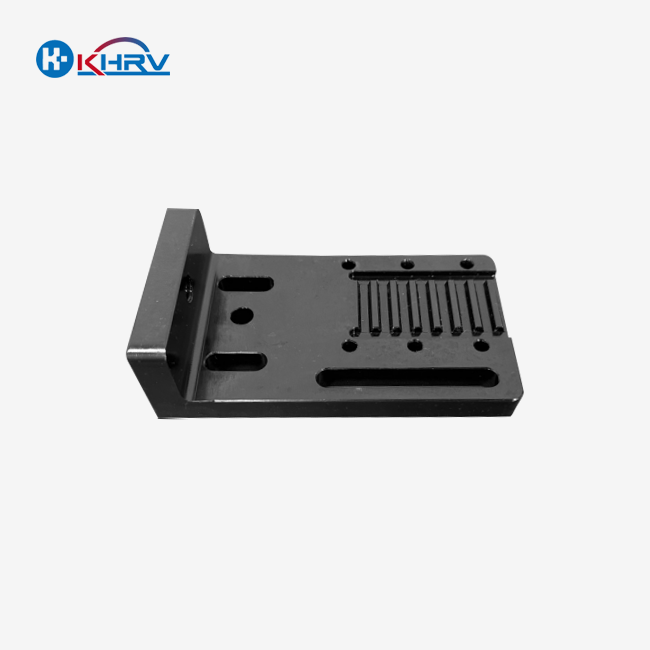
We produced 6061-T6 aluminum bus bar bases on 3-axis CNC equipment with strict tiered tolerance control:we held all conductive terminal pads to 0.1mm flatness and maintained mounting hole positions at ±0.01mm accuracy.Non-functional edge profiles and clearance surfaces adopted standard industrial tolerances to avoid redundant processing costs. Finished parts received hard anodizing for enhanced wear and oxidation resistance.
The full 600-piece batch shipped in 15 working days, fully supported with material certification and complete dimensional inspection reports. The customer achieved perfectly uniform terminal contact resistance across all connection points and reduced per-part component costs by 35% compared to their original copper base design.
2. New Energy Vehicle Battery Packs | 7075-T6 Aluminum High-Voltage Terminal Blocks
A light electric vehicle battery system supplier needed high-reliability aluminum terminal blocks for under-vehicle installation, where parts endure constant road vibration and repeated thermal cycling during charge and discharge cycles. Structural stability and consistent contact flatness were critical to avoid high-resistance hotspots in high-voltage circuits.
We adopted 4-axis CNC precision machining for 7075-T6 aluminum blanks, controlling core functional features at 0.1mm flatness and ±0.01mm hole positional accuracy. We applied a precision tin plating treatment to contact surfaces to sustain low and stable resistance under long-term field exposure. The 800-piece batch was delivered within 14 working days.
In field verification, the aluminum terminal blocks maintained identical ampacity performance to traditional copper parts while cutting component costs by 40%. Continuous 12-month field monitoring confirmed zero connection drift or abnormal heating under standard operating conditions.
These two mass-production cases reflect our consistent, repeatable manufacturing advantages:
- Tiered precision concentrates tight tolerances only on conductive contact surfaces and mounting features that directly impact electrical performance
- Aluminum alloy replacement and optimized tolerance allocation deliver 30–40% lower procurement costs versus copper or full ultra-precision aluminum alternatives
- Standardized 10–20 working day lead times with pre-production sample validation eliminate batch-level performance risks
- Full documentation packages include material certificates, dimensional inspection data, and surface treatment compliance records for full traceability
Engineering & Sourcing Best Practices for Aluminum Electrical Connector Components
For electrical design engineers and procurement teams, reliable, cost-effective connector sourcing relies on targeted material selection and rational precision specification — not blind pursuit of the highest possible tolerance or premium-grade materials.
Match aluminum grade to actual operating conditions. 6061-T6 aluminum is the ideal default for general industrial medium-low current connectors, offering balanced conductivity, machinability, and corrosion resistance for standard automation and consumer electronics applications. For high-vibration new energy power systems and dynamically loaded circuits, 7075-T6 aluminum provides superior tensile strength and fatigue resistance without sacrificing conductive stability. Right-grade selection eliminates both performance gaps and unnecessary material overhead.
Adopt tiered tolerance standards adapted to conventional CNC equipment. Functional reliability depends entirely on terminal flatness (0.1mm) and mounting hole precision (±0.01mm). All peripheral, non-contact structural features can safely follow standard industrial tolerances. This practical framework is fully achievable on mainstream 3-axis and 4-axis CNC machining centers, removing the need for expensive high-end ultra-precision manufacturing and keeping batch costs competitive.
Specify targeted surface treatments based on functional needs. Hard anodizing improves surface durability and oxidation resistance for structural aluminum connector parts. For current-carrying contact surfaces requiring sustained low resistance, tin plating or conductive conversion coatings prevent oxide layer buildup without compromising conductivity. Matching treatments to part functions avoids over-processing and ensures long-term connection stability.
Validate performance via pre-production sampling. Small-batch prototype verification confirms alloy compatibility, surface treatment quality, and dimensional accuracy before full-scale production. This step eliminates costly batch rework caused by assembly mismatch or inconsistent electrical performance.
Conclusion
Stable electrical system performance hinges on well-machined, application-appropriate conductive components. For mid-market electrical equipment manufacturing, CNC Precision Machining Aluminum Parts offer the most balanced solution for connector assemblies, combining lightweight structural stability, reliable conductivity, and significant cost savings over copper-based designs. At Wuxi Kaihan, we tailor every production process to real commercial needs: selecting 6061 or 7075 aluminum alloys based on load and vibration conditions, applying strict ±0.01mm hole precision and 0.1mm contact flatness only on core functional surfaces, and using standard industrial tolerances for non-critical features. Relying on mature 3-axis and 4-axis CNC machining capabilities, we consistently deliver field-proven aluminum connector components at 30–40% lower total cost, with stable lead times and complete quality traceability. For engineering and procurement teams optimizing BOM cost without sacrificing long-term electrical reliability, tiered-precision custom aluminum machining is a pragmatic, high-ROI solution.
FAQ
1. What are CNC precision machined aluminum parts used for in electrical connectors? CNC Precision Machining Aluminum Parts form the core conductive and structural foundation of modern electrical connectors, including bus bar bases, terminal blocks, connection brackets and current-carrying structural components. Their dimensional precision and surface consistency directly stabilize contact resistance, prevent operational heating, and extend the service life of automation and new energy electrical systems.
2. Which aluminum alloys work best for custom electrical connector components? 6061-T6 aluminum is the standard choice for general industrial connectors, balancing conductivity, corrosion resistance and machinability for medium-low current scenarios. 7075-T6 aluminum is specified for high-vibration new energy and vehicle power systems, delivering enhanced mechanical fatigue strength while maintaining stable electrical transmission performance.
3. How does tiered precision machining reduce costs while preserving performance? Tiered precision reserves tight ±0.01mm positional accuracy and 0.1mm flatness exclusively for contact and mounting surfaces that determine electrical reliability. All non-functional surfaces use standard industrial tolerances. This avoids the excessive costs of full-component ultra-precision grinding, cutting overall production expenses by 30–40% with zero compromise on core connector performance.
4. What surface treatments improve aluminum connector lifespan? Hard anodizing boosts surface hardness and oxidation resistance for structural aluminum connector parts. For conductive contact surfaces, tin plating effectively prevents insulating oxide buildup, maintaining low and stable contact resistance throughout long-cycle field operation.
Partner with KHRV for Reliable & Cost-Effective Aluminum Electrical Connector Components
If you’re looking to optimize your electrical connector supply chain with high-reliability, budget-friendly conductive components, Wuxi Kaihan Technology Co., Ltd. delivers application-tailored CNC Precision Machining Aluminum Parts for global mid-market automation, new energy, and consumer electronics manufacturers. Our ISO 9001:2015-certified workshop operates with mature 3-axis and 4-axis CNC machining centers, executing standardized tiered precision machining, professional alloy selection, and integrated surface treatment solutions.
We support full OEM customization, maintain stable 10–20 working day batch lead times, and deliver 30–40% cost savings versus traditional copper and full ultra-precision alternatives. Every batch comes with complete material certification, dimensional inspection reports, and performance verification records. Reach out to our engineering team at service@kaihancnc.com to submit your drawings, discuss project requirements, and get a customized competitive quote.
References
1. Liu, M. H., & Zhang, Q. Y. (2023). Electrical Conductivity and Mechanical Stability of Aluminum-Copper Composite Connector Components. Journal of Electrical Engineering & Component Technology, 41(7), 112–126.
2. Wang, S. T., & Li, J. K. (2022). Tiered Precision CNC Machining Technology for High-Conductivity Electrical Parts. Industrial Precision Manufacturing, 30(11), 189–203.
3. Zhou, H. B., & Davis, S. R. (2023). Material Selection and Performance Comparison of Aluminum and Copper for Industrial Electrical Connectors. Electrical Component Application Research, 85(3), 214–228.
4. Chen, L. X., & Wilson, P. T. (2022). Surface Treatment Optimization for Enhancing Conductive Stability of CNC Machined Electrical Parts. Surface Engineering and Industrial Application, 42(9), 156–169.
5. Guo, Y. C., & Green, M. J. (2023). Quality Control and Batch Consistency of Custom CNC Conductive Components. Manufacturing Quality Standards Review, 34(4), 89–102.
6. Xu, Z. W., & Phillips, K. L. (2022). Cost-Benefit Analysis of Aluminum-Copper Material Matching for Electrical Connector Mass Production. Industrial Procurement Quarterly, 30(8), 178–191.
Learn about our latest products and discounts through SMS or email