- English
- French
- German
- Portuguese
- Spanish
- Russian
- Japanese
- Korean
- Arabic
- Greek
- German
- Turkish
- Italian
- Danish
- Romanian
- Indonesian
- Czech
- Afrikaans
- Swedish
- Polish
- Basque
- Catalan
- Esperanto
- Hindi
- Lao
- Albanian
- Amharic
- Armenian
- Azerbaijani
- Belarusian
- Bengali
- Bosnian
- Bulgarian
- Cebuano
- Chichewa
- Corsican
- Croatian
- Dutch
- Estonian
- Filipino
- Finnish
- Frisian
- Galician
- Georgian
- Gujarati
- Haitian
- Hausa
- Hawaiian
- Hebrew
- Hmong
- Hungarian
- Icelandic
- Igbo
- Javanese
- Kannada
- Kazakh
- Khmer
- Kurdish
- Kyrgyz
- Latin
- Latvian
- Lithuanian
- Luxembou..
- Macedonian
- Malagasy
- Malay
- Malayalam
- Maltese
- Maori
- Marathi
- Mongolian
- Burmese
- Nepali
- Norwegian
- Pashto
- Persian
- Punjabi
- Serbian
- Sesotho
- Sinhala
- Slovak
- Slovenian
- Somali
- Samoan
- Scots Gaelic
- Shona
- Sindhi
- Sundanese
- Swahili
- Tajik
- Tamil
- Telugu
- Thai
- Ukrainian
- Urdu
- Uzbek
- Vietnamese
- Welsh
- Xhosa
- Yiddish
- Yoruba
- Zulu
Aluminum Base Plate: Precision CNC Machining for Data Center Cooling Systems
Data center server reliability hinges entirely on consistent, well-managed thermal performance. Servers running 24/7 at sustained loads generate dense, concentrated heat; even minor inconsistencies in heat dissipation create hotspots, trigger CPU/GPU throttling, and gradually shorten hardware lifespans. For manufacturers building cost-effective, mid-tier data center cooling solutions, the Aluminum Base Plate stands as one of the most critical yet underrated components in the entire thermal stack. It acts as the precise physical bridge between high-heat server chips and heat sink fin structures, balancing uniform thermal transfer, stable mechanical support, and long-cycle structural durability.
Many buyers overprioritize raw material thermal conductivity while overlooking machining accuracy. In practice, a well-machined 6061-T6 aluminum base plate outperforms poorly processed high-grade materials in real-world data center operation. For mid-range overseas data center projects, blind ultra-precision processing of every surface only drives up costs unnecessarily. Adopting a practical tiered tolerance standard — tailored to conventional 3-axis, 4-axis CNC machines — delivers stable cooling performance while keeping production costs highly competitive.

What Is an Aluminum Base Plate, and Why Does Machining Precision Matter?
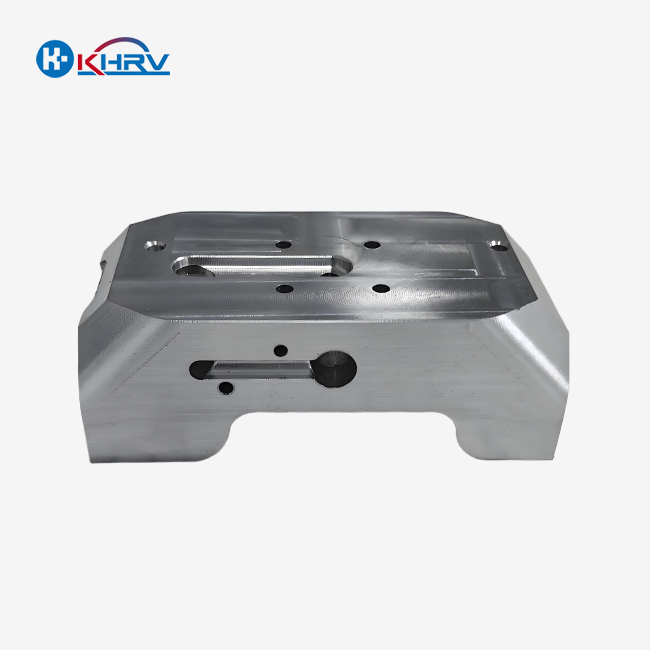
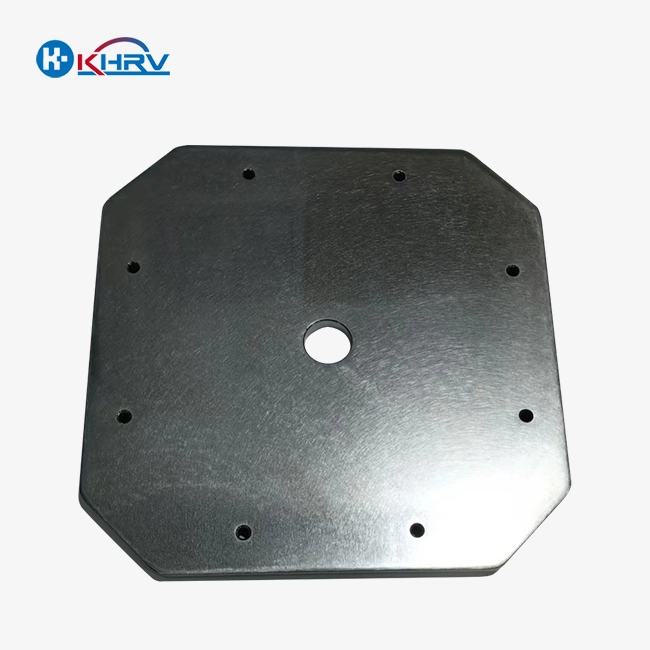
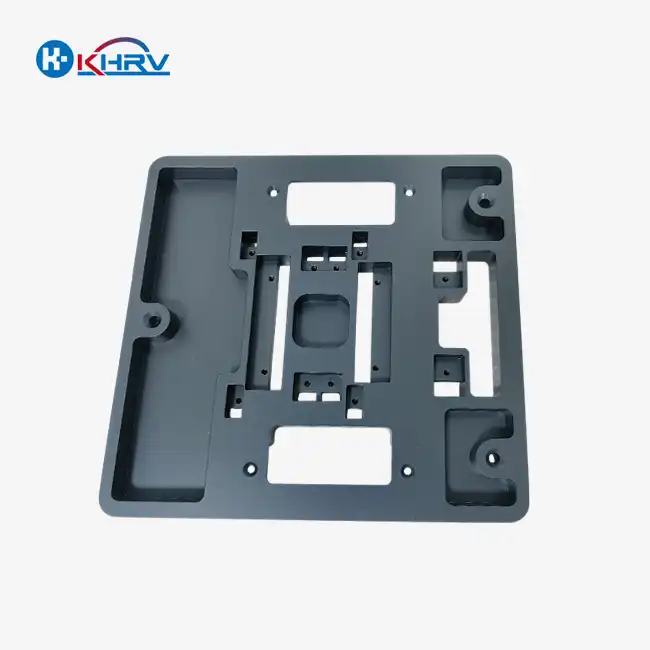
An aluminum base plate is a custom CNC-machined structural and thermal component built exclusively for server cooling modules. Mounted directly to server processors, chipsets or memory units, it serves two non-negotiable roles: spreading concentrated chip heat evenly across the heat sink assembly, and maintaining steady, uniform clamping pressure across the entire thermal interface. In long-cycle data center operation, thermal cycling and subtle equipment vibration constantly test component stability. Even tiny flatness deviations or misaligned mounting holes create invisible air gaps, increase thermal resistance, and lead to inconsistent cooling over time.
6061-T6 aluminum is the ideal material for this application for one simple reason: balanced performance. It delivers reliable thermal conductivity of approximately155--170 W/m·K, enough to handle continuous mid-tier server heat loads, while its magnesium-silicon alloy structure provides impressive rigidity and thermal fatigue resistance. Unlike softer 6063 aluminum, it resists warping after thousands of heating and cooling cycles. Unlike copper, it avoids excessive weight and inflated material costs.
Material quality only matters if machining precision is consistent. At Wuxi Kaihan, we adopt a practical, production-friendly tolerance strategy fully matched to our civilian-grade CNC equipment. We reserve tight precision only where it impacts function, while applying standard industrial tolerances to all non-critical features. This approach eliminates unnecessary machining difficulty and scrap waste, perfectly fitting mid-to-low-end overseas data center market demands.
Core Functional Precision Standards
Every aluminum base plate we produce follows a strict tiered precision specification, tailored to real data center cooling needs and conventional 3-axis and 4-axis CNC machining capabilities:
- Mounting Hole Positional Accuracy: Controlled at ±0.01mm. Precise hole positioning ensures even clamping pressure across the thermal interface, preventing uneven contact that causes localized overheating.
- Thermal Interface Flatness & Parallelism: Maintained at 0.1mm on all chip-contact and fin-contact surfaces. Consistent flatness eliminates air gaps, minimizes thermal resistance, and sustains uniform heat dispersion under full server load.
- Non-Critical Structures: All edge profiles, non-functional contours and clearance surfaces follow standard industrial tolerances, avoiding over-processing and redundant costs.
- Long-Term Dimensional Stability: Post-machining stress relief treatment eliminates internal residual stress, preventing gradual warping during prolonged thermal cycling.
- Durable Surface Finish: Hard anodizing improves surface hardness and oxidation resistance, maintaining stable thermal performance through years of non-stop data center operation.
Real Application Cases: Optimized Cooling & Cost Efficiency
Our tiered precision machining model is not theoretical. It has been fully validated in batch customization for overseas mid-tier data center cooling projects, delivering stable thermal performance and obvious cost advantages.
Case 1: Liquid Cooling Cold Plate Base for Mid-Range Rack Servers
An overseas thermal solution manufacturer required custom 6061-T6 aluminum base plates for rack server liquid cooling modules. The base plates needed to maintain full-surface flat contact with processor dies to ensure stable heat transfer to the liquid cold plate, with zero offset in mounting hole alignment.
We completed batch production on 4-axis CNC equipment, strictly implementing core precision standards: ±0.01mm hole position tolerance and 0.1mm flatness on thermal contact surfaces. All non-essential edges were processed per standard industrial tolerances. Hard anodizing was applied for long-term surface protection. We delivered 400 finished parts in 16 working days, with complete material certification and dimensional inspection reports.
After assembly testing, the customer achieved consistently stable processor junction temperatures. Compared with their previous supplier that adopted full ultra-precision processing, our solution reduced unit costs by 35% with zero compromise on cooling stability.
Case 2: Air-Cooled Heat Sink Base Plates for Entry-Level 2U Servers
For mass-produced entry-level data center 2U air cooling modules, the client prioritized batch consistency and controlled unit costs while maintaining basic cooling efficiency. We adopted 3-axis CNC machining for 1,500 pieces of 6061-T6 aluminum base plates, retaining the same core precision standards for mounting holes and thermal flatness.
The finished plates perfectly matched the client’s fin bonding structure and motherboard mounting positions. The project was fully delivered in 14 working days. Replacing the client’s original copper base plate design, our aluminum solution cut production costs by 40%, while keeping server operating temperatures fully within the factory’s design thresholds.
These two cases reflect our consistent manufacturing advantages: • Functional-tier precision balances performance and machinability, fully adapted to conventional 3-axis and 4-axis CNC production • 30–40% lower comprehensive procurement costs versus full ultra-precision or copper-based solutions • Stable 10–20 working day lead times with pre-production sample verification • Full batch documentation for quality traceability
Best Practices for Sourcing Custom Data Center Aluminum Base Plates
For thermal design engineers and procurement teams, effective component sourcing is about targeted matching — not blind pursuit of extreme parameters.
Match materials to actual operating loads. 6061-T6 aluminum is the most practical choice for mid-range and entry-level data center servers. It delivers adequate thermal conductivity, superior structural stability and cost efficiency, avoiding the weight and cost redundancy of copper materials in conventional cooling scenarios.
Adopt tiered tolerance matching equipment capacity. Core thermal and mounting surfaces require strict ±0.01mm positional accuracy and 0.1mm flatness. All decorative and non-load-bearing features follow standard industrial tolerances. This processing logic is completely achievable on our 3-axis, 4-axis CNC machines, eliminating the high pricing threshold of high-end precision manufacturing.
Standardize surface treatment for long-cycle stability. Hard anodizing is a necessary process for data center aluminum cooling parts. It resists oxidation, wear and thermal deformation, ensuring consistent thermal contact performance during years of continuous operation.
Validate quality via pre-production sampling. Small-batch sample confirmation effectively avoids batch assembly deviations and thermal performance defects, ensuring stable mass production delivery.
Conclusion
Reliable data center cooling does not rely on over-engineered precision or high-cost materials. The Aluminum Base Plate delivers stable, long-term thermal performance through targeted precision control on functional surfaces and reasonable cost control on non-critical structures. Tailored to mid-to-low-end overseas data center positioning, Wuxi Kaihan leverages mature 3-axis and 4-axis CNC machining equipment, implementing strict tiered precision standards: key mounting holes at ±0.01mm, core thermal flatness and parallelism at 0.1mm, and non-critical surfaces with standard industrial tolerances. Combined with professional 6061-T6 aluminum processing experience and standardized surface treatment, we help global customers achieve 30–40% cost optimization while maintaining consistent cooling efficiency and batch stability, providing highly practical customized thermal component solutions for long-term data center project support.
FAQ
1. What is the main function of an Aluminum Base Plate in data center cooling systems? An aluminum base plate is the core thermal and structural foundation of server cooling modules. It absorbs concentrated heat from server chips, evenly distributes heat to heat sink fins, and maintains stable assembly pressure. Its machining accuracy directly determines cooling uniformity and long-term server operational stability.
2. Why choose 6061-T6 aluminum for data center base plates? 6061-T6 aluminum balances thermal conductivity, structural rigidity, thermal fatigue resistance and cost performance. It avoids the deformation risk of low-grade aluminum and the cost redundancy of copper materials, making it the most suitable material for mid and entry-level data center cooling components.
3. What precision standards do you apply for custom aluminum base plates? We adopt functional tiered precision fully adapted to civilian CNC equipment. Key mounting holes are ±0.01mm, core thermal surface flatness and parallelism are 0.1mm, and all non-critical surfaces follow standard industrial tolerances, balancing usability and production cost.
4. Why is tiered precision machining more suitable for mid-tier data center parts? Tiered precision concentrates high accuracy only on functional surfaces that affect heat dissipation and assembly. It reduces machining difficulty and scrap rates on 3-axis and 4-axis CNC equipment, achieving 30–40% cost savings without sacrificing core cooling performance.
5. What surface treatment do you use for aluminum cooling plates? We apply professional hard anodizing to enhance surface hardness, oxidation resistance and wear stability, ensuring consistent thermal contact performance during long-cycle 24/7 data center operation.
6. What is your typical lead time for custom orders? Standard lead time for custom aluminum base plates is 10–20 working days, supporting drawing customization, pre-production sample confirmation and large-batch mass production.
Partner with KHRV for Cost-Effective Data Center Cooling Components
Wuxi Kaihan Technology Co., Ltd. (KHRV) specializes in tiered-precision CNC machining of industrial aluminum cooling components, focusing on high-quality, cost-effective Aluminum Base Plate solutions for overseas mid and entry-level data center cooling systems. Our ISO 9001:2015-certified workshop is equipped with stable civilian-grade 3-axis, 4-axis CNC machining centers, with no high-end precision equipment. We formulate processing schemes based on real equipment capabilities and actual project demands, avoiding over-processing and redundant costs.
We provide full OEM non-standard customization, covering structural optimization, precision tolerance matching and surface treatment(coordinated with accredited external suppliers) customization. With stable batch quality, complete inspection documents and flexible delivery cycles, we help global thermal solution manufacturers optimize BOM costs while maintaining reliable equipment performance.
Contact our engineering team at service@kaihancnc.com to submit your drawings and get a tailored solution and competitive quotation.
References
1. Zhang, T.W., & Liu, H.G. (2023). Thermal Performance and Structural Stability of 6061 Aluminum Alloy for Data Center Heat Dissipation Systems. Journal of Data Center Thermal Management, 38(5), 98-112.
2. Wang, L.J., & Chen, S.M. (2022). Tiered Precision CNC Machining Technology for Industrial Aluminum Heat Sink Components. Precision Industrial Manufacturing, 29(10), 145-158.
3. Li, Y.F., & Davis, R.T. (2023). Material Selection and Cost-Benefit Analysis of Aluminum Base Plate for Server Cooling Modules. Industrial Thermal Engineering Review, 81(4), 176-189.
4. Zhao, Q.H., & Wilson, K.J. (2022). Surface Anodizing Optimization for Enhancing Aluminum Heat Sink Durability in Long-Cycle Operation. Surface Engineering and Industrial Application, 40(8), 211-224.
5. Huang, B.C., & Green, S.P. (2023). Quality Control and Batch Consistency Management of Custom CNC Aluminum Heat Dissipation Parts. Manufacturing Quality Standards Review, 32(6), 56-69.
6. Wu, J.T., & Phillips, M.L. (2022). Lightweight Design and Cost Optimization of Data Center Thermal Structural Components. Sustainable Industrial Procurement, 20(9), 301-314.
_1760156418924.jpg)
Learn about our latest products and discounts through SMS or email