- English
- French
- German
- Portuguese
- Spanish
- Russian
- Japanese
- Korean
- Arabic
- Greek
- German
- Turkish
- Italian
- Danish
- Romanian
- Indonesian
- Czech
- Afrikaans
- Swedish
- Polish
- Basque
- Catalan
- Esperanto
- Hindi
- Lao
- Albanian
- Amharic
- Armenian
- Azerbaijani
- Belarusian
- Bengali
- Bosnian
- Bulgarian
- Cebuano
- Chichewa
- Corsican
- Croatian
- Dutch
- Estonian
- Filipino
- Finnish
- Frisian
- Galician
- Georgian
- Gujarati
- Haitian
- Hausa
- Hawaiian
- Hebrew
- Hmong
- Hungarian
- Icelandic
- Igbo
- Javanese
- Kannada
- Kazakh
- Khmer
- Kurdish
- Kyrgyz
- Latin
- Latvian
- Lithuanian
- Luxembou..
- Macedonian
- Malagasy
- Malay
- Malayalam
- Maltese
- Maori
- Marathi
- Mongolian
- Burmese
- Nepali
- Norwegian
- Pashto
- Persian
- Punjabi
- Serbian
- Sesotho
- Sinhala
- Slovak
- Slovenian
- Somali
- Samoan
- Scots Gaelic
- Shona
- Sindhi
- Sundanese
- Swahili
- Tajik
- Tamil
- Telugu
- Thai
- Ukrainian
- Urdu
- Uzbek
- Vietnamese
- Welsh
- Xhosa
- Yiddish
- Yoruba
- Zulu
Complex Precision Machined Parts: Ensuring Batch Consistency for European OEM Supply Chains
European OEMs know the real cost of a component that drifts. Complex precision machined parts sit at the heart of automation equipment, agricultural machinery, fluid control systems, and robotic assemblies—and they only earn their keep when every batch matches the last. Too many procurement teams have watched a flawless prototype turn into a disappointing production run: tolerances wander, lead times stretch, and documentation arrives incomplete. By the time the dust settles, lean schedules have absorbed the hit. The fix is rarely a better drawing. It is a better way of handing the part from sample to serial production. This article walks through the trial-to-production handover, tiered tolerance control, and audit-ready documentation that keep European supply chains running without surprise.

What are Complex Precision Machined Parts and Why Does Batch Consistency Matter?
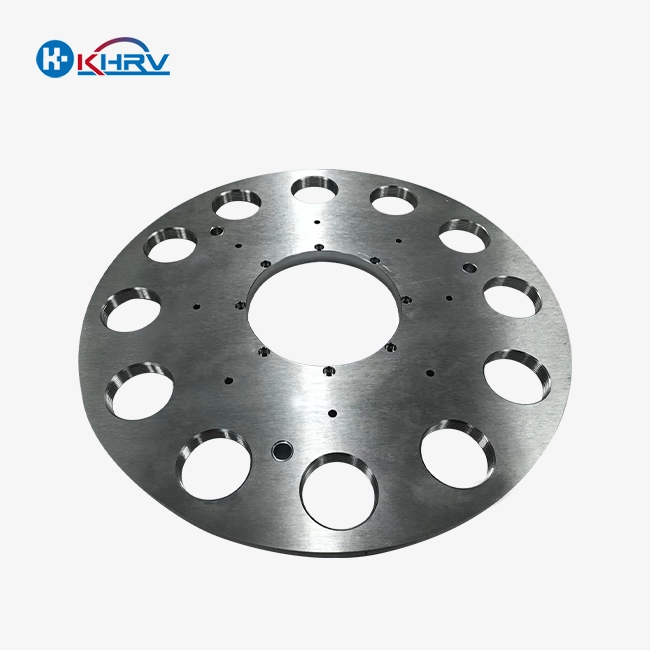
A complex precision machined part is more than a tight dimension on a drawing. It is a component built to hold dimensional stability, fixturing logic, and process repeatability across every production run—from the first article to the thousandth unit. Multi-structure geometries, multi-alloy builds, and interdependent tolerances make it unforgiving: a single good prototype proves little if the process behind it is not locked down.
What separates a reliable supplier from a lucky one comes down to a few attributes:
- Dimensional stability across batches — critical hole positions and flatness stay inside specification regardless of run size.
- Process repeatability — fixture setup, cutting parameters, and inspection checklists are frozen once the sample is approved.
- Material traceability — mill certificates and heat numbers tie every part back to its raw material.
- Documentation completeness — FAI reports, batch dimension records, and surface treatment certificates sit ready for audit.
A supplier chasing only the first approved sample will stumble later. A qualified manufacturer builds batch consistency and process locking into the workflow from day one, stopping the tool wear, fixturing drift, and residual stress that quietly create dimensional drift at scale.
How Complex Precision Machined Parts Perform in European OEM Supply Chains
Combining tiered precision control with locked workflows delivers results that are both measurable and repeatable.
1. Automation Equipment — 6061 Aluminum Brackets and Motor Housings
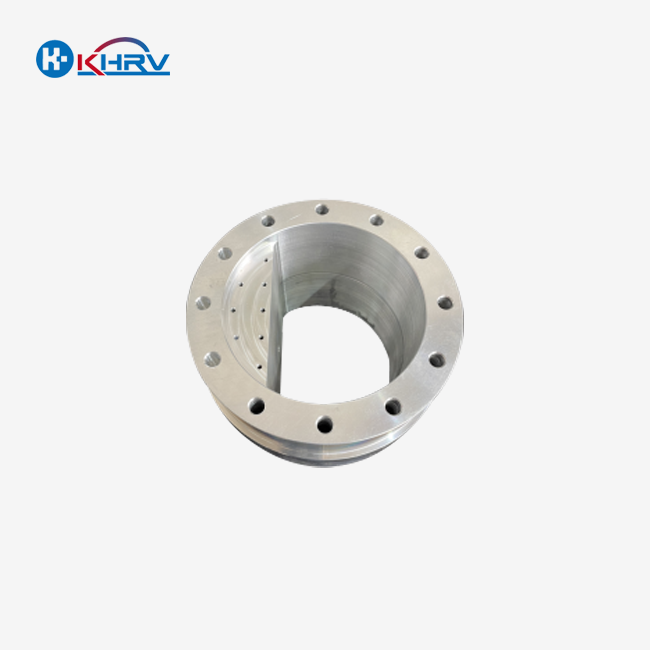
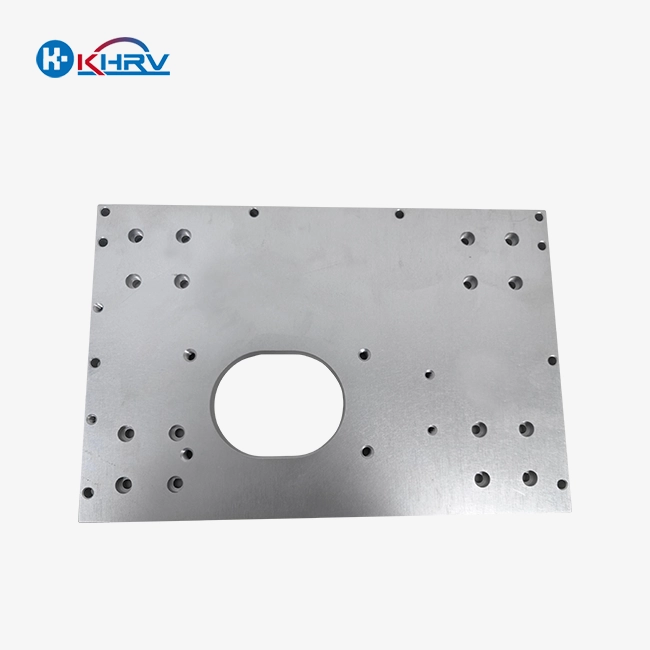
A German automation OEM needed 6061 aluminum brackets and motor housings for a robotic assembly line. Their previous supplier passed the prototype, then shipped out-of-tolerance batches three months in. Wuxi Kaihan reviewed the drawings, ran a DFM analysis, and applied tiered tolerance control: critical hole positions at ±0.01mm, flatness at 0.1mm, and non-critical surfaces to standard industrial tolerances. After sample approval, we froze the fixture setup, cutting parameters, and inspection checklist. Four hundred units shipped in 16 working days with full dimensional reports. The customer saw zero assembly rejections and cut per-part cost by 35% versus their prior European supplier.
2. Fluid Control Systems — 316L Stainless Steel Valve Bodies and Fittings
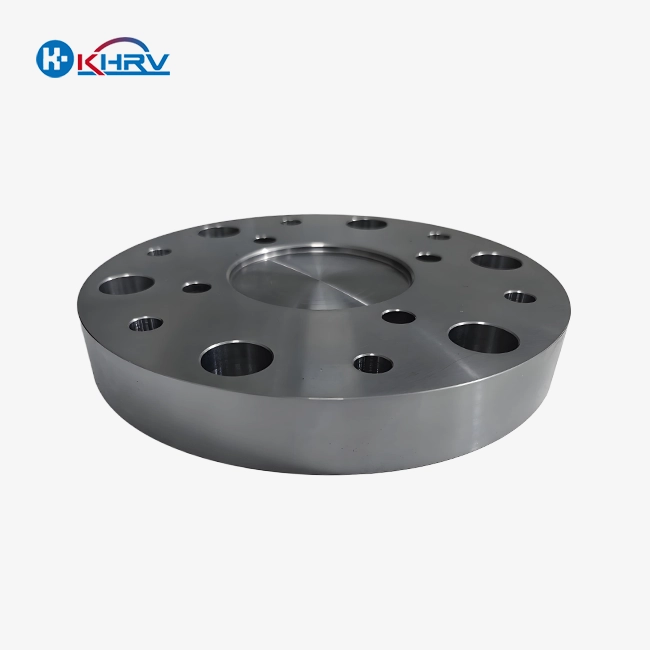
A Dutch fluid control manufacturer required 316L stainless steel valve bodies and threaded fittings for food processing. The parts needed corrosion resistance and precise thread dimensions. We machined them on 4-axis CNC machines, holding critical bore tolerance and thread fit within the tiered precision standard. A pre-production sample cleared in 5 working days; the full 300-unit batch shipped in 18. The customer cut cost by 40% versus local sourcing and logged zero leakage after 12 months of operation.
Across these projects, the pattern holds:
Precision is reserved for functional surfaces—±0.01mm positional accuracy and strict flatness standards—while non-critical features follow standard industrial tolerances.
Total cost lands 30–40% below European or high-end alternatives through smarter material matching and leaner processes.
Lead times stay predictable at 10–20 working days, backed by sample verification and complete English-language documentation.
Best Practices for Building Complex Precision Machined Parts Into Your Supply Chain
European procurement teams get the most out of this category when they qualify suppliers with the end state in mind.
Verify the trial-to-production handover. Before committing to volume, confirm the supplier locks process parameters, fixturing, and inspection checklists after sample approval. A formal DFM review up front catches thin-wall deformation, tolerance conflicts, and thread interference early. This is the difference between a repeatable process and a supplier who treats every batch as a brand-new job.
Demand documentation that survives an audit. European OEM quality systems expect material test certificates (MTC), first article inspection (FAI) reports, batch dimension records, surface treatment certificates, and RoHS statements. Insist these arrive in English, organized so they drop straight into your quality files. Thin documentation creates inspection delays and audit exposure you do not need.
Lock in a single point of contact. A dedicated engineer for technical discussion, drawing revisions, and schedule updates removes the information loss that happens when queries bounce between staff. Confirm response times and ask for proactive alerts the moment a material or process issue could affect shipment.
Take transit damage seriously. Sharp edges, thin walls, and delicate threads do not survive careless shipping. Specify compartmented packaging, anti-collision foam, and rust protection built for sea or air freight. It is a small requirement that removes a frequent, hidden source of rejects.
Conclusion
For European OEMs, the reliability of complex precision machined parts comes down to repeatable batch quality, dependable lead times, responsive communication, and documentation that holds up in an audit. Plenty of vendors can make a beautiful prototype; fewer can repeat it at scale without disrupting a lean line. Wuxi Kaihan builds its model around a stable trial-to-production handover, a fixed contact window, protective cross-border packaging, and traceable quality files. With tiered precision standards and a shop floor built on 3-axis and 4-axis CNC machines, we serve OEMs that want dependable mid-volume components without paying for over-processing. When batch consistency and complete documentation are non-negotiable, specifying professionally machined complex precision machined parts is a practical route to a resilient supply chain.
FAQ
1. What are complex precision machined parts, and why does batch consistency matter?
They are custom components requiring tight dimensional control, proper fixturing, and repeatable process control across production runs. Batch consistency matters because small variations in clamping, tool wear, or stress relief cause fit issues during OEM assembly—and that turns into rework and downtime.
2. Which materials suit complex precision machined parts?
Common choices include 6061 and 7075-T6 aluminum for lightweight brackets and housings, carbon and alloy steel for load-bearing parts, 316L stainless steel for corrosive and food-grade environments, and brass for fittings and connectors. Material selection pairs with surface treatments such as hard anodizing, passivation, and TiN coating.
3. How does tiered precision control lower cost without sacrificing quality?
It reserves ±0.01mm positional accuracy and strict flatness standards for critical functional surfaces and applies standard industrial tolerances everywhere else. That avoids the expense of full-workpiece ultra-precision grinding, cutting total manufacturing cost by 30–40% while keeping the accuracy OEM assembly actually needs.
4. What documentation does Wuxi Kaihan provide for European audits?
Material test certificates (MTC), first article inspection (FAI) reports, batch dimension inspection sheets, surface treatment records, and RoHS statements—all in English and delivered with every shipment, ready for incoming inspection and audit.
Partner with KHRV for Reliable Complex Precision Machined Parts | KHRV
Ready to put complex precision machined parts on a stable footing for your next project? Wuxi Kaihan Technology Co., Ltd. delivers OEM custom machining for European industrial OEMs. Our ISO 9001:2015 certified workshop runs 3-axis and 4-axis CNC machines, with locked process controls from sampling through mass shipment, complete English quality documentation, and packaging designed for cross-border transit. Expect 30–40% savings versus many local European workshops, transparent schedules, and a dedicated project contact.
Send your drawings and requirements to our engineering team at service@kaihancnc.com for a competitive quote.
References
Davis, R. T., & Weber, L. H. (2023). Batch Quality Stability and Process Locking for Custom CNC Machined Components. Journal of Industrial Component Supply Chain Management, 47(9), 162–178.
Müller, F. K., & Zhang, Y. (2022). Communication and Documentation Standards for European OEM Overseas Machining Sourcing. International Industrial Procurement Review, 20(11), 311–326.
Hoffmann, S. R., & Li, M. Z. (2023). Tolerance Tiering Strategy for Mid-Volume Precision Machined Parts in Cross-Border Supply Chains. Precision Manufacturing & Automation, 34(8), 174–190.
Peterson, C. J., & Wang, H. T. (2022). Packaging and Transit Damage Control for Exported Complex Machined Metal Parts. Logistics & Industrial Component Reliability, 14(6), 98–113.
Schmidt, A. B., & Chen, S. H. (2023). ISO 9001 Document Control and Traceability Requirements for European OEM Subcontract Machining. Manufacturing Compliance Journal, 32(5), 76–92.
Learn about our latest products and discounts through SMS or email