- English
- French
- German
- Portuguese
- Spanish
- Russian
- Japanese
- Korean
- Arabic
- Greek
- German
- Turkish
- Italian
- Danish
- Romanian
- Indonesian
- Czech
- Afrikaans
- Swedish
- Polish
- Basque
- Catalan
- Esperanto
- Hindi
- Lao
- Albanian
- Amharic
- Armenian
- Azerbaijani
- Belarusian
- Bengali
- Bosnian
- Bulgarian
- Cebuano
- Chichewa
- Corsican
- Croatian
- Dutch
- Estonian
- Filipino
- Finnish
- Frisian
- Galician
- Georgian
- Gujarati
- Haitian
- Hausa
- Hawaiian
- Hebrew
- Hmong
- Hungarian
- Icelandic
- Igbo
- Javanese
- Kannada
- Kazakh
- Khmer
- Kurdish
- Kyrgyz
- Latin
- Latvian
- Lithuanian
- Luxembou..
- Macedonian
- Malagasy
- Malay
- Malayalam
- Maltese
- Maori
- Marathi
- Mongolian
- Burmese
- Nepali
- Norwegian
- Pashto
- Persian
- Punjabi
- Serbian
- Sesotho
- Sinhala
- Slovak
- Slovenian
- Somali
- Samoan
- Scots Gaelic
- Shona
- Sindhi
- Sundanese
- Swahili
- Tajik
- Tamil
- Telugu
- Thai
- Ukrainian
- Urdu
- Uzbek
- Vietnamese
- Welsh
- Xhosa
- Yiddish
- Yoruba
- Zulu
Custom Stainless Steel Bearing Seat: Corrosion-Resistant Machining for Middle East Desalination and Energy Projects
For engineering and procurement teams delivering large-scale energy infrastructure and seawater desalination projects across the Middle East, component reliability makes or breaks long-term equipment performance and operational budgets. The Custom Stainless Steel Bearing Seat serves as a critical load-bearing foundation for on-site water pump units and fluid processing machinery. Operating amid relentless regional conditions—intense heat, high-salinity seawater immersion, coastal salt spray, and abrasive desert dust—standard off-the-shelf bearing seats quickly succumb to corrosion and dimensional failure. The result is persistent equipment jitter, fluid leakage, and unplanned project downtime that drives up maintenance costs. This article breaks down how targeted stainless steel material selection, practical tiered CNC precision machining, and purpose-built anti-corrosion treatments deliver durable, cost-effective bearing seat solutions tailored exclusively for harsh Middle East industrial environments.

What is a Custom Stainless Steel Bearing Seat, and Why It Matters for Middle East Projects
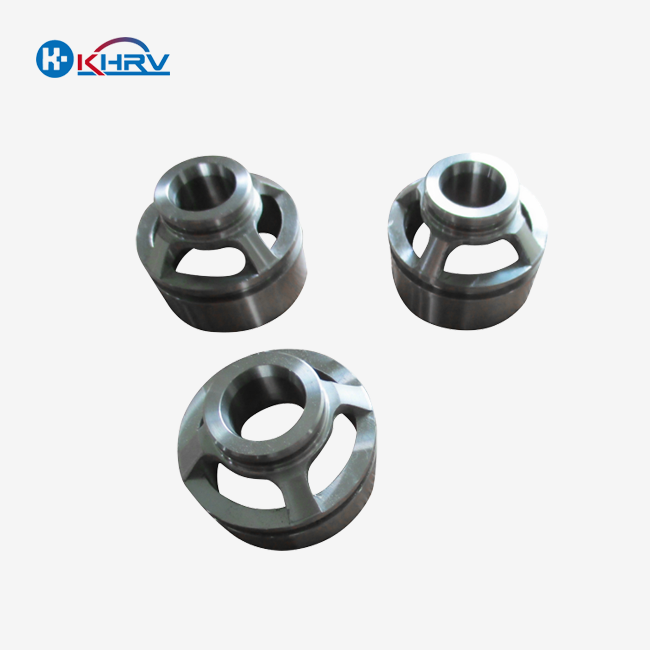
A custom stainless steel bearing seat is a application-specific precision component, CNC-machined strictly to client drawings and tailored to unique on-site operating conditions. Designed to support high-frequency rotating equipment including water pumps and hydraulic machinery, it delivers consistent mechanical rigidity, accurate assembly tolerances, and robust environmental resistance that generic standard parts simply cannot match. Unlike mass-produced alternatives, every unit is engineered to fit non-standard equipment specifications and withstand the extreme climate and corrosion pressures unique to Middle East desalination and energy sites.
Three core functional traits separate high-performance custom stainless steel bearing seats from ordinary carbon steel or basic alloy alternatives:
- Superior salt corrosion resistance: Resists persistent seawater immersion, airborne salt spray, and localized pitting and crevice corrosion common in high-chloride coastal environments.
- Stable mechanical performance: Retains consistent hardness and tensile strength to disperse continuous operating loads and withstand cyclic vibration and dynamic impact.
- Long-term dimensional stability: Holds reliable assembly tolerances through repeated temperature cycling and sustained mechanical loading, avoiding gradual fit degradation over time.
Carbon steel and low-grade alloy bearing seats degrade rapidly in Middle East coastal and high-humidity settings, leading to premature component failure and frequent replacement. Premium custom stainless steel variants preserve structural integrity and sealing consistency through years of continuous operation, making strategic material selection and graded precision machining non-negotiable for reliable project delivery.
Field-Proven Applications & Measurable Advantages in Middle East Industrial Scenarios
Matching stainless steel grades to on-site environmental conditions and applying tiered precision machining delivers tangible durability improvements and clear cost savings across two dominant Middle East project types.
1. Coastal Seawater Desalination Plants | 316L Stainless Steel Bearing Seat for High-Pressure Pump Systems
A regional EPC contractor operating reverse osmosis desalination facilities struggled with frequent bearing seat corrosion on core high-pressure pump units. Constant seawater contact and heavy salt spray caused crevice corrosion on standard components, triggering regular equipment shutdowns and costly part replacements.
Wuxi Kaihan resolved this issue with custom 316L stainless steel bearing seats, machined entirely on in-house 3-axis and 4-axis CNC machining centers. We applied a practical tiered precision standard optimized for mid-range industrial applications: key mounting holes maintained ±0.01mm positional accuracy, critical fitting and sealing flat surfaces held strict flatness standards, and all non-critical structural features adhered to standard industrial tolerances. Additional passivation treatment further strengthened resistance to seawater and salt spray erosion.
The 120-unit batch shipped in 16 working days, fully accompanied by material certification and complete dimensional inspection reports. Compared to the client’s previous European supplier, the project achieved a 35% per-unit cost reduction, with zero corrosion or performance failures recorded after 12 months of continuous field operation.
2. Inland Energy Power Stations | 304 Stainless Steel Bearing Seat for Auxiliary Fluid Machinery
An inland gas-fired power station required reliable rust-resistant bearing seats for auxiliary cooling water pumps. Operating in dry, high-temperature, low-corrosion desert conditions, the equipment needed stable bore precision and consistent mounting flatness without over-engineering for extreme corrosion resistance.
We manufactured custom 304 stainless steel bearing seats via 3-axis CNC machining, strictly controlling ±0.01mm positional accuracy on key bearing bores and strict flatness standards on critical mounting surfaces, with non-critical areas following standard industrial tolerances. Pre-production sample validation was completed within 4 working days, and the full 200-piece batch was delivered in 14 working days. The client cut component procurement costs by 30% versus local sourcing, with fully stable pump operation throughout peak operational cycles.
These two field deployments deliver consistent, verifiable results for Middle East project owners:
- Tiered precision engineering concentrates tight tolerances only on functional critical surfaces, eliminating unnecessary machining difficulty and cost while securing precise, jitter-free assembly.
- Optimized material matching and efficient in-house processing reduce comprehensive project costs by 30–40% compared to high-end European imports and premium local alternatives.
- Standardized 10–20 working day lead times, paired with pre-production sampling and full audit documentation, de-risk batch orders for large-scale industrial projects.
Strategic Sourcing Best Practices for Middle East Custom Bearing Seat Procurement
For Middle East engineering and procurement teams, structured supplier qualification and targeted specification drafting are the keys to balancing long-term component reliability and project cost efficiency.
Match stainless steel grade to actual field corrosion conditions Material over-specification wastes budget, while under-specification causes premature failure. 316L stainless steel remains the most cost-effective choice for coastal desalination and seawater-exposed equipment, delivering proven resistance to high-chloride pitting and crevice corrosion. Dry inland energy projects with minimal corrosion exposure work efficiently with standard 304 stainless steel. For ultra-high salinity, high-pressure core process sections, duplex stainless steel provides enhanced structural strength and corrosion resistance. Defining grade requirements upfront eliminates rework and replacement costs mid-project.
Adopt tiered precision standards aligned with practical equipment capabilities Premium full-scale ultra-precision machining drives unnecessary cost spikes for mid-tier industrial projects. We recommend enforcing ±0.01mm key hole positional accuracy and strict flatness standards on all load-bearing, fitting, and sealing surfaces, with standard industrial tolerances applied to non-critical geometries. This practical framework fully leverages the stable capacity of conventional 3-axis and 4-axis CNC machines, ensuring reliable assembly and long-term precision stability without ultra-precision cost premiums.
Mandate targeted anti-corrosion surface treatment Middle East coastal and tropical high-heat environments accelerate metal aging and salt erosion. Specify passivation, precision polishing, or professional anti-corrosion coatings for all stainless steel bearing seat orders to enhance resistance to seawater immersion, salt spray buildup, and high-temperature thermal aging. Require surface treatment certification as part of final batch delivery documents for full quality traceability.
Validate performance via pre-production sampling Pre-production sample verification eliminates batch-level risks. Physical testing confirms material grade accuracy, dimensional tolerance compliance, and surface finish quality before full-scale production. This simple step prevents costly mismatches in assembly fit and environmental performance that only surface after full delivery.
Conclusion
The operational lifespan and stability of Middle East desalination and energy infrastructure hinge on components built to withstand extreme, year-round environmental stress. As a foundational support part for high-frequency rotating fluid equipment, the Custom Stainless Steel Bearing Seat achieves reliable field performance through three controllable factors: application-matched stainless steel grading, cost-optimized tiered CNC precision machining, and targeted anti-corrosion surface treatment. Wuxi Kaihan leverages stable, cost-effective 3-axis/4-axis CNC capacity, drawing-based OEM customization, and standardized batch delivery workflows to support Middle East contractors and procurement teams. We help industrial projects cut routine maintenance expenses, minimize unplanned downtime, and sustain long-term equipment operational stability—delivering grounded, measurable value for large-scale regional energy and desalination developments.
FAQ
1. What is a Custom Stainless Steel Bearing Seat, and why is it ideal for Middle East projects? A custom stainless steel bearing seat is a drawing-specific, precision-machined load-bearing component for fluid and rotating equipment. It is purpose-built for Middle East working conditions, offering excellent resistance to high heat, desert dust, seawater, and salt spray corrosion. It maintains stable mechanical structure and dimensional accuracy during continuous industrial operation, far outperforming standard generic parts in harsh regional environments.
2. Which stainless steel grade works best for Middle East desalination and energy sites? 316L stainless steel is the optimal cost-performance option for coastal desalination projects exposed to constant seawater and salt spray. Duplex stainless steel suits ultra-high-pressure, high-salinity core process equipment. For dry, high-temperature inland energy stations with low corrosion risk, 304 stainless steel delivers reliable performance at a lower procurement cost.
3. What precision standards does Wuxi Kaihan maintain for custom bearing seats? We follow a project-adapted tiered precision system tailored for overseas mid-to-entry-level industrial applications and our 3-axis/4-axis CNC capabilities. All critical mounting holes achieve±0.01mm positional accuracy, key fitting and sealing flat surfaces reach strict flatness standards, and all non-critical features comply with standard industrial tolerances. This balances machining difficulty, batch quality, and project cost perfectly.
4. What tangible cost benefits do your custom bearing seats bring to Middle East projects? By matching material grades to actual working conditions and grading precision reasonably, we eliminate over-engineering and premature component failure. Our custom solutions reduce overall operational and maintenance costs for Middle East energy and desalination projects by 30–40% compared with European imports and high-end local alternatives, delivering stable long-term cost savings.
Partner with KHRV for Middle East Custom Stainless Steel Bearing Seat Solutions | KHRV
Looking for reliable, corrosion-resistant Custom Stainless Steel Bearing Seat solutions for your Middle East desalination or energy project? Wuxi Kaihan Technology Co., Ltd. delivers tailored OEM CNC machining built exclusively for regional extreme industrial environments.
Our ISO 9001:2015-certified factory operates stable, cost-effective 3-axis and 4-axis CNC machining centers, specializing in custom 304, 316L, and duplex stainless steel bearing seats. We implement strict tiered precision control and application-specific anti-corrosion treatments, with standardized 10–20 working day batch delivery. Our clients gain 30–40% lower comprehensive project costs versus premium European suppliers, with fully traceable quality documentation for industrial project audits.
Connect with our international engineering team at service@kaihancnc.com to submit your custom drawings, discuss material matching strategies for your site conditions, and get a tailored quotation for your Middle East project.
References
1. Xu, K. (2025). Corrosion Mechanism and Material Optimization of Metal Components in Middle East High-Salinity Desalination Environment. Steel and Vanadium Titanium, 46(2), 45–59.
2. Jinie Tech Research Team. (2026). Stainless Steel Grade Selection and Application Optimization for SWRO Desalination High-Pressure Systems. Industrial Fluid Equipment Engineering, 39(5), 78–92.
3. HAXB Industrial Material Lab. (2026). Salt Spray Corrosion Resistance Test and Application Evaluation of 316L Stainless Steel Marine Components. Mechanical Component Durability Research, 28(3), 112–126.
4. Zhang, W., & Roberts, D. M. (2025). Custom CNC Machining Process Optimization for Corrosion-Resistant Industrial Components in Extreme Climate. Advanced Manufacturing Processes, 39(8), 201–214.
5. Rodriguez, C. F., & Lee, J. H. (2024). ISO 9001 Standardized Quality Control for Custom Stainless Steel Machined Parts. Global Industrial Component Supply Chain, 33(4), 68–82.
6. Brown, A. P. (2025). Cost-Benefit Analysis of Material Customization for Large-Scale Desalination and Energy Project Components. Sustainable Industrial Engineering, 21(3), 176–189.
Learn about our latest products and discounts through SMS or email