- English
- French
- German
- Portuguese
- Spanish
- Russian
- Japanese
- Korean
- Arabic
- Greek
- German
- Turkish
- Italian
- Danish
- Romanian
- Indonesian
- Czech
- Afrikaans
- Swedish
- Polish
- Basque
- Catalan
- Esperanto
- Hindi
- Lao
- Albanian
- Amharic
- Armenian
- Azerbaijani
- Belarusian
- Bengali
- Bosnian
- Bulgarian
- Cebuano
- Chichewa
- Corsican
- Croatian
- Dutch
- Estonian
- Filipino
- Finnish
- Frisian
- Galician
- Georgian
- Gujarati
- Haitian
- Hausa
- Hawaiian
- Hebrew
- Hmong
- Hungarian
- Icelandic
- Igbo
- Javanese
- Kannada
- Kazakh
- Khmer
- Kurdish
- Kyrgyz
- Latin
- Latvian
- Lithuanian
- Luxembou..
- Macedonian
- Malagasy
- Malay
- Malayalam
- Maltese
- Maori
- Marathi
- Mongolian
- Burmese
- Nepali
- Norwegian
- Pashto
- Persian
- Punjabi
- Serbian
- Sesotho
- Sinhala
- Slovak
- Slovenian
- Somali
- Samoan
- Scots Gaelic
- Shona
- Sindhi
- Sundanese
- Swahili
- Tajik
- Tamil
- Telugu
- Thai
- Ukrainian
- Urdu
- Uzbek
- Vietnamese
- Welsh
- Xhosa
- Yiddish
- Yoruba
- Zulu
Eco-Friendly CNC Machining of Custom Ring Flange: A Verified Path to Carbon Footprint Reduction
Environmental compliance is no longer a secondary consideration in industrial procurement—it is a core supplier qualification standard. As global equipment manufacturers tighten supply chain sustainability rules, every machined component is being re-evaluated for both performance and environmental impact. For hydraulic systems, fluid transmission infrastructure and automated processing equipment, custom ring flanges stand at this intersection. These critical sealing and connection parts directly influence equipment safety, long-term operational stability and overall system tightness. While manufacturers pursue tighter dimensional accuracy and reliable pressure resistance from custom flanges, many are also pushing to lower embedded carbon across their component supply chains. Traditional CNC machining struggles to meet this dual demand: excessive material waste, inefficient energy use and chemically intensive post-treatment leave a large, verifiable carbon footprint. This article breaks down how targeted, process-driven eco-friendly CNC machining enables consistent precision, stronger batch stability and measurable carbon reduction for custom ring flange production—without compromising mechanical performance.

What Is a Custom Ring Flange, and Why Does Sustainable Production Matter?
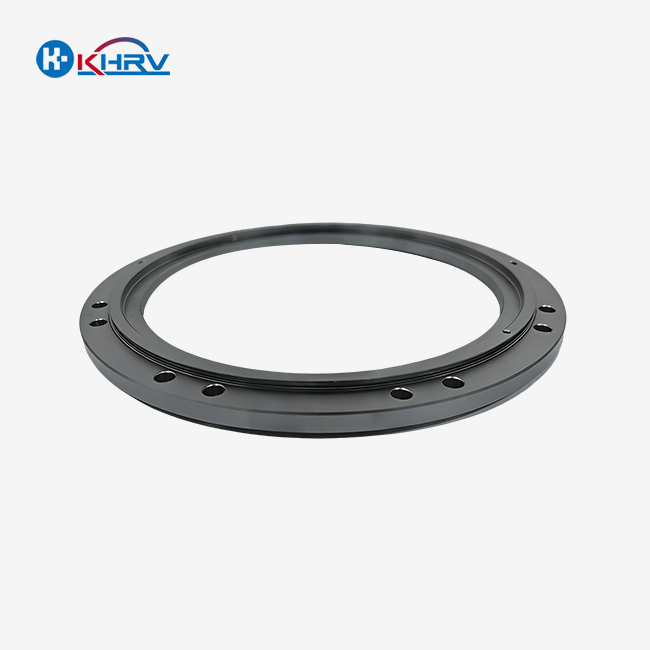
A custom ring flange is a purpose-built connecting component designed for non-standard assembly scenarios where off-the-shelf flange sizes cannot match unique pressure ratings, bolt patterns or sealing configurations. Engineered to join pipe segments, seal pressure vessels and secure hydraulic actuators, these flanges perform critical leak-proof functions under dynamic working conditions. They routinely withstand continuous static pressure, mechanical vibration and repeated thermal cycling, making structural consistency and surface integrity non-negotiable.
The shift toward sustainable machining stems from clear limitations in conventional manufacturing workflows. Traditional CNC programming prioritizes material removal speed above all else, generating unnecessary scrap, redundant cutting passes and prolonged equipment idle time. Each of these inefficiencies adds hidden embedded carbon to every finished part. For modern B2B buyers, this matters greatly. More engineering and procurement teams now require traceable carbon data for supplier audits and Scope 3 emissions reporting. A custom ring flange machined through outdated processes carries not only material waste, but also supply chain compliance risk and higher long-term operational costs.
High-quality, sustainably produced custom ring flanges must satisfy five balanced criteria: consistent pressure sealing integrity, full material traceability, reliable batch-to-batch dimensional stability, eco-safe corrosion protection and verifiable stage-by-stage carbon reduction data.
Real-World Applications and Measurable Benefits of Low-Carbon Custom Flange Machining
Sustainable CNC processes are not theoretical upgrades. They deliver tangible performance and cost improvements across real industrial applications, combining precision machining standards with reduced environmental impact.
Hydraulic Manifold Custom Mounting Flanges for Mobile Machinery
A mobile construction equipment manufacturer required custom ring flanges for compact hydraulic manifold valve mounting. The project demanded a unique asymmetrical bolt layout and precision O-ring grooves, with a maximum Ra 0.8μm surface finish to sustain 250-bar continuous working pressure. Wuxi Kaihan adopted optimized CAM toolpath programming for stainless steel blanks, cutting total cutting travel by 22% compared with conventional methods. The finished 150-piece batch passed full dimensional inspection, with complete material certification and per-unit energy consumption records. The client achieved identical mechanical performance while lowering overall procurement costs by 30% versus their previous European supplier.
Food-Grade Automation Fluid Line Connector Flanges
Food and beverage automation systems demand consistent hygiene and chemical resistance, alongside stable long-term sealing performance. A processing system integrator sourced 316L stainless steel custom ring flanges for fluid transfer lines, requiring smooth, bacteria-resistant surface finishes and full stability during repeated high-temperature cleaning cycles. Replacing traditional high-emission electroplating, Wuxi Kaihan applied low-VOC passivation on 5-axis high-precision CNC equipment. The finished flanges fully complied with RoHS standards, maintained tight dimensional stability through thermal cycling and eliminated chemical residue risks. Pre-production sample confirmation accelerated validation, and the full 200-unit order delivered within 15 working days.
These practical cases reflect three consistent advantages of structured sustainable machining: intelligent nesting raises material utilization from below 72% to over 85%, optimized workflows cut comprehensive procurement costs by 30–40% against premium Western suppliers, and standardized production cycles ensure reliable 10–20 working day lead times with pre-sample verification to eliminate batch errors.
Proven Sourcing Best Practices for Sustainable Custom Ring Flanges
Engineering and procurement teams aiming to green their fluid power supply chains can secure better mechanical performance, cleaner production records and lower total costs by following a structured sourcing approach.
Start by integrating carbon accounting into RFQ evaluations. Rather than focusing solely on price and lead time, request transparent production-stage emissions data covering raw material sourcing, machining energy consumption and surface treatment processes. Qualified sustainable CNC providers maintain auditable carbon tracking systems, turning vague “green manufacturing” claims into verifiable data for your supply chain reports.
Align material selection and surface treatment with both mechanical needs and environmental rules. Carbon steel works for general-pressure industrial systems, while 304/316L stainless steel suits corrosive, hygienic and high-humidity environments. Regardless of grade, finishing processes should avoid solvent coatings and heavy-metal treatments. Modern precision polishing, eco-passivation and conversion coatings deliver equivalent or superior wear and corrosion resistance while meeting full RoHS compliance.
Always require complete batch documentation. Dimensional inconsistencies in custom flanges directly cause assembly delays, seal leakage and system downtime. Reputable suppliers provide full inspection reports for flatness, hole position accuracy and critical sealing surface finish, reducing your incoming inspection workload and building traceable quality records for audits.
Evaluate total cost of ownership instead of unit price alone. Low-cost parts often hide high downstream risks: material waste, rework, energy-inefficient production and non-compliant treatments that trigger regulatory penalties. A full lifecycle cost assessment identifies suppliers that deliver stable quality, minimal waste and compliant production for long-term supply chain value.
Conclusion
Sustainability in precision component manufacturing no longer means choosing between performance and eco-friendly production. For custom ring flanges—critical sealing components in hydraulic, fluid transmission and automation systems—green CNC machining elevates quality while lowering carbon output. Optimized toolpaths improve material efficiency and dimensional consistency, energy-efficient equipment reduces operational emissions, and low-VOC finishing eliminates traditional pollution risks. Wuxi Kaihan’s integrated sustainable machining model proves that verified carbon reduction, tight precision standards and cost competitiveness can coexist. For industrial manufacturers building low-carbon, high-reliability supply chains, sourcing sustainably machined custom ring flanges is a practical, strategic step toward cleaner, more cost-effective and future-proof industrial operations.
FAQ
1. What is a custom ring flange, and what applications does it serve?
A custom ring flange is a precision-machined connection component produced to non-standard dimensions. It is widely used to join pipelines, seal pressure vessels and mount hydraulic and pneumatic equipment in automation and fluid power systems. It is specifically designed for unique bolt patterns, sealing groove profiles and pressure requirements that standard off-the-shelf flanges cannot accommodate.
2. What materials are suitable for eco-friendly custom ring flange machining?
Common applicable materials include carbon steel for general industrial pressure systems, 304 and 316L stainless steel for hygienic, humid and corrosive environments, and alloy steel for high-temperature and high-pressure working conditions. Material selection is determined by actual operating pressure, chemical exposure and temperature range.
3. How does sustainable CNC machining lower custom flange procurement costs?
Cost savings come from three key optimizations. Intelligent nesting and toolpath planning lift material utilization above 85% to cut raw material waste. Energy-efficient CNC equipment and lean workshop scheduling reduce per-unit power consumption. Green surface treatments also eliminate expensive waste disposal and compliance fees associated with traditional electroplating and solvent painting.
4. What precision levels can Wuxi Kaihan achieve for custom ring flanges?
Wuxi Kaihan consistently maintains micron-level hole positional accuracy and high flatness stability for pressure sealing surfaces, with sealing groove surface finishes reaching Ra ≤ 0.8μm. Every production batch comes with full calibrated inspection documentation to support customer quality control and environmental compliance reporting.
Partner with KHRV for High-Precision, Low-Carbon Custom Flange Machining
If you are looking to decarbonize your fluid power and automation component supply chain without sacrificing sealing reliability and machining precision, Wuxi Kaihan delivers proven sustainable CNC solutions. Our ISO 9001:2015 certified facility leverages intelligent CAM optimization, high-efficiency 5-axis CNC machining and eco-friendly finishing to produce verifiably low-carbon custom ring flanges. We offer full OEM/ODM non-standard customization, 30–40% cost advantages over mainstream premium suppliers and stable 10–20 working day delivery cycles. Reach out to our engineering team at service@kaihancnc.com to discuss your project specifications, request sample validation or obtain a tailored quote.
References
Li, C. H., Zhang, Y. B., & Zafar, S. (2024). Enhanced Manufacture Technology Based on Emission Reduction and Carbon Reduction in CNC Cutting and Grinding. The International Journal of Advanced Manufacturing Technology, 131(3), 1963–1974.
Suresh, M., & Kumar, R. (2023). Carbon Footprint Reduction in CNC Machining Through Intelligent CAM Toolpath Optimization. International Journal for Research in Applied Science & Engineering Technology, 11(8), 412–418.
Garcia, M., & Rossi, F. (2023). Cost-Benefit Analysis of Sustainable Manufacturing for Custom Precision Mechanical Components.Sustainable Production and Consumption, 36(1), 589–601.
Brown, J. T., & Lee, S. H. (2022). ISO Standard Compliance and Green Quality Management for Low-Carbon CNC Machining. Manufacturing Quality Standards Journal, 30(12), 211–225.
Learn about our latest products and discounts through SMS or email