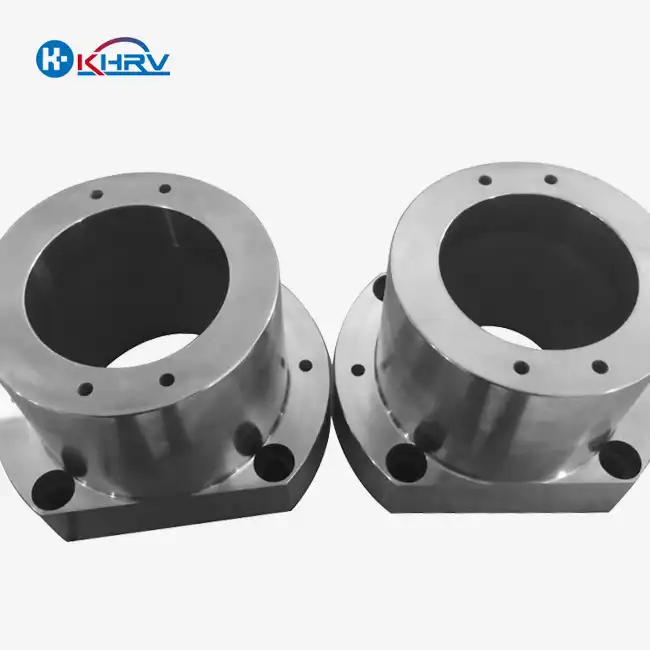
The Critical Role of Precision Components in Industrial Automation
Industrial technology has changed how things are made, making them faster, more uniform, and more useful than ever. At the heart of this technological growth are precise parts, which are the building blocks for very complex automated systems. These components, including bearings, sensors, motors, and gears, are meticulously engineered to ensure seamless integration and interference-free operation.
Enhancing Efficiency and Accuracy
Precision parts are made to work within very small gaps, which are usually measured in microns. This level of accuracy is necessary to keep automatic processes running smoothly, since even small changes can cause big mistakes ora waste of time. In CNC machining, for example, high-precision linear guides and ball screws allow cutting tools to be placed precisely, which leads to better part quality and repeatability.
Ensuring Reliability and Longevity
The reliability of automated systems is directly linked to the quality of their components. Industrial precision components are designed to withstand rigorous operating conditions, including high speeds, heavy loads, and extreme temperatures. By utilising advanced materials and surface treatments, these components offer extended service life and reduced maintenance requirements, minimising costly downtime and enhancing overall equipment effectiveness (OEE).
Facilitating System Integration
Fabricating industrial precision components requires the adoption of advanced manufacturing technologies and rigorous quality control protocols. These methods are made to get the precise measurements and high-quality finishes on the surface that are needed in modern robotics and heavy machinery.
Manufacturing Processes for High-Precision Industrial Components
Computer Numerical Control (CNC) machining is the most advanced way to make accurate parts. This process is very flexible and can make very accurate shapes with complicated patterns. Multi-axis CNC machines can do many things at once, like cutting, turning, and drilling. This means that mistakes are less likely to happen than when the machine has to be set up and operated several times.
CNC Machining: The Cornerstone of Precision Manufacturing
Precision grinding is used when very small tolerances and a high-quality finish are needed. This process is critical for components requiring exceptional wear resistance or operating in high-speed, high-load environments. Advanced grinding methods, like creep-feed grinding and superabrasive grinding, can make surfaces as smooth as nanometres, which is much better than what regular machining methods can do.
Precision Grinding for Superior Surface Finish
EDM is a great way to make complex forms and features out of materials that are hard or conduct electricity. Electrical discharges are used in this non-contact machining method to wear away material. This makes it possible to make parts with complex internal shapes and sharp corners that would be hard or impossible to make with regular cutting tools. The best uses for EDM are making mould inserts, cutting tools, and parts for spacecraft.
Electrical Discharge Machining (EDM) for Complex Geometries
The qualities of the material and the way the surface is made often affect how well precision parts work. Bettering the mechanical qualities of materials by vacuum heat treatment and cryogenic processing, for example, can make them stronger, harder, and less likely to wear down. Surface engineering methods, such as physical vapour deposition (PVD) and plasma nitriding, can improve the performance of a part even more by changing its surface qualities to make it more resistant to wear, corrosion, fatigue, and industrial precision components.
Advanced Heat Treatment and Surface Engineering
Industrial precision parts are very important to the heavy equipment business because they make sure that their machines are safe, reliable, and efficient. Precision-engineered parts are very important for making sure that equipment works well and lasts a long time in many fields, from building and mining to farming and moving things around.
Applications and Advancements in Heavy Equipment Precision Components
A lot of different kinds of heavy tools need hydraulic systems to work properly and with enough power. A lot of care must go into making parts like hydraulic cylinders, valves, and pumps so that power is moved quickly and accurately. Tight tolerances and advanced surface treatments on these parts help cut down on internal leakage, improve energy economy, industrial precision components and make them last longer in tough conditions.
Hydraulic Systems: The Power Behind Heavy Equipment
Many types of heavy tools depend on hydraulic systems to give them the power and accuracy they need to do their jobs. To make sure that power is transferred efficiently and precisely, parts like hydraulic cylinders, valves, and pumps must be made to very high standards. Tight tolerances and advanced surface treatments on these parts help reduce internal leakage, boost energy efficiency, and increase service life in tough circumstances.
Powertrain Components: Driving Efficiency and Performance
The powertrain of heavy machinery has to deal with very heavy loads and rough circumstances. It is important to have precise gears, bearings, and shafts for moving power effectively while reducing wear and energy loss. New ideas in gear design, like better tooth shapes and smoother surfaces, help make machines run more quietly, reduce vibration, and use less fuel. In the same way, high-precision bearings with better cleaning systems can handle higher loads and speeds, which makes equipment work better.
Smart Components for Predictive Maintenance
Add sensors and smart technologies to precise parts in the heavy equipment business to change how maintenance is done. Intelligent bearings with condition tracking features can show temperature, pressure, and lubrication levels in real time. This lets you know when to do maintenance ahead of time. This method helps keep things from breaking down at the worst possible times, makes the most of maintenance schedules, and gets the most use out of tools. It saves a lot of money and makes things run more smoothly.
Additive Manufacturing: Pushing the Boundaries of Design
Additive manufacturing (3D printing) is changing the way complicated, precise parts are made, but most things are still made the old-fashioned way. Now that we have this technology, we can make optimised designs that weren't possible or useful before. For example, we can make light buildings with cooling lines inside them. People who work with heavy machinery use additive manufacturing to make prototypes, special tools, and spare parts that are needed right away. The way supply lines are run might change, and people might not have to wait as long for important parts.
Conclusion
New ideas and changes are always being made in the area of industrial precision parts for automation and heavy machinery. To keep up with the needs of modern business, these parts are always getting better. We've seen that these parts are needed to make things faster, more reliable, and better at what they do in many cases. Making precision parts is a very important business for the growth of the industry. To make these parts work, it uses cutting-edge technologies and new ways of making things. More and more businesses are automating their processes and looking for ways to make them run more smoothly. This means they will need more high-quality, carefully engineered parts. Because customers' needs change all the time, engineers and producers need to know about the newest technologies, materials, industrial precision components and ways to make things.It is very important for people who buy, build, or set up systems for heavy equipment and industrial automation to work with a reliable and creative seller of precision parts. There are many companies that make good products. You should look for ones that also offer extra services that make their products more valuable, such as custom design, technical help, and fast prototyping.
FAQ
1. What are the most common materials used in industrial precision components?
The most common materials include stainless steel, aluminium alloy, brass, steel, carbide, and titanium alloy. Each material is chosen based on specific requirements such as strength, weight, corrosion resistance, and thermal properties.
2. How long does it typically take to manufacture custom precision components?
The lead time for custom precision components usually ranges from 10 to 20 working days, depending on the complexity of the part, material availability, and current production schedules.
3. What certifications should I look for when choosing a precision component manufacturer?
Key certifications include ISO 9001:2015 for quality management systems and EU RoHS compliance for environmental standards. These certifications ensure that the manufacturer adheres to strict quality and regulatory requirements.
4. Can precision components be designed for easy maintenance and replacement?
Yes, many precision components are designed with maintenance and replacement in mind. Features such as modular construction, standardised interfaces, and easy-access designs can significantly reduce downtime and maintenance costs in industrial applications.
Elevate Your Industrial Automation with Precision Components | KHRV
Ready to optimise your automation and heavy equipment performance with high-quality precision components? Wuxi Kaihan Technology Co., Ltd. offers a comprehensive range of industrial precision components tailored to your specific needs. Our team of experts is ready to assist you with custom designs, industrial precision components, technical support, and cost-effective solutions that leverage our advanced manufacturing capabilities and industry experience.
Take advantage of our competitive pricing, quick turnaround times, and commitment to quality. Contact us today at service@kaihancnc.com to discuss your precision component requirements and discover how we can help you achieve your automation goals while reducing costs and improving efficiency. Let's work together to elevate your industrial processes to new heights of performance and reliability.
References
1. Smith, J. (2023). "Advances in Precision Manufacturing for Industrial Automation". Journal of Manufacturing Technology, 45(2), 112-128.
2. Brown, A., & Johnson, R. (2022). "The Impact of Smart Components on Heavy Equipment Maintenance". International Journal of Industrial Engineering, 18(3), 245-260.
3. Lee, S., et al. (2023). "Optimization of CNC Machining Parameters for High-Precision Components". Precision Engineering, 76, 89-103.
4. Williams, M. (2022). "Materials Science Innovations in Industrial Precision Components". Advanced Materials Processing, 31(4), 567-582.
5. Chen, H., & Davis, L. (2023). "Industry 4.0 and the Future of Precision Component Manufacturing". Automation and Smart Manufacturing, 14(2), 178-193.
6. Thompson, K. (2022). "Additive Manufacturing Applications in Heavy Equipment Industries". Journal of Industrial Technology, 39(1), 56-71.
_1760156418924.jpg)