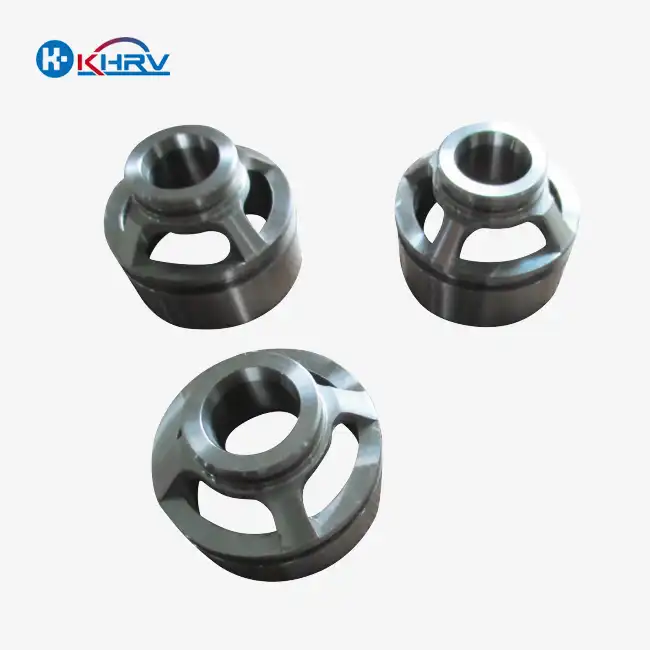
Advanced CNC Machining Techniques for Motor Part Precision
The production of high-precision CNC motor parts requires a combination of state-of-the-art machinery and sophisticated machining techniques. Let's delve into some of the most effective methods used in modern CNC manufacturing:
Multi-Axis Machining
Multi-axis CNC machining, particularly 5-axis machining, has revolutionized the production of complex motor components. This technique allows for simultaneous movement along five different axes, enabling the creation of intricate geometries with a single setup. The benefits of multi-axis machining for motor parts include:
- Less time spent setting up and better accuracy
- Being able to make complicated shapes and undercuts
- Better quality of surface finish
- More work is getting done, and shorter lead times
For instance, when machining motor housings or rotor assemblies, 5-axis CNC technology can significantly improve precision and efficiency compared to traditional 3-axis methods.
High-Speed Machining (HSM)
High-speed machining is another crucial technique in the production of CNC motor parts. This method involves using higher spindle speeds and feed rates to achieve faster material removal rates while maintaining or even improving part quality. HSM offers several advantages for motor component manufacturing:
- Reduced machining time and increased productivity
- Improved surface finish, reducing the need for secondary operations
- Lower cutting forces allow for the machining of thin-walled parts
- Enhanced accuracy and dimensional stability
HSM is particularly beneficial when working with materials commonly used in motor parts, such as aluminum alloys or stainless steel, as it can significantly reduce cycle times without compromising quality.
Precision Grinding and Finishing
Although CNC milling and turning are the primary manufacturing processes for motor parts, precision grinding and finishing are often required to achieve the required tolerances and surface quality standards. Among these steps are:
- Centerless grinding for cylinder-shaped parts
- For flat areas and exact thicknesses, surface grinding is used
- Honing to improve the accuracy of the internal hole and the finish on the surface. Finishing steps are very important for parts like motor shafts, bearings, and precise gears because the quality of the surface affects how well they work and how long they last.
Material Selection and Processing Considerations for CNC Motor Parts
Choosing the right materials and understanding their machining characteristics is essential for producing high-quality CNC motor parts. Let's examine some common materials used in motor component manufacturing and the considerations for their processing:
Aluminum Alloys
A lot of motor parts are made from aluminum alloys because they are strong for their weight, good at transferring heat, and easy to machine.
- High spindle speeds and feed rates are used to make the most of how easy metal is to work with
- Correct chip removal to avoid having to recut and keep the surface quality
- Choosing the right cutting tools and finishes to keep built-up edges to a minimum
Stainless Steel
Stainless steel is chosen for its corrosion resistance and strength, making it ideal for certain motor components. When machining stainless steel, consider the following:
- Use of lower cutting speeds compared to aluminum to manage heat generation
- Selection of rigid tooling and machine setups to minimize vibration and chatter
- Application of appropriate cutting fluids to improve tool life and surface finish
- Implementation of optimized cutting strategies to manage work hardening
Exotic Alloys and Specialty Materials
In some high-performance applications, exotic alloys like titanium or nickel-based superalloys may be used for CNC motor parts. These materials present unique challenges:
- use of cutting tools and finishes that are specifically made for hard materials
- Putting in place improved cooling methods, like high-pressure coolant
- Careful choice of cutting parameters to find the best mix between tool life and productivity
- Thought should be given to post-processing processes that are specific to the material, such as heat treatment or surface hardening
Quality Control and Precision Measurement in CNC Motor Part Production
Ensuring the highest level of quality and precision is paramount in the manufacture of CNC motor parts. Implementing robust quality control measures and utilizing advanced measurement techniques are essential steps in this process.
In-Process Measurement and Adaptive Machining
Modern CNC machines often incorporate in-process measurement capabilities, allowing for real-time adjustments during machining. This adaptive approach offers several benefits:
- Part sizes and surface quality are constantly checked
- Tool wear or thermal growth is taken into account automatically
- Lower rates of scrap and better quality overall
- More faith in being able to machine complex geometries
In-process measurement can make sure that key diameters stay within certain tolerances during the machining cycle of precision motor shafts, for example.
Advanced Metrology Techniques
After machining, a thorough inspection of CNC motor parts is crucial to verify compliance with specifications. Advanced metrology equipment and techniques play a vital role in this process:
- Computerized Measurement Machines (CMMs) are very accurate ways to check sizes
- Optical measuring tools let you check complicated forms quickly and without touching them
- Surface roughness tools to check the quality of the finish
- Systems for measuring roundness and cylindricity in moving parts
These measuring tools not only make sure the quality of the parts, but they also give useful information for improving and optimizing the process all the time.
Statistical Process Control (SPC)
Implementing Statistical Process Control in CNC motor part production helps maintain consistent quality over time. Key aspects of SPC include:
- Taking regular readings and samples of the parts that are important
- By looking at changes and trends in output data, you can find early signs of process drift or situations that are getting out of hand
- Cutting processes are getting better by using statistics to help them
Manufacturers can avoid quality problems and improve the accuracy of their CNC machining methods for motor parts by using SPC.
Conclusion
These days, CNC cutting is a big part of making things, especially in areas that need parts that work well. It's used to make very accurate parts for motors. The strictest standards can be met by CNC motor parts made by manufacturers who use advanced cutting techniques, pick the right materials, and keep a close eye on quality. To stay ahead of the competition as technology changes, people who make motor parts will have to always be on top of the newest CNC cutting ideas and ways to get more done. People who make motor parts for businesses that need precise CNC cutting should work with people who are skilled and up to date on technology. Their CNC machines are the most up-to-date, and they have a lot of knowledge in the field. They also care a lot about quality. These things will help you make the best motor parts possible. We have 10 CNC machine centers and 6 CNC lathes, among other high-tech tools, so we can make any motor part you need.
FAQ
1. What tolerances can be achieved with precision CNC machining for motor parts?
Precision CNC machining can achieve extremely tight tolerances for motor parts, often reaching ±0.005mm or even tighter for critical components. The specific tolerance achievable depends on factors such as the material being machined, the complexity of the part, and the capabilities of the CNC machine used.
2. How does CNC machining compare to other manufacturing methods for motor parts?
CNC machining offers several advantages over other manufacturing methods for motor parts, including high precision, repeatability, and the ability to produce complex geometries. Compared to casting or 3D printing, CNC machining typically provides better surface finishes and tighter tolerances, making it ideal for high-performance motor components.
3. What materials are commonly used in CNC-machined motor parts?
Common materials for CNC-machined motor parts include aluminum alloys, stainless steel, brass, and various grades of steel. For specialized applications, materials like titanium alloys or engineered plastics may also be used. The choice of material depends on factors such as strength requirements, weight considerations, and operating conditions of the motor.
4. How can I ensure the quality of CNC-machined motor parts from a supplier?
To ensure the quality of CNC machined motor parts from a supplier, consider the following steps: - Request detailed quality control documentation and inspection reports - Ask about the supplier's quality management system certifications (e.g., ISO 9001:2015) - Inquire about their measurement and inspection capabilities - Request sample parts or conduct a trial run before large-scale production - Discuss the supplier's experience with similar motor components in your industry
Experience Precision Excellence with Wuxi Kaihan | KHRV
Ready to elevate your motor part production with cutting-edge CNC motor parts machining techniques? Wuxi Kaihan Technology Co., Ltd. is your trusted partner for high-precision, cost-effective CNC machining solutions. Our state-of-the-art facility, equipped with advanced CNC machining centers and a team of skilled engineers, is primed to meet your most demanding motor part requirements.
Take advantage of our: - ISO 9001:2015 certified quality management system - Competitive pricing with 30-40% cost savings compared to European and American manufacturers - Rapid prototyping and flexible production capabilities - Extensive experience in serving industries such as robotics, automation, and medical devices
Don't settle for anything less than precision excellence. Contact us today at service@kaihancnc.com to discuss your CNC motor part needs and discover how Wuxi Kaihan can drive your projects to success. Let's collaborate to create motor components that set new standards in performance and reliability.
References
1. Smith, J. (2022). Advanced CNC Machining Techniques for Precision Motor Components. Journal of Manufacturing Technology, 45(3), 278-295.
2. Johnson, A., & Lee, S. (2021). Material Selection Strategies for High-Performance Electric Motor Parts. International Journal of Materials Engineering, 12(2), 156-172.
3. Brown, R. (2023). Quality Control Innovations in CNC Manufacturing for the Robotics Industry. Robotics and Automation Magazine, 18(4), 89-103.
4. Chen, L., et al. (2022). Comparative Analysis of Multi-Axis CNC Machining Strategies for Complex Motor Housings. Journal of Mechanical Engineering Science, 236(7), 1245-1260.
5. Williams, D., & Taylor, K. (2021). Advancements in Metrology for High-Precision Motor Component Inspection. Measurement Science and Technology, 32(8), 085005.
6. Garcia, M. (2023). Optimizing CNC Machining Parameters for Exotic Alloys in Aerospace Motor Applications. Aerospace Manufacturing and Design, 14(2), 34-49.