When evaluating mechanical parts versus eccentric shaft components, understanding their fundamental differences becomes crucial for optimal equipment performance. A mechanical parts eccentric shaft represents a specialized component where the rotating axis differs from the geometric center, creating controlled oscillatory motion. Standard mechanical parts typically maintain centered rotational axes, while eccentric shafts deliberately introduce offset geometry to convert rotary motion into reciprocating movement. This distinction affects everything from torque transmission patterns to bearing load distribution, making component selection critical for applications in robotics, CNC machining, and precision automation systems.
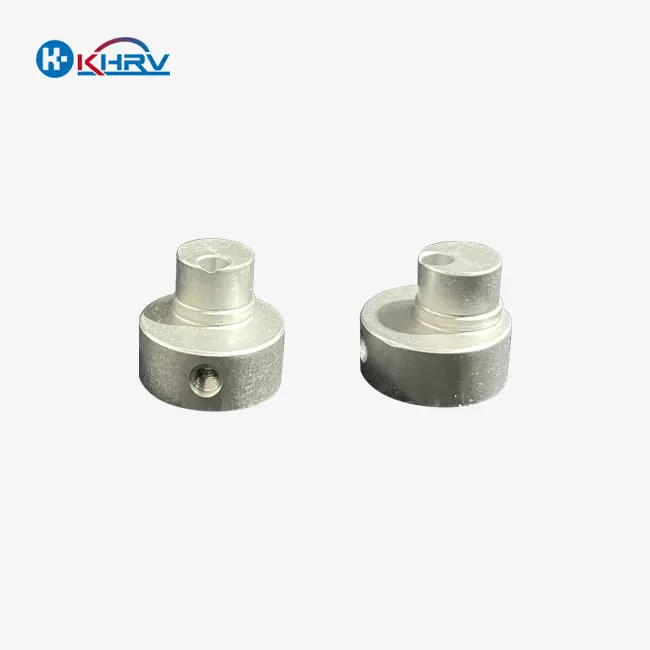
Understanding Mechanical Parts and Eccentric Shaft Fundamentals
The distinction between conventional mechanical parts and eccentric shaft designs lies in their geometric configuration and operational principles. Standard mechanical components maintain concentric geometry, where the rotation axis aligns with the part's geometric center. This design ensures uniform load distribution and predictable rotational dynamics.
Eccentric shafts feature deliberately offset geometry, creating eccentricity that generates controlled mechanical advantage. This offset typically ranges from 0.5mm to 50mm, depending on application requirements. The eccentricity coefficient directly influences output motion characteristics and force multiplication ratios.
Three core operational differences emerge:
- Load distribution patterns vary significantly between centered and offset configurations
- Bearing requirements differ due to varying radial forces throughout rotation cycles
- Vibration characteristics change based on mass distribution relative to the rotation axis
If you need a consistent rotational speed with minimal vibration, then standard mechanical parts, such parts an eccentric shaft, prove more suitable. If your application requires variable motion conversion or mechanical advantage, then eccentric shaft designs offer superior performance.
Design Characteristics and Engineering Specifications
Mechanical linkage systems utilizing eccentric shafts demand precise manufacturing tolerances to achieve optimal performance. Standard parts typically require ±0.01mm dimensional accuracy, while eccentric components often necessitate ±0.005mm precision for proper function.
Material selection varies between applications mechanical parts eccentric shaft. Conventional shafts commonly use steel alloys with 45-55 HRC hardness. Eccentric designs may require specialized materials like carbide or titanium alloy for high-stress applications. Surface treatments, including nitriding or coating, enhance wear resistance in both configurations.
Key design parameters include:
- Shaft diameter ranging from 6mm to 200mm for standard applications
- Eccentricity values typically 5-20% of the shaft radius
- Surface roughness requirements of Ra 0.8 or better for precision applications
- Geometric tolerances maintain concentricity within 0.002mm
Shaft alignment becomes particularly critical in eccentric designs of mechanical parts eccentric shafts. Misalignment exceeding 0.05mm can increase bearing loads by 300% and reduce component lifespan significantly. Precision machining techniques using CNC milling and grinding ensure proper geometric relationships.
If you need high-speed rotation exceeding 5000 RPM, then balanced conventional shafts work better. If your system requires controlled oscillation below 1000 RPM, then eccentric configurations deliver optimal results.
Applications Across Industries
Industrial automation systems extensively utilize both mechanical component types depending on motion requirements. Robot manufacturing incorporates eccentric designs in joint actuators and gripper mechanisms. The offset geometry provides a mechanical advantage, reducing motor torque requirements by 25-40% compared to direct-drive systems.
CNC machine tool applications favor conventional shafts for spindle assemblies requiring high rotational accuracy. Tool holders and shaft coupling systems maintain concentric geometry to minimize runout. Typical spindle accuracy specifications demand less than 0.001mm radial deviation.
Medical device manufacturing employs both configurations strategically. Surgical instruments use eccentric mechanisms for controlled cutting motions, while imaging equipment relies on precise concentric rotation for scanner assemblies. Biocompatible materials like titanium alloy ensure patient safety.
New energy production equipment mechanical parts, eccentric shaft integrates eccentric shafts in solar tracking systems and wind turbine pitch control. The mechanical advantage reduces actuator power consumption by 30-35% while maintaining positioning accuracy within ±0.1 degrees.
Specific application examples include:
- Robotic joint actuators utilizing 15mm eccentric shafts with 3mm offset
- CNC spindle assemblies using 80mm diameter precision-ground shafts
- Medical pump mechanisms incorporating 8mm eccentric components
- Solar tracker drives featuring 25mm eccentric shaft assemblies
If you need precise positioning without mechanical advantage, then standard mechanical parts suit your requirements. If your application demands force multiplication or motion conversion, then eccentric shaft solutions prove more effective.
Performance Comparison and Selection Criteria
Performance evaluation requires analyzing multiple factors, including load capacity, speed capabilities, and maintenance requirements. Standard mechanical parts typically handle higher rotational speeds with better dynamic balance characteristics. Eccentric designs excel in force multiplication applications but require more frequent bearing maintenance.
Torque transmission efficiency varies between configurations. Conventional shafts achieve 95-98% transmission efficiency with proper bearing selection. Eccentric systems typically operate at 85-92% efficiency due to increased friction from varying load vectors.
Vibration analysis mechanical parts eccentric shaft reveals significant differences in operational characteristics. Standard parts generate minimal vibration when properly balanced, typically under 1.5 mm/s RMS velocity. Eccentric components inherently produce controlled oscillation, with vibration levels ranging from 3-8 mm/s RMS depending on eccentricity and rotational speed.
| Parameter | Standard Parts | Eccentric Shaft |
|---|---|---|
| Speed Capability | Up to 15,000 RPM | Up to 3,000 RPM |
| Load Capacity | Uniform distribution | Variable, 2-5x peak loads |
| Efficiency | 95-98% | 85-92% |
| Maintenance Interval | 8,000-12,000 hours | 4,000-6,000 hours |
| Manufacturing Cost | Standard | 15-25% higher |
Bearing selection becomes crucial for optimal performance. Standard applications use deep groove ball bearings or cylindrical roller bearings. Eccentric designs often require needle bearings or specialized cam followers to handle varying radial loads effectively.
If you prioritize high-speed operation and minimal maintenance, then conventional mechanical parts offer advantages. If your system requires mechanical advantage or motion conversion, then eccentric shaft benefits outweigh the additional complexity.
Manufacturing and Quality Considerations
Precision machining requirements differ significantly between standard and eccentric components. CNC turning operations for conventional shafts focus on achieving concentricity and surface finish. Eccentric manufacturing demands multi-axis machining capabilities to maintain precise offset relationships.
Quality control procedures must address different measurement challenges. Standard parts use conventional roundness and concentricity gauging. Eccentric components require specialized fixtures and measurement protocols to verify offset accuracy and angular positioning.
Manufacturing processes include:
- CNC milling for rough shaping and offset creation
- Precision grinding for final dimensional accuracy
- EDM processing for complex geometric features
- Coordinate measuring machine verification for geometric tolerances
Material selection for mechanical parts eccentric shaft impacts manufacturing complexity. Standard steel components are machined easily with conventional tooling. Titanium alloy and carbide materials require specialized cutting parameters and tool coatings to achieve the required surface quality.
ISO9001:2015 certification ensures consistent quality management throughout production. RoHS compliance addresses environmental requirements for electronic assembly applications. Military-grade test reports validate component reliability under extreme operating conditions.
Heat treatment considerations vary between designs. Conventional shafts typically undergo through-hardening or case hardening. Eccentric components may require selective hardening to optimize wear resistance at contact surfaces while maintaining core toughness.
If you need cost-effective standard components with established supply chains, then conventional mechanical parts provide reliable solutions. If your application demands custom eccentric geometry with specialized performance characteristics, then engineered shaft solutions deliver optimal results.
Conclusion
The choice between mechanical parts and eccentric shaft designs depends on specific application requirements, performance expectations, and operational constraints. Standard mechanical components excel in high-speed applications requiring minimal vibration and maximum efficiency. Eccentric shaft designs provide mechanical advantage and motion conversion capabilities essential for specialized applications.
Understanding geometric differences, performance characteristics, and manufacturing considerations enables informed component selection. Proper evaluation of load requirements, speed capabilities, and maintenance expectations ensures optimal system performance and component longevity.
KHRV's comprehensive manufacturing capabilities support both standard and custom eccentric shaft requirements with industry-leading precision and reliability. Our commitment to quality, excellence, and technical innovation delivers engineered solutions meeting the most demanding industrial applications.
KHRV Mechanical Parts Eccentric Shaft Manufacturing Excellence
KHRV stands as a leading mechanical parts eccentric shaft manufacturer, delivering precision-engineered solutions for demanding industrial applications. Our state-of-the-art facility features 50+ CNC machines with expansion capability to 80 units, ensuring reliable production capacity for both standard and custom eccentric shaft requirements.
Our comprehensive material portfolio includes stainless steel, aluminum alloy, brass, steel, carbide, and titanium alloy options. Each material undergoes rigorous testing to meet ±0.005mm tolerance specifications with military-grade quality validation. Advanced processing capabilities encompass CNC milling, CNC turning, precision grinding, and EDM technologies.
Our technical team collaborates closely with purchasing managers, mechanical engineers, and R&D directors to optimize component designs for enhanced performance. Custom cutting parameters and process optimization recommendations reduce production costs while improving component reliability.
Whether you need standard mechanical parts for high-speed applications or specialized eccentric shaft components for motion conversion systems, KHRV delivers engineered solutions meeting your exact specifications. Our mechanical parts eccentric shaft supplier capabilities extend across multiple industries, supporting diverse application requirements with consistent quality excellence.
Ready to optimize your component sourcing with precision-engineered solutions? Contact us at service@kaihancnc.com to discuss your mechanical parts eccentric shaft requirements. Our engineering team stands ready to provide technical consultation, material recommendations, and competitive pricing for your next project.
References
1. Norton, Robert L. "Machine Design: An Integrated Approach, 5th Edition." Pearson Education, 2019. Chapter 12: Shaft Design and Analysis.
2. Shigley, Joseph E., and Charles R. Mischke. "Mechanical Engineering Design, 10th Edition." McGraw-Hill Education, 2018. Section 7.4: Eccentric Mechanisms and Applications.
3. Budynas, Richard G. "Advanced Strength and Applied Stress Analysis, 2nd Edition." McGraw-Hill Science, 2017. Chapter 9: Rotating Machinery Components.
4. Hamrock, Bernard J. "Fundamentals of Machine Elements, 3rd Edition." CRC Press, 2019. Unit 15: Shaft Coupling and Eccentric Systems.
5. Collins, Jack A. "Mechanical Design of Machine Elements and Machines, 2nd Edition." John Wiley & Sons, 2018. Chapter 11: Power Transmission Shafts and Couplings.
6. Spotts, Merhyle F. "Design of Machine Elements, 8th Edition." Prentice Hall, 2020. Section 13.3: Eccentric Loading and Shaft Design Considerations.