- English
- French
- German
- Portuguese
- Spanish
- Russian
- Japanese
- Korean
- Arabic
- Greek
- German
- Turkish
- Italian
- Danish
- Romanian
- Indonesian
- Czech
- Afrikaans
- Swedish
- Polish
- Basque
- Catalan
- Esperanto
- Hindi
- Lao
- Albanian
- Amharic
- Armenian
- Azerbaijani
- Belarusian
- Bengali
- Bosnian
- Bulgarian
- Cebuano
- Chichewa
- Corsican
- Croatian
- Dutch
- Estonian
- Filipino
- Finnish
- Frisian
- Galician
- Georgian
- Gujarati
- Haitian
- Hausa
- Hawaiian
- Hebrew
- Hmong
- Hungarian
- Icelandic
- Igbo
- Javanese
- Kannada
- Kazakh
- Khmer
- Kurdish
- Kyrgyz
- Latin
- Latvian
- Lithuanian
- Luxembou..
- Macedonian
- Malagasy
- Malay
- Malayalam
- Maltese
- Maori
- Marathi
- Mongolian
- Burmese
- Nepali
- Norwegian
- Pashto
- Persian
- Punjabi
- Serbian
- Sesotho
- Sinhala
- Slovak
- Slovenian
- Somali
- Samoan
- Scots Gaelic
- Shona
- Sindhi
- Sundanese
- Swahili
- Tajik
- Tamil
- Telugu
- Thai
- Ukrainian
- Urdu
- Uzbek
- Vietnamese
- Welsh
- Xhosa
- Yiddish
- Yoruba
- Zulu
The True Cost of Machine Downtime: Why Quality Spare Parts Are a Smart Investment
Machine downtime represents one of the most significant yet often underestimated expenses in modern manufacturing. When production equipment fails unexpectedly, the financial impact extends far beyond immediate repair costs. Lost productivity, wasted supplies, missed delivery dates, and ruined customer relationships all add up to a lot of extra costs that may add up to thousands of dollars every hour. Many manufacturers focus solely on minimizing upfront costs when purchasing spare parts, overlooking how this short-term thinking leads to increased machine downtime and long-term financial losses. Spare parts that are made to a high standard and with great care may cost more at first, but they are more reliable, last longer, and break down less often, which saves a lot of money in the long run. Knowing how much unexpected stoppages really cost the economy shows why buying verified, real parts isn't just a maintenance cost—it's a strategic choice that keeps production going and keeps operations stable.
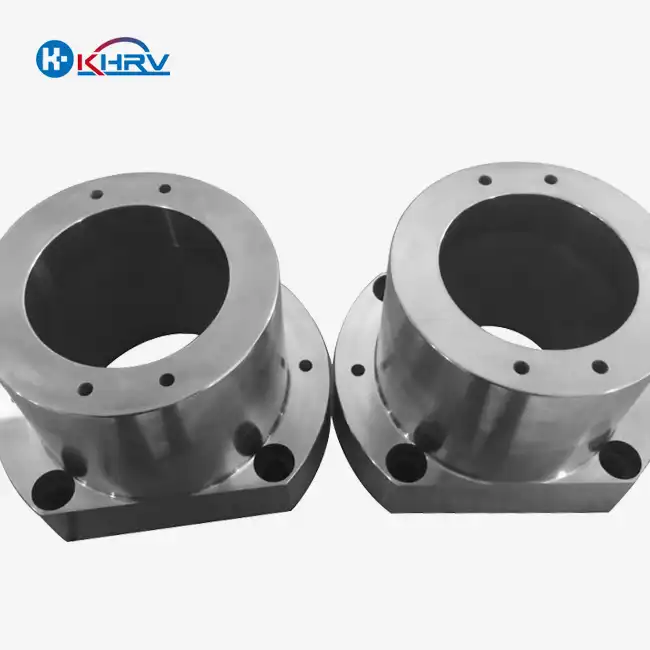
The Hidden Financial Impact of Unplanned Production Stoppages
The actual cost of machine downtime extends far beyond visible repair expenses and replacement part prices. When critical production equipment fails, manufacturers immediately lose revenue from halted output, with industry studies indicating average costs ranging from ,000 to ,000 per hour depending on production scale and complexity. Labor costs continue accumulating as skilled operators and technicians remain idle or redirect efforts to troubleshooting rather than productive work. Raw materials already loaded into machines may become scrap, representing direct material waste that compounds financial losses. Downstream operations experience disruption as subsequent production stages starve for input, creating bottlenecks throughout the entire manufacturing process. Rush shipping charges for emergency replacement parts, overtime pay for expedited repairs, and premium fees for after-hours technical support add substantial unplanned expenses. Perhaps most damaging are the long-term consequences: missed delivery commitments erode customer trust, penalty clauses trigger financial penalties, and lost market opportunities benefit competitors. Machine downtime caused by failed inferior spare parts often requires extended repair durations because low-quality components damage surrounding equipment, necessitating more extensive overhauls. Companies relying on cheap, uncertified parts frequently experience repeat failures, creating a vicious cycle of breakdowns that severely undermines production reliability. When calculating the true cost, manufacturers must account for opportunity costs—the profitable orders they cannot accept because production capacity becomes unreliable.
How Inferior Components Accelerate Equipment Degradation and Failure Rates
The relationship between spare part quality and machine downtime frequency becomes evident when examining how substandard components affect equipment performance. Counterfeit or low-grade parts often use inferior materials that lack the metallurgical properties, dimensional accuracy, and surface finishes of genuine components. These changes from the original equipment standards cause too much vibration, misalignment, and friction, which speeds up wear on nearby components. A single out-of-tolerance bearing generates harmonic vibrations that damage shafts, housings, and seals, transforming a simple bearing replacement into a major overhaul. Non-genuine parts frequently fail to meet heat treatment, hardness, or fatigue resistance specifications, resulting in premature fractures under normal operating loads. The ripple effect of component failure extends throughout mechanical systems—when one part fails catastrophically, debris contaminates lubrication systems and triggers cascading failures that multiply machine downtime incidents. Inferior electrical components present equally serious risks, with substandard insulation materials and inadequate current ratings leading to shorts and control system failures that halt entire production lines. Machine downtime statistics demonstrate that facilities using non-certified spare parts experience failure rates two to five times higher than those maintaining equipment with genuine components. Quality certified components engineered to original specifications maintain proper tolerances, material properties, and performance characteristics that preserve equipment integrity and extend operational life between maintenance intervals.
The ROI of Preventive Maintenance and Quality Component Investment
Calculating ROI for quality spare parts requires examining how proactive maintenance strategies reduce total cost of ownership and minimize machine downtime. Preventive replacement of wear-prone parts according to manufacturer specifications, before failure occurs, allows scheduled maintenance during planned production breaks rather than forcing emergency shutdowns. This strategic strategy turns machine downtime that can't be predicted into planned maintenance periods that provide the least amount of disturbance to output. Quality components deliver extended service life, often operating 30-50% longer than economy alternatives before requiring replacement, which reduces both parts consumption and maintenance labor over equipment lifetime. Parts that are made with precision have tighter tolerances for their entire service life. This preserves machine precision and high-quality output while using less energy. The data clearly demonstrates financial advantages: while quality parts may cost 20-30% more initially, their extended lifespan and superior reliability reduce total parts spending by 40-60% annually when accounting for reduced failure rates. Labor cost savings prove equally significant—preventive maintenance with quality parts requires less technician time per intervention compared to emergency repairs of catastrophic failures. Machine downtime reduction directly translates to increased production capacity without capital investment in additional equipment. Manufacturers implementing quality spare parts programs report machine availability improvements from 85-90% to 95-98%, effectively adding weeks of production capacity annually. Putting money into high-quality parts preserves the large amount of money spent on manufacturing equipment, making the most of assets and prolonging their economic life.
Quality Certification Standards and Supply Chain Authenticity Verification
Protecting against counterfeit and substandard spare parts requires understanding certification standards and implementing supply chain verification protocols. Original Equipment Manufacturer parts carry certifications guaranteeing materials meet specifications and performance characteristics match original designs. ISO 9001 certified suppliers demonstrate quality management systems capable of consistent production control and documented verification procedures. Industry-specific certifications such as AS9100 for aerospace or IATF 16949 for automotive indicate suppliers meet enhanced quality requirements for critical sectors where machine downtime carries severe consequences. Material certifications show the chemical makeup and mechanical attributes of a material. They also make it possible to track parts and show that they have the right qualities. Dimensional inspection reports make sure that crucial tolerances match engineering drawings. This is very important for precise parts, since even small differences can make them wear out faster. Sophisticated counterfeiters increasingly produce parts with convincing appearance but using inferior materials, making visual inspection insufficient for authenticity verification. Establishing relationships with authorized distributors, demanding certificates of conformance, and conducting incoming inspection of critical components provide multiple verification layers. Third-party testing laboratories offer material analysis and dimensional verification services for high-value or safety-critical components. The modest cost of verification procedures represents wise insurance against the substantial machine downtime and safety risks posed by counterfeit parts.
Strategic Inventory Management for Minimizing Emergency Procurement
Effective spare parts inventory strategies balance carrying costs against the risk of extended machine downtime during emergency procurement situations. Critical path analysis identifies components whose failure halts production entirely, justifying inventory investment to ensure immediate availability. Using statistical analysis of lead times and failure patterns from suppliers, you may make judgments about how much to store based on data. Fast-moving consumables with predictable replacement intervals require minimal safety stock, while slow-moving components with long procurement cycles warrant strategic inventory despite carrying costs. Condition monitoring and predictive maintenance technologies let you know ahead of time when something is about to break, so you may buy parts ahead of time and avoid paying extra for emergency purchases or having to throw away old parts. However, inventory strategies must prioritize quality over cost savings—stocking inferior parts simply ensures rapid access to components that will cause repeat machine downtime incidents. Digital inventory management systems track usage patterns, trigger reordering at optimal points, and maintain certification documentation. It's important to keep output going by getting good substitute parts quickly and keeping as little money as possible in stock.
Conclusion
The true cost of machine downtime far exceeds immediate repair expenses, encompassing lost production, wasted materials, and damaged customer relationships. Good replacement parts are purchases that protect production capacity, lower the chance of equipment breaking down, and extend its life. By putting certified parts first, doing preventive maintenance, and checking the authenticity of the supply chain, manufacturers turn maintenance into a competitive edge that guarantees operational dependability and long-term profitability.
FAQ
1. How much does machine downtime typically cost manufacturers per hour?
Machine downtime costs vary significantly based on production scale and industry, typically ranging from ,000 to ,000 per hour for mid-sized manufacturers. High-volume operations in automotive, pharmaceutical, or food processing may experience losses exceeding 0,000 per hour when accounting for lost production, labor costs, material waste, and contractual penalties. It's harder to get along with people and lose business chances over time, which these numbers don't show.
2. What is the average lifespan difference between quality and inferior spare parts?
Quality certified spare parts typically operate 30-50% longer than economy alternatives before requiring replacement. For example, a premium bearing rated for 10,000 operating hours may achieve 13,000-15,000 hours, while an inferior substitute might fail at 6,000-7,000 hours. This extended service life reduces both parts consumption and machine downtime frequency, ultimately lowering total cost of ownership despite higher initial investment.
3. How can manufacturers verify spare parts authenticity and quality?
Authenticity verification requires purchasing from authorized distributors, demanding certificates of conformance and material certifications, conducting dimensional inspection of critical tolerances, and implementing serialization tracking. For high-value components, third-party laboratory testing can verify material composition and mechanical properties. ISO 9001 certification and industry-specific standards indicate supplier quality management capability, reducing machine downtime risk from counterfeit parts.
4. What ROI can companies expect from investing in quality spare parts programs?
Manufacturers implementing quality spare parts programs typically achieve 40-60% reduction in total parts spending annually despite 20-30% higher individual part costs, due to extended component life and reduced failure frequency. Machine availability improvements from 85-90% to 95-98% effectively add weeks of production capacity annually. Combined with reduced emergency repair costs and improved customer satisfaction, most companies achieve positive ROI within 12-18 months.
Premium Quality Spare Parts Solutions | KHRV Manufacturers
Wuxi Kaihan Technology Co., Ltd. offers replacement parts and components that are made with accuracy to keep machines running smoothly and increase production dependability. Founded by industry veterans with extensive experience in precision CNC machining at major international corporations, our ISO9001:2005-certified facility operates with rigorous quality control, ensuring every component meets exact specifications. With ten CNC machining centers, advanced EDM capabilities, six CNC lathes, and comprehensive inspection equipment, we manufacture spare parts for aviation, automation, automotive, and AI equipment applications where reliability is non-negotiable. Our competitive advantages include China's low supply chain costs, which save us 30–40% without lowering quality; our considerable knowledge in key manufacturing areas; and our thorough traceability documentation, which ensures quality. Whether you require OEM replacement components, custom precision parts, or cost-effective cross-border semi-finishing solutions, our technical team provides the engineering expertise and manufacturing precision your operations demand. Don't let machine downtime undermine your production capacity—partner with suppliers who understand that quality parts are investments in operational excellence. Contact us at service@kaihancnc.com to discuss how our precision manufacturing capabilities can reduce your downtime risk while optimizing maintenance costs.
References
1. Mobley RK. An Introduction to Predictive Maintenance. 2nd Edition. Butterworth-Heinemann, 2002.
2. Levitt J. Complete Guide to Preventive and Predictive Maintenance. Industrial Press Inc, 2003.
3. Nakajima S. Introduction to TPM: Total Productive Maintenance. Productivity Press, 1988.
4. Moubray J. Reliability-Centered Maintenance. 2nd Edition. Industrial Press Inc, 1997.
5. Gulati R, Smith R. Maintenance and Reliability Best Practices. Industrial Press Inc, 2009.
6. Dhillon BS. Engineering Maintenance: A Modern Approach. CRC Press, 2002.
Learn about our latest products and discounts through SMS or email