- English
- French
- German
- Portuguese
- Spanish
- Russian
- Japanese
- Korean
- Arabic
- Greek
- German
- Turkish
- Italian
- Danish
- Romanian
- Indonesian
- Czech
- Afrikaans
- Swedish
- Polish
- Basque
- Catalan
- Esperanto
- Hindi
- Lao
- Albanian
- Amharic
- Armenian
- Azerbaijani
- Belarusian
- Bengali
- Bosnian
- Bulgarian
- Cebuano
- Chichewa
- Corsican
- Croatian
- Dutch
- Estonian
- Filipino
- Finnish
- Frisian
- Galician
- Georgian
- Gujarati
- Haitian
- Hausa
- Hawaiian
- Hebrew
- Hmong
- Hungarian
- Icelandic
- Igbo
- Javanese
- Kannada
- Kazakh
- Khmer
- Kurdish
- Kyrgyz
- Latin
- Latvian
- Lithuanian
- Luxembou..
- Macedonian
- Malagasy
- Malay
- Malayalam
- Maltese
- Maori
- Marathi
- Mongolian
- Burmese
- Nepali
- Norwegian
- Pashto
- Persian
- Punjabi
- Serbian
- Sesotho
- Sinhala
- Slovak
- Slovenian
- Somali
- Samoan
- Scots Gaelic
- Shona
- Sindhi
- Sundanese
- Swahili
- Tajik
- Tamil
- Telugu
- Thai
- Ukrainian
- Urdu
- Uzbek
- Vietnamese
- Welsh
- Xhosa
- Yiddish
- Yoruba
- Zulu
Complex Precision Machined Parts: Hard Anodizing as an Eco-Friendly Alternative to Chrome Plating
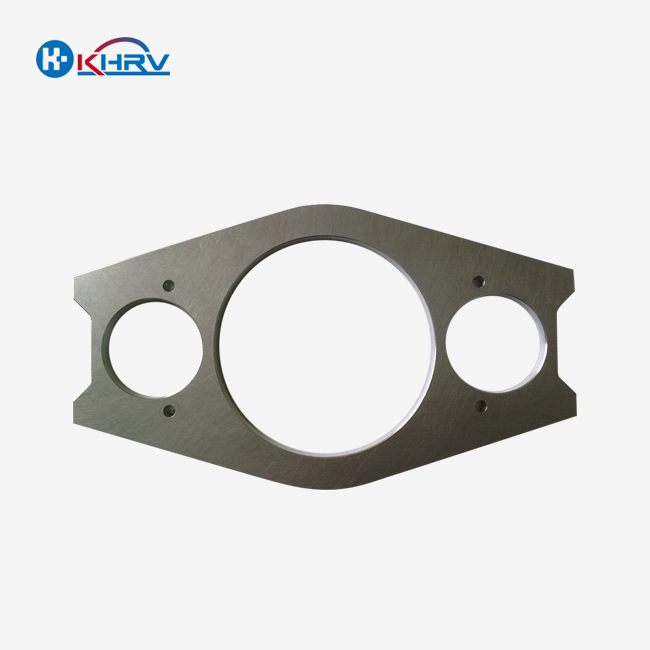
Sourcing Complex Precision Machined Parts for automation, robotics, medical or aerospace programs rarely comes down to one decision. Geometry matters. Material matters. But the finish is where a good design either holds up for a decade or starts costing you money in rejects, audits and rework. Aluminum housings, sliding blocks, valve bodies and actuator components all need the same three things: wear resistance that lasts, corrosion protection that survives real plant conditions, and dimensions that stay put. Add tightening environmental rules in Europe and North America, and the finishing choice gets harder. Hard chrome plating has carried high-wear surfaces for decades, yet its dependence on hexavalent chromium keeps generating compliance paperwork and waste-treatment expense. Hard anodizing offers a different route, and for aluminum parts it is often the better one. What follows is how the two processes actually compare, and what a controlled finishing workflow looks like when it has to pass an export audit.

What Are Complex Precision Machined Parts, and Why Does the Finish Matter So Much?
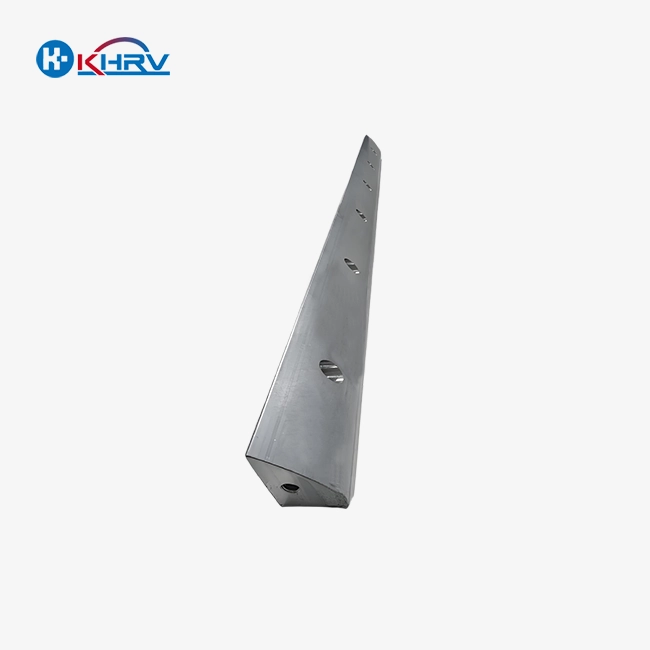
Complex precision machined parts are multi-feature components cut from 6061 or 7075 aluminum, steel,and stainless steel. Machining accuracy gets them to size. The surface layer decides how long they stay that way. Surface hardness determines how a part responds to scratching and abrasive contact. Coating uniformity matters just as much, particularly where small bores, thin walls and internal channels leave little room for thickness variation.
Hard anodizing departs from chrome plating in two ways that procurement teams feel immediately. It grows an aluminum oxide layer out of the base metal instead of depositing a separate plated skin, so vibration and cyclic loading are unlikely to lift it. And it sidesteps hexavalent chromium, the substance RoHS and REACH keep tightening around.
What you get in practice:
- An oxide layer bonded into the substrate, which resists chipping and delamination under repeated load.
- Predictable growth — roughly half inward, half outward — so stock allowance can be planned at the CNC stage.
- Natural electrical insulation, useful for motor housings, sensor brackets and enclosures.
- Hex-free chemistry that supports RoHS and REACH declarations for export shipments.
Hard chrome plating still delivers very high hardness and low friction, and there are heavy-load steel applications where it remains the sensible answer. On complex aluminum geometry, though, chrome builds unevenly across cavities and thin walls, and the regulatory overhead rarely stays contained to the plating shop. For aluminum precision parts, hard anodizing usually matches chrome on wear performance while removing a category of compliance risk altogether.
Where Hard Anodizing Earns Its Place: Two Field Examples
Controlled anodizing combined with disciplined CNC stock planning has produced measurable results in two recent precision programs.
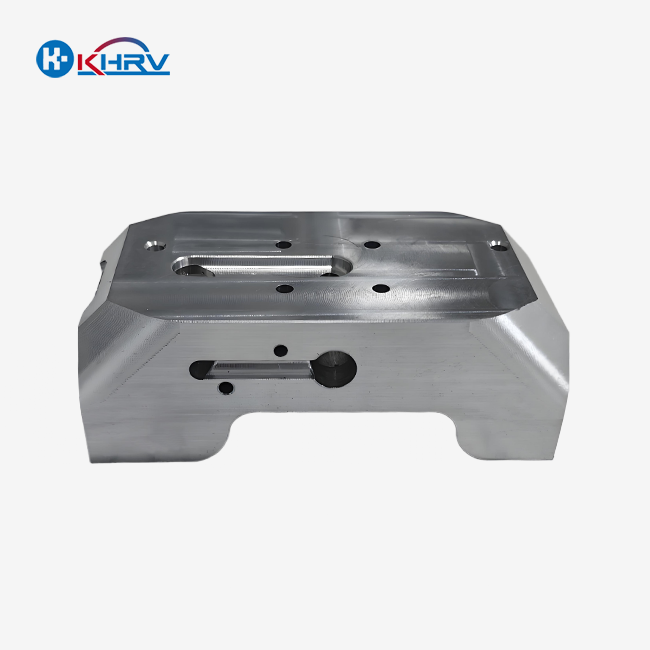
Automation sliding blocks in 6061 aluminum. A European automation integrator needed sliding blocks for a high-cycle linear motion assembly. The chrome-plated version they had been buying worked, but the compliance file grew with every shipment, and internal channels showed thickness variation that nobody could defend in a dimensional report. Wuxi Kaihan machined the blocks on 4-axis CNC equipment, reserved stock for oxide growth, and held critical bore positions to ±0.01mm and strict flatness standards, leaving non-critical surfaces on standard industrial tolerances. Type III hardcoat with non-chromate sealing followed. Three hundred blocks shipped in 16 working days. Per-part cost dropped about 35%, and after twelve months in service the customer had logged no wear-related failures.
Robotic actuator housings in 7075 aluminum. A robotics manufacturer needed actuator housings that were both wear-resistant and electrically insulating, with bore dimensions that stayed predictable after finishing. We ran the housings on 3-axis CNC machines, built in a controlled stock allowance for anodizing, and again held critical hole positions to ±0.01mm with strict flatness standards. A pre-production sample cleared in 5 working days; the 250-piece batch shipped in 15. Fit after anodizing stayed stable, and component cost came in roughly 30% below the chrome-plated alternative.
The pattern behind both projects is worth stating plainly:
- Precision is applied where it functions. ±0.01mm hole position and strict flatness standards land on mating and sealing surfaces; everything else stays on standard industrial tolerances.
- Combined cost falls 30–40% against chrome-plated alternatives, mostly through lower compliance and waste-treatment overhead rather than cheaper machining.
- Lead times hold at 10–20 working days, with sample validation and post-finish dimensional inspection built into the schedule.
Practical Guidance for Engineering and Procurement Teams
Finishing decisions made after the drawing is released tend to cost more than they should. Four habits keep programs on track.
Reserve anodizing stock allowance at the drawing stage. Oxide growth splits roughly half inward and half outward, so tight bores and thin walls need planned stock in the CAD model. Avoid sharp internal corners that create thickness variation, and pick aluminum grades with the mechanical properties the part actually needs. This one step removes most of the post-finish dimensional surprises.
Treat compliance documents as deliverables, not as paperwork. For EU, North American and medical programs, specify hex-free hard anodizing with non-chromate sealing and ask for RoHS and REACH declarations, thickness logs and salt spray results with each batch. Buyers who request these up front spend far less time explaining themselves to auditors later.
Tier your tolerances. Hold ±0.01mm hole position and strict flatness standards on mating and sealing features. Let non-critical surfaces follow standard industrial tolerances. This matches what 3-axis and 4-axis CNC equipment do well, and it avoids paying for precision that no assembly ever uses.
Validate fit and wear through a pre-production sample. Confirm dimensional shift after finishing, surface hardness and corrosion resistance before committing to volume. In mixed-material assemblies, hard anodizing on the aluminum parts paired with compliant coatings on steel components is a workable way to phase chrome out without giving up performance.
Conclusion
Finishing decisions on Complex Precision Machined Parts have to be read alongside performance, compliance, tolerance control and supply chain risk — not in isolation. Hard anodizing is the practical eco-friendly option for aluminum components, balancing wear resistance, electrical insulation, corrosion protection and regulatory exposure. Wuxi Kaihan holds critical hole positions at ±0.01mm and strict flatness standards, keeps non-critical surfaces on standard industrial tolerances, and machines on 3-axis and 4-axis CNC equipment. With stock planning before finishing,coordinated anodizing through qualified partners and full dimensional inspection afterward, automation, robotics and medical OEMs get lower compliance risk, fewer rejects and longer part life, at 30–40% lower total cost. For export-focused programs, specifying properly finished Complex Precision Machined Parts is one of the simplest ways to keep a global supply chain predictable.
FAQ
1. What are Complex Precision Machined Parts, and which of them suit hard anodizing? They are multi-feature components built for automation, robotics, medical and aerospace assemblies. Hard anodizing works on aluminum parts — sliding blocks, sensor housings, motor brackets, valve bodies, fixture components. It does not apply to steel, stainless steel or brass.
2. Which materials can be hard anodized for Complex Precision Machined Parts? Aluminum alloys, primarily 6061, 7075 and 5052. Steel and stainless steel need different routes, such as PVD coatings or low-toxicity electroless nickel. Material selection should be settled alongside the wear, corrosion and insulation targets, not after them.
3. How does hard anodizing actually reduce the cost of Complex Precision Machined Parts? It removes hexavalent chromium compliance costs, waste-treatment overhead and the audits that come with chrome plating. Paired with sensible stock allowance planning and tiered tolerances, customers typically reach 30–40% savings across finishing and compliance combined while keeping wear and corrosion performance.
4. What precision holds after hard anodizing on Complex Precision Machined Parts? With controlled stock allowance and thickness planning, critical hole positions hold to ±0.01mm and strict flatness standards after finishing; non-critical surfaces follow standard industrial tolerances. Post-finish dimensional inspection confirms bore size and assembly fit.
Partner with KHRV for Compliant Complex Precision Machined Parts | KHRV
Planning a program that needs Complex Precision Machined Parts finished for export?Wuxi Kaihan Technology Co., Ltd.combines precision CNC machining with coordinated hard anodizing for automation, robotics, medical and aerospace OEMs.We plan oxide stock allowance at the machining stage and coordinate Type III hardcoat with accredited external finishing partners, so post-finish dimensions stay within tolerance.Our ISO 9001:2015 certified facility machines aluminum components from 6061 and 7075 on 3-axis and 4-axis CNC milling and turning equipment, plans stock allowance before finishing, and inspects every dimension after anodizing. Critical hole positions hold at ±0.01mm, strict flatness standards, non-critical surfaces to standard industrial tolerances. Full OEM customization comes with 30–40% lower compliance and waste overhead than chrome-plated alternatives and lead times of 10–20 working days.
Send your drawings and requirements to service@kaihancnc.com and we will come back with a quote and a finishing recommendation.
References
Carter, M. L., & Bennett, J. T. (2023). Hard Anodizing as a Hexavalent Chromium Replacement for Precision Aluminum Components. Journal of Surface Finishing Technology, 47(5), 112–130.
Lopez, R. A., & Harris, S. P. (2022). Tolerance Management for Complex CNC Machined Parts with Type III Hardcoat Anodizing. International Journal of Precision Manufacturing, 17(10), 388–405.
Zhang, H. L., & Foster, D. R. (2023). Environmental Compliance Comparison: Hard Chrome Plating vs Hex-Free Hard Anodizing. Industrial Compliance & Sustainability Review, 31(3), 147–162.
Patel, K. G., & Wilson, M. C. (2022). Wear Performance of Hard Anodized Aluminum in Automation Sliding Assemblies. Machining and Surface Engineering Quarterly, 28(8), 94–111.
Evans, C. F., & Lin, J. H. (2023). DFM Guidelines for Complex Precision Machined Parts with Controlled Anodizing Stock. Manufacturing Quality Standards Journal, 32(2), 52–68.
Learn about our latest products and discounts through SMS or email