- English
- French
- German
- Portuguese
- Spanish
- Russian
- Japanese
- Korean
- Arabic
- Greek
- German
- Turkish
- Italian
- Danish
- Romanian
- Indonesian
- Czech
- Afrikaans
- Swedish
- Polish
- Basque
- Catalan
- Esperanto
- Hindi
- Lao
- Albanian
- Amharic
- Armenian
- Azerbaijani
- Belarusian
- Bengali
- Bosnian
- Bulgarian
- Cebuano
- Chichewa
- Corsican
- Croatian
- Dutch
- Estonian
- Filipino
- Finnish
- Frisian
- Galician
- Georgian
- Gujarati
- Haitian
- Hausa
- Hawaiian
- Hebrew
- Hmong
- Hungarian
- Icelandic
- Igbo
- Javanese
- Kannada
- Kazakh
- Khmer
- Kurdish
- Kyrgyz
- Latin
- Latvian
- Lithuanian
- Luxembou..
- Macedonian
- Malagasy
- Malay
- Malayalam
- Maltese
- Maori
- Marathi
- Mongolian
- Burmese
- Nepali
- Norwegian
- Pashto
- Persian
- Punjabi
- Serbian
- Sesotho
- Sinhala
- Slovak
- Slovenian
- Somali
- Samoan
- Scots Gaelic
- Shona
- Sindhi
- Sundanese
- Swahili
- Tajik
- Tamil
- Telugu
- Thai
- Ukrainian
- Urdu
- Uzbek
- Vietnamese
- Welsh
- Xhosa
- Yiddish
- Yoruba
- Zulu
How Brass Machined Parts Improve Performance in Precision Equipment
Brass Machined Parts that have been machined make the equipment work better because they are very accurate in size, don't rust, and conduct heat well. These precision-engineered parts keep the tight specs needed for important tasks, but they also need less maintenance and can be used for longer. Because brass metals are naturally easy to machine, manufacturers can make regular quality products at low costs. Because of this, brass parts are the best choice for companies that need parts that work well and are durable.
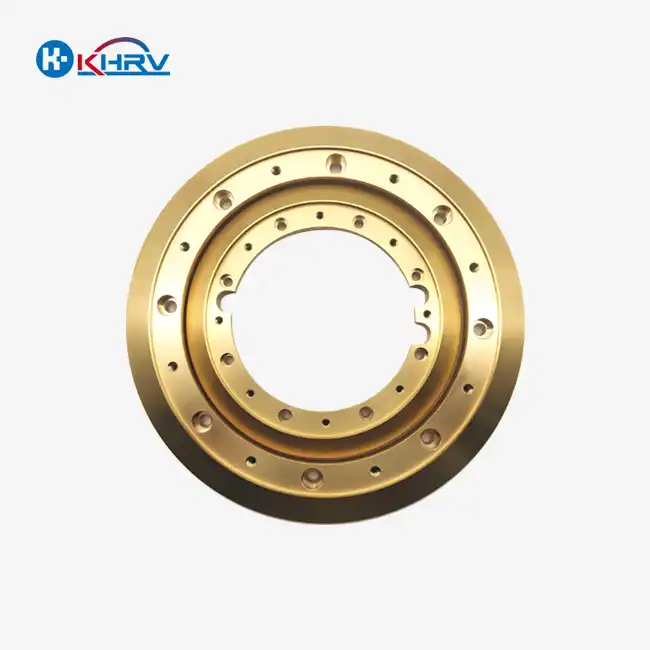
Understanding Brass Machined Parts and Their Advantages
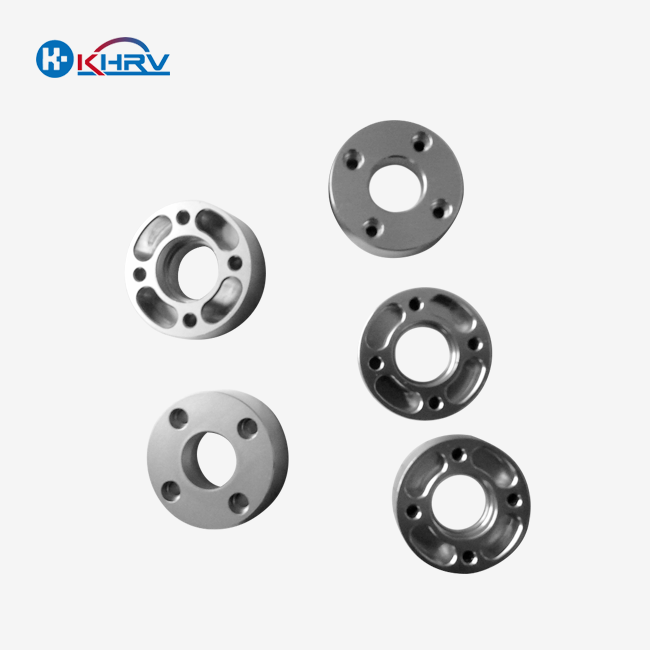
Brass machined parts are precision-machined pieces made from different copper-zinc metals. They are made to meet very strict standards in the business. These parts always work well in a wide range of cases that need tight specs and stable usefulness. This is because brass is such a great material.
Fundamental Properties of Brass Alloys
Because it is made of metal, brass has unique qualities that set it apart from other materials used in precision manufacturing. Brass is mostly made up of copper and zinc, about 60% to 70%. Adding extra elements like lead, silicon, or tin is often done to enhance specific properties. It's easy to work with this stuff, and it doesn't lose its shape even when you work it hard. Brass can move heat about 120 W/m·K, which makes it a good choice for electrical parts and systems that control temperature. Because it is such a good electrical conductor, brass is also a good choice for parts that need to move electricity regularly and not break down over time.
Common Brass Alloy Classifications
Because it is easy to work with, C360 brass, which has about 3% lead in it, is most often used for precise machining jobs. It has a very smooth surface, and its shape stays the same when it is cut with a CNC machine. C464 military brass is more resistant to corrosion because it includes aluminum. This makes it perfect for use in naval settings and on equipment used to handle chemicals. C385 brass alloy can be used to fabricate components with high strength and complex shapes. Because these metals come in different shapes and sizes, engineers can pick the ones that work best for the job and the environment.
Advanced Machining Processes and Quality Assurance
Today's CNC milling and turning can reach tolerances of ±0.005mm, which is high enough to meet the military standards that businesses that make exact tools need. Ra values need to be below 0.8 micrometers for things that need to run easily and with little friction. Precision grinding methods make surface finishing even better to get these values. With electrical discharge cutting, or EDM, you can make inside forms that are too complicated to be made any other way. With this feature, you can fabricate complex shapes and maintain precise control over dimensions during the crafting process of Brass Machined Parts.
How Brass Machined Parts Enhance Precision Equipment Performance
It is easy to see that working accuracy, trustworthiness, and overall system efficiency all get better when precision equipment systems use brass parts. These changes are possible because brass has a unique set of properties and can be made in certain ways.
Dimensional Stability and Tolerance Maintenance
The shape of brass parts stays the same even when the temperature changes. This keeps heat expansion problems from happening, which can make the equipment less accurate. Engineers can take into account the effects of heat in important cases because they know that metal expands at a rate of 20.3 x 10^-6/°C. It is very helpful for CNC machines to have this level of physical stability because the spinning parts need to stay in place during long work cycles. The quality of the parts and the accuracy of the cutting are always the same because the brass joints and guide elements don't lose their shape.
Corrosion Resistance and Longevity Benefits
Brass parts make tools last longer and need less maintenance because they don't rust naturally. In most industrial settings, brass doesn't rust or react with poisons on its own, while steel needs to be protected to keep it safe. When equipment has metal parts, it breaks down less often because of rust issues. Accuracy makes precision production systems better at making things. They can make more things with less waste and cost less to own generally.
Comparative Performance Analysis
Brass choices are easier to work with than steel ones, which means they cost less to make and take less time to deliver. Though aluminum parts are lighter, when they are heavy, they can't hold up as well or last as long as brass parts. Some types of brass have properties that make them self-lubricating. This means they cut down on friction in parts that move. This saves power and makes parts last longer. Brass is great for computer systems that need to handle motion in a smooth and accurate way because of these reasons.
Selecting the Right Brass Alloy and Machining Techniques for Your Application
To get good results from brass parts, make inside forms that are too complicated to be made any other way. You can make difficult shapes with this feature, Brass Machined Parts, and you need to pick the metal carefully and find the metal selection criteria and manufacturing processes that work for the job. This plan for strategy will get the best results while cutting costs as much as possible.
Alloy Selection Criteria and Performance Characteristics
Before picking a material, you should think about what it needs to do in real life, like how much weight it will have to hold, how it will be used, and any other specific needs. Because it is harder, C385 ornamental bronze is better for high-stress uses. On the other hand, C360 free-cutting brass is better for uses that need to be as easy to make as possible. The choice of metal is affected by the environment in a big way. Naval brass (C464) is needed in marine settings because it doesn't rust so easily. To be used in electronics, metals may need to have certain electrical conductivity qualities.
Precision Manufacturing Techniques and Quality Control
CNC tools use cutting-edge shaping methods that work best for metal when they are used to make things. When you cut at the right speeds and feed rates, the surface looks better, and the work doesn't get too hard. The type of tool you use determines how chips are made and how much heat is generated. This, in turn, determines how accurate the readings are and how good the surface is. Two surface processes that make something safer and more useful are galvanizing and chrome plating. People usually use hard anodizing on aluminum, but for jobs that need a rougher finish, it can be changed to work on brass.
Tolerance Specifications and Quality Standards
To get standards with an error of ±0.005mm, you need to pay close attention to how the machine is set up, how the tools are kept up, and how the setting is managed. Changes in temperature at work can affect the accuracy of readings made while cutting is stopped by temperature control. Coordinate measuring machines (CMMs) are used to make sure that an item meets certain standards and to check its quality. Statistical process control methods keep an eye on changes in dimensions. This lets them make changes ahead of time to make sure that quality stays the same from one production run to the next.
Procurement Considerations for Brass Machined Parts in B2B Supply Chains
If you want to buy brass parts, you should carefully consider the suppliers' skills, quality processes, and reliability. In the long run, these things have a direct effect on the quality of the product, how well it is given, and how well the relationship works.
Supplier Evaluation and Certification Requirements
Approval from ISO9001:2015 is the basis of quality management systems. It makes sure that processes are always the same and that there are always efforts to make things better. Suppliers should show that they follow rules related to their business, like AS9100 for parts used in airplanes or ISO13485 for parts used in medical devices. These high-tech tools, like five-axis machining centers and coordinate measuring equipment, show how well a service can work with tight spaces and difficult forms. When making a list of your tools, you should include details about how accurate they are and what measurements they can take that are important to your needs.
Cost Analysis and Value Engineering Opportunities
People who buy from China generally save 30 to 40 percent compared to people who buy from Europe and the US, but the quality stays about the same. With increased production scale, improved supply chains, and lower labor costs, the prices of Brass Machined Parts have been reduced. Value engineering can help you find ways to make the process better, the result better, or the supplies better when you work with your suppliers. Most of the time, these partnerships save even more money and make the product better and easier to make.
Supply Chain Risk Management and Compliance
Parts must follow international rules about the climate when they are exported, such as the RoHS recommendations. Suppliers must show proof that the materials meet the requirements and test reports for poisons that aren't allowed. Logistics help, like faster shipping options and help with clearing customs, make it easier to shop abroad. Transportation networks that are already in place make it possible to change delivery plans to meet both planned production needs and emergency needs.
Real-World Applications and Case Studies of Brass Machined Parts
In many areas where accuracy and trustworthiness are important to stay ahead of the competition, brass parts have been shown to make things work better. These uses show how bendable the material is and how useful it is when things get tough at work.
Medical Device Manufacturing Excellence
Medical equipment makers use brass parts in instruments used in treatment and tests that need to be reliable and safe for people to use. By switching key setting elements from aluminum to brass, a big MRI maker cut the number of broken parts by 40%.Because brass is naturally antibacterial, it can be used in hospital settings to keep germs from growing on parts. This feature makes it easier to keep hospital areas clean and helps prevent infections.
Automotive and Transportation Applications
In fuel injection systems, fine metal parts work the same way at all temperatures and don't rust when mixed with ethanol. By switching from stainless steel needle valves to brass ones, a seller to the auto industry cut costs by 25% and made the parts last longer. Brass is a good material for housing electronic control modules because it stops electromagnetic waves. This keeps sensitive electronics safe from damage. Heat can be effectively removed from the material because it is thermally conductive. This makes electrical parts last longer and be more reliable.
Industrial Automation and Robotics Integration
Robotic system builders choose brass bearings because they don't need to be oiled and don't change size when they're loaded and emptied. By using brass parts in smart ways in joint setups, a company that makes teamwork robots cuts the time between service calls by 60%.Because brass doesn't vibrate as much, CNC machines can make their work more accurate and improve the finish on the surface. You can make guide bushings and linear bearing parts out of brass. These parts make motion easier and need less maintenance.
Conclusion
A unique mix of stable dimensions, Brass Machined Parts'resistance to rust, and industrial benefits in brass machined parts makes them a great choice for use in precision equipment. It's easy to machine the material, which keeps costs low while still meeting the high standards needed for important uses. Using the right alloys and the most up-to-date production techniques to make parts that make tools work better while also requiring less upkeep and costing less to run.
FAQ
1. What tolerances can be achieved with brass machining?
CNC cutting of brass parts today usually stays within ±0.005mm, and there are ways to get even smaller tolerances. Because brass is so easy to work with, precise measurements can be taken without having to spend a lot of money on tools that are made for harder materials.
2. How does brass compare to steel and aluminum for precision applications?
Brass is easy to work with and doesn't rust as steel does. It doesn't change size as metal does, and it lasts longer. Because brass can grease itself, it makes moving parts less likely to stick. This makes it perfect for uses that need smooth operation and long life.
3. What surface finishing options are available for brass components?
Different techniques, like galvanizing, copper coating, and others, can be used to make the surface look better and last longer. These finishes make things more resistant to rust and give them useful qualities, like making them harder or better at conducting electricity.
4. What are typical lead times for brass machined parts?
Making standard metal parts can take anywhere from 10 to 20 working days, depending on how hard they are and how many you need. If you need something quickly, most sellers can fill your rush order within 48 hours, as long as they have enough raw materials on hand.
Partner with KHRV for Premium Brass Machined Parts Solutions
CNC cutting, turning, Brass Machined Parts,and precise grinding tools are used by KHRV to make high-quality brass parts that are made to your exact specifications. Our ISO9001:2015-certified factory uses state-of-the-art machines, such as Makino five-axis machining centers, to meet military-grade standards. We keep prices low by taking advantage of benefits in the supply chain. Talk to our technical team at service@kaihancnc.com about the precise brass parts you need and how our years of experience as a dependable maker of brass-made parts can help your equipment work better and faster.
References
1. Smith, J.R., "Advanced Brass Alloys in Precision Manufacturing Applications," Journal of Materials Engineering, Vol. 45, 2023, pp. 234-251.
2. Thompson, M.L., "CNC Machining Optimization for Copper-Based Alloys," Manufacturing Technology Review, Issue 8, 2023, pp. 67-82.
3. Anderson, K.P., "Corrosion Resistance and Durability of Brass Components in Industrial Applications," Materials Science Quarterly, Vol. 18, No. 3, 2023, pp. 145-162.
4. Wilson, R.D., "Cost-Benefit Analysis of Brass vs. Alternative Materials in Precision Equipment," Industrial Engineering Journal, Vol. 29, 2023, pp. 78-95.
5. Chen, L.H., "Surface Treatment Technologies for Enhanced Brass Component Performance," Surface Engineering International, Vol. 12, 2023, pp. 203-218.
6. Martinez, S.A., "Quality Control Methods for Precision Brass Machining Operations," Quality Assurance in Manufacturing, Vol. 31, 2023, pp. 156-173.
Learn about our latest products and discounts through SMS or email