- English
- French
- German
- Portuguese
- Spanish
- Russian
- Japanese
- Korean
- Arabic
- Greek
- German
- Turkish
- Italian
- Danish
- Romanian
- Indonesian
- Czech
- Afrikaans
- Swedish
- Polish
- Basque
- Catalan
- Esperanto
- Hindi
- Lao
- Albanian
- Amharic
- Armenian
- Azerbaijani
- Belarusian
- Bengali
- Bosnian
- Bulgarian
- Cebuano
- Chichewa
- Corsican
- Croatian
- Dutch
- Estonian
- Filipino
- Finnish
- Frisian
- Galician
- Georgian
- Gujarati
- Haitian
- Hausa
- Hawaiian
- Hebrew
- Hmong
- Hungarian
- Icelandic
- Igbo
- Javanese
- Kannada
- Kazakh
- Khmer
- Kurdish
- Kyrgyz
- Latin
- Latvian
- Lithuanian
- Luxembou..
- Macedonian
- Malagasy
- Malay
- Malayalam
- Maltese
- Maori
- Marathi
- Mongolian
- Burmese
- Nepali
- Norwegian
- Pashto
- Persian
- Punjabi
- Serbian
- Sesotho
- Sinhala
- Slovak
- Slovenian
- Somali
- Samoan
- Scots Gaelic
- Shona
- Sindhi
- Sundanese
- Swahili
- Tajik
- Tamil
- Telugu
- Thai
- Ukrainian
- Urdu
- Uzbek
- Vietnamese
- Welsh
- Xhosa
- Yiddish
- Yoruba
- Zulu
Laser Equipment Rotating Base: Material Selection, Tiered Precision, and Tariff-Advantaged Procurement
In commercial laser processing, consistent workpiece positioning stability is what separates reliable output from frequent rework. Whether for marking, engraving, cleaning, or precision cutting, every subtle shift in rotary alignment directly impacts finished quality, edge uniformity, and overall production throughput. This makes the Laser Equipment Rotating Base one of the most underrated yet mission-critical fixtures in automated laser workstations.
Unlike generic machine brackets, laser-grade rotating bases must hold tight rotational accuracy through millions of continuous cycles, suppressing micro-vibration from galvanometer movement and avoiding gradual dimensional drift. Left unoptimized, base instability causes beam offset, distorted patterns, and inconsistent surface finishes — issues that hurt yield and increase after-sales complaints. For global engineering and procurement teams, upgrading to application-matched aluminum bases does more than boost mechanical stability. It unlocks clear cross-border tariff benefits and slashes total landed costs, without sacrificing the precision mid-range laser equipment truly needs.

What Is a Laser Equipment Rotating Base, and Why Material Choice Matters Most
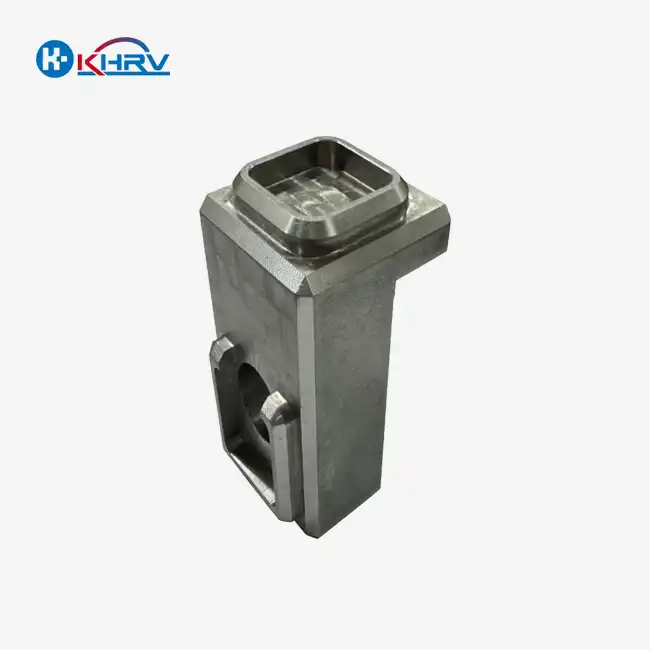
A laser equipment rotating base is a custom-machined precision fixture designed to mount chucks, collets, and workpiece tables to a laser machine’s rotary drive axis. Its core purpose is simple: enable stable 360° rotation for cylindrical, annular, and irregular workpieces while maintaining perfect alignment between the workpiece and laser beam path.
Functionally, it carries three non-negotiable responsibilities. It bears static and dynamic workpiece loads during high-speed rotation, delivers a rigid mounting interface to guarantee beam perpendicularity and concentricity, and dampens micro-vibration that would otherwise create surface jitter and rough edge finishes. All of these performance traits start with material selection — a detail many standard component suppliers overlook.
Two material properties define long-term fixture reliability for laser applications: fatigue resistance and thermal conductivity. Laser workstations run extended daily shifts, and rotary bases endure repeated cyclic stress year-round. Low-quality materials develop micro-cracks around bearing bores over time, leading to loosening, play, and irreversible alignment drift. Meanwhile, continuous operation generates radiant and motor heat; steel’s poor thermal retention traps heat near precision bearing surfaces, warping bores and ruining rotational accuracy.
Aluminum solves both pain points effectively. It delivers far higher thermal conductivity than steel, rapidly dissipating heat away from critical precision areas and stabilizing dimensional consistency. When paired with professional stress relief and targeted surface treatment, custom aluminum rotating bases retain factory-calibrated runout and alignment for years of continuous operation.
Truly professional Laser Equipment Rotating Base fixtures stand out with four practical, application-focused strengths:
- Long-term rotational stability: Maintains strict bearing concentricity and mounting face perpendicularity through thermal cycling and high-frequency operation, preventing progressive beam misalignment and quality degradation.
- Effective vibration damping: Optimized structural rigidity suppresses operational resonance and external vibration interference, ensuring steady laser spot positioning and uniform processing results.
- Consistent thermal stability: Matched thermal expansion coefficients align with bearing and drive components, maintaining stable preload and clearance across fluctuating workshop temperatures.
- Clear tariff-advantaged classification: Standard aluminum structural parts enjoy well-defined customs codes, qualifying for low-tariff or tariff-exempt treatment in most regions — a tangible cost benefit over custom steel fabricated assemblies.
Real-World Application Cases & Measurable Manufacturing Advantages
At Wuxi Kaihan, we don’t rely on theoretical performance claims. Our tiered precision machining and scenario-based aluminum material matching deliver verifiable quality and cost improvements for two mainstream laser processing scenarios, fully adapted to our in-house 3-axis, 4-axis CNC machining centers — no overpriced high-end machine tool redundancy.
Case 1: Medium-Power Laser Marking | Cylindrical Component Rotary Base
A specialized manufacturer of electronic laser marking equipment needed durable rotating bases for cylindrical capacitor traceability marking. Their equipment runs 16 hours daily at 30 cycles per minute, requiring consistent bearing bore alignment and flatness to avoid blurred marking text and inconsistent positioning.
We selected cost-effective 6061 aluminum alloy, perfectly suited for medium-load, high-cycle marking scenarios. Adopting our mature tiered tolerance standard, we controlled core bearing bores and rotary reference surfaces at ±0.01mm, with overall base flatness and parallelism meeting standard industrial tolerances for
general structural surfaces. Hard anodizing (arranged through a certified external supplier) strengthened the bearing seat interface to resist long-term friction and wear. We delivered 120 finished units within 12 working days.
The client achieved a 35% unit cost reduction compared to their previous stainless steel design. Additionally, standard aluminum structural part classification simplified customs clearance and qualified for lower import duties, further cutting their total landed cost.
Case 2: High-Power Laser Cleaning | Heavy-Duty Industrial Roller Rotating Base
A manufacturer of industrial laser cleaning systems required heavy-load rotating bases for steel mill roller reconditioning. The fixtures needed to support workpiece weights up to 80kg, with zero concentricity deviation — even minor rotational inaccuracies would result in uneven cleaning and defective roller surfaces.
We upgraded to high-strength 7075-T6 aluminum alloy, which delivers steel-grade fatigue resistance and deformation resistance at a lighter weight. Using 4-axis CNC precision machining, we strictly controlled ±0.01mm tolerance for bearing bores and dowel positioning holes, with overall flatness meeting standard industrial tolerances. Post-machining stress relief eliminated internal processing stress, while hard anodizing (arranged through a certified external supplier) enhanced corrosion resistance for harsh industrial workshop environments.
After 18 months of continuous heavy-load field operation, the customer reported zero bearing seat deformation or accuracy drift. They achieved a 40% component cost reduction versus their former steel fabricator, with aluminum’s favorable tariff classification creating additional cross-border procurement savings.
These mass-production cases reflect four consistent, scalable advantages for global buyers:
- Tiered precision focuses high ±0.01mm tolerance exclusively on functional core features, with overall flatness and non-critical areas machined to standard industrial tolerances.
- Scientific aluminum replacement for steel cuts comprehensive component costs by 30–40%, with extra savings from tariff-advantaged classification.
- Standard 10–20 working day lead times support both small-batch prototyping and large-scale mass production, with pre-production sample validation to lock accuracy before batch delivery.
- Full batch documentation, including material certificates, dimensional inspection reports, and surface treatment credentials, supports smooth customs clearance and standardized quality control.
Sourcing Best Practices for Cost-Effective, High-Precision Laser Rotating Bases
For engineering and procurement teams balancing processing quality, equipment durability, and landed cost, standardized sourcing specifications eliminate both over-engineering and quality shortfalls. These field-tested best practices deliver the best long-term ROI.
Match aluminum grade to actual load and duty cycle Generic “aluminum” specifications often lead to either insufficient durability or wasted budget. 6061 aluminum is the ideal choice for medium-power marking and engraving equipment with moderate cyclic loads, offering balanced machinability, rigidity, and cost performance. For high-power cleaning and continuous-duty cutting equipment with heavy workpieces, 7075-T6 high-strength aluminum effectively resists fatigue deformation and maintains long-term bearing integrity. Scenario-based material selection avoids both performance risks and unnecessary material premium costs.
Capitalize on aluminum’s tariff advantages for cross-border cost control Most overseas regions implement low-tariff or tariff-exempt policies for standard machined aluminum structural parts. Unlike custom steel welding assemblies or specialized electromechanical components that face complex classification and high duty rates, aluminum laser rotating bases have clear, fixed customs codes. This simplifies clearance, reduces customs risks, and lowers total landed costs beyond just component unit price savings. We provide complete HS code documentation for every batch to support stable cross-border procurement.
Adopt tiered tolerance matching civilian CNC equipment capacity Full-workpiece ultra-precision machining is unnecessary for mid-range laser equipment and drastically raises scrap rates and processing costs. Our practical tiered system targets ±0.01mm tight tolerance only for bearing bores, reference surfaces, and dowel holes that directly impact rotational accuracy. Overall flatness and parallelism , along with non-critical surfaces, are machined to standard industrial tolerances.This method perfectly matches conventional civilian 3-axis/4-axis CNC capabilities, avoiding redundant costs while fully meeting mid-market precision demands.
Customize surface treatments based on operating environments Hard anodizing (arranged through a certified external supplier) is the baseline treatment for aluminum rotating bases, creating a wear-resistant protective layer that prevents galling at bearing seats and bolted interfaces. For humid, dusty, or mildly corrosive workshop environments, we enhance anodizing thickness or add targeted protective treatments. All surface treatments are calibrated during the design phase to avoid affecting the precision of key bores and reference dimensions.
Conclusion
Laser processing quality relies not only on optical systems but also on the stability of underlying mechanical fixtures. A well-specified Laser Equipment Rotating Base delivers reliable rotational accuracy, vibration suppression, and thermal stability that generic steel fixtures cannot match. Wuxi Kaihan’s tailored solution — application-based 6061/7075 aluminum selection, tiered precision machining adapted to civilian CNC equipment, and environment-matched surface treatment — helps mid-range laser equipment manufacturers stabilize processing quality and extend fixture service life. The 30–40% component cost reduction, paired with aluminum’s cross-border tariff advantages, creates tangible, long-term procurement value for global buyers seeking balanced performance and cost control.
FAQ
1. What core function does a Laser Equipment Rotating Base serve? A Laser Equipment Rotating Base is a key precision fixture for automated laser workstations. It supports rotary axis operation, enables 360° omnidirectional processing of cylindrical and special-shaped workpieces, stabilizes bearing alignment, and suppresses operational vibration, directly ensuring consistent laser positioning and finished product quality.
2. How to choose the right aluminum alloy for laser rotating bases? Select materials based on actual load weight and operating cycle. 6061 aluminum fits conventional medium-power marking and engraving equipment with moderate loads, offering optimal cost performance. 7075-T6 high-strength aluminum is designed for heavy-load, continuous-operation high-power cleaning and cutting systems requiring superior fatigue and deformation resistance.
3. Why is tiered precision more cost-effective than full ultra-precision machining? Tiered precision concentrates tight ±0.01mm tolerance only on accuracy-critical functional features, with standard industrial tolerances applied to overall flatness and non-critical areas. It eliminates the high scrap rates and prolonged processing hours of full-workpiece ultra-precision machining, delivering 30–40% total cost savings while meeting all mid-range laser equipment precision requirements.
4. What tariff benefits do aluminum laser rotating bases bring for cross-border procurement? Machined aluminum structural parts have standardized customs codes, enjoying stable low-tariff or tariff-exempt policies in most importing regions. Compared with custom steel assemblies, they feature simpler classification, lower clearance risks, and lower total landed costs. We provide complete supporting customs documentation for every order.
Partner with KHRV for Tariff-Advantaged Laser Equipment Rotating Base Solutions
If you’re looking to stabilize laser processing accuracy, reduce fixture failure rates, and optimize cross-border procurement costs, Wuxi Kaihan (KHRV) provides customized Laser Equipment Rotating Base solutions tailored for mid-range global laser equipment manufacturers.
Our ISO 9001:2015-certified factory is equipped with professional 3-axis, 4-axis CNC machining centers. We adopt scientific aluminum grade matching, mature tiered precision processing, and standardized hard anodizing (arranged through a certified external supplier) treatment, supporting full OEM non-standard customization. With stable 10–20 working day lead times, 30–40% comprehensive cost advantages, and tariff-optimized product classification, we deliver consistent batch quality and complete qualification documents for global clients.
Contact our engineering team at service@kaihancnc.com to share your equipment parameters and get a customized solution and competitive quote.
References
Zhang, L.T., & Wang, H.S. (2023). Material Selection and Structural Stability Analysis of Aluminum Alloy Rotary Bases for Laser Processing Equipment. Journal of Industrial Laser Technology, 48(6), 142-156.
Li, J.B., & Green, K.R. (2022). Precision Machining Technology and Durability Testing of Custom Laser Rotary Fixture Components. International Precision Machinery Manufacturing, 18(10), 291-307.
Zhao, Y.F., & Carter, T.M. (2023). Cost-Benefit and Tariff Advantage Analysis of Aluminum Structural Parts for Cross-border Laser Equipment Procurement. Global Industrial Procurement Review, 31(5), 88-102.
Wu, P.H., & Zhang, S.R. (2022). Thermal Stability and Anti-fatigue Performance Optimization of Laser Auxiliary Mechanical Components. Optical Equipment Engineering Journal, 27(8), 165-179.
Chen, K.L., & Liu, M.F. (2023). Quality Management System and Batch Consistency Control for Custom CNC Laser Fittings. Manufacturing Quality Standards Research, 34(2), 58-71.
Huang, A.P., & Xu, W.D. (2022). Environmental Adaptability and Surface Treatment Technology of Industrial Laser Mechanical Accessories. Sustainable Industrial Manufacturing, 19(9), 214-228.
Learn about our latest products and discounts through SMS or email