- English
- French
- German
- Portuguese
- Spanish
- Russian
- Japanese
- Korean
- Arabic
- Greek
- German
- Turkish
- Italian
- Danish
- Romanian
- Indonesian
- Czech
- Afrikaans
- Swedish
- Polish
- Basque
- Catalan
- Esperanto
- Hindi
- Lao
- Albanian
- Amharic
- Armenian
- Azerbaijani
- Belarusian
- Bengali
- Bosnian
- Bulgarian
- Cebuano
- Chichewa
- Corsican
- Croatian
- Dutch
- Estonian
- Filipino
- Finnish
- Frisian
- Galician
- Georgian
- Gujarati
- Haitian
- Hausa
- Hawaiian
- Hebrew
- Hmong
- Hungarian
- Icelandic
- Igbo
- Javanese
- Kannada
- Kazakh
- Khmer
- Kurdish
- Kyrgyz
- Latin
- Latvian
- Lithuanian
- Luxembou..
- Macedonian
- Malagasy
- Malay
- Malayalam
- Maltese
- Maori
- Marathi
- Mongolian
- Burmese
- Nepali
- Norwegian
- Pashto
- Persian
- Punjabi
- Serbian
- Sesotho
- Sinhala
- Slovak
- Slovenian
- Somali
- Samoan
- Scots Gaelic
- Shona
- Sindhi
- Sundanese
- Swahili
- Tajik
- Tamil
- Telugu
- Thai
- Ukrainian
- Urdu
- Uzbek
- Vietnamese
- Welsh
- Xhosa
- Yiddish
- Yoruba
- Zulu
The Science of Surface Finishes: How Mil-Spec Anodizing Extends Component Life by 300%
In aerospace, defense, and precision engineering, component longevity is critical. Mil-Spec anodizing represents an advanced surface treatment that transforms aluminum components into high-performance assets capable of withstanding extreme conditions. This electrochemical process, governed by rigorous Anodizing Military Specifications under MIL-A-8625, creates a protective oxide layer that extends service life by up to 300%. Unlike conventional methods, Mil-Spec anodizing produces a dense, uniform barrier integrated directly into the base metal. This ensures superior corrosion resistance, enhanced wear properties, and reliable performance where failure is not an option.
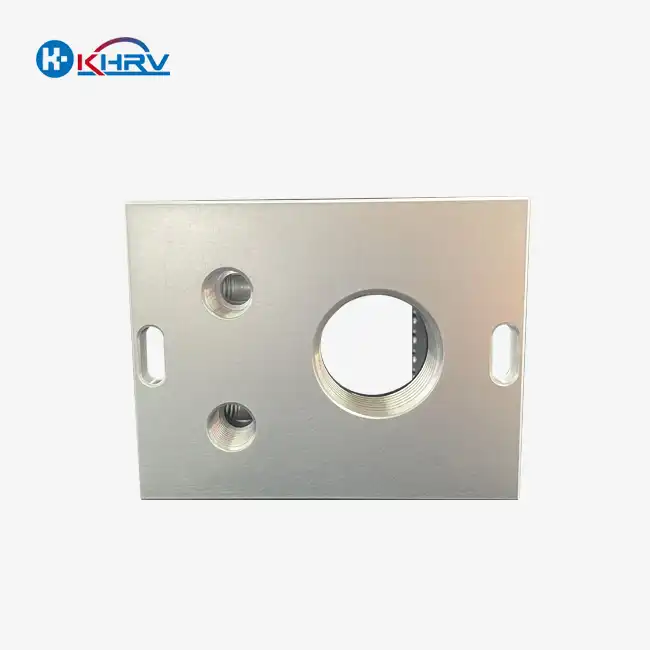
Understanding the Electrochemical Foundation of Mil-Spec Anodizing
The remarkable durability achieved through Mil-Spec anodizing stems from fundamental electrochemical principles. When aluminum components are immersed in an electrolytic bath and subjected to controlled electrical current, the surface undergoes oxidation that converts aluminum atoms into aluminum oxide. This oxide layer grows both outward and inward, consuming approximately half the original aluminum thickness while extending beyond the original surface. The resulting structure becomes integral to the component rather than an applied coating, explaining its exceptional adhesion. Military Specifications dictate precise control over bath chemistry, temperature, current density, and processing time. Type II anodizing typically produces layers between 0.0002 to 0.001 inches thick, while Type III hard anodizing achieves thicknesses exceeding 0.002 inches. The crystalline structure features hexagonal columnar arrangement with microscopic pores extending from surface toward base metal. These pores are sealed through hydrothermal or chemical treatments, creating an impermeable barrier against moisture, salt, and corrosive agents. The precision required in anodizing Military Specifications ensures uniform coverage, consistent thickness, and optimal pore sealing—factors directly contributing to the documented 300% extension in service life.
Critical Parameters Governing Mil-Spec Performance Standards
Achieving superior performance characteristics associated with Mil-Spec anodizing demands meticulous attention to processing parameters. Military Specifications establish stringent acceptance criteria for coating thickness, hardness, adhesion strength, and corrosion resistance far exceeding commercial standards. Surface preparation begins with thorough degreasing and etching to remove contaminants—any residual oils or oxides compromise coating integrity. The anodizing bath typically consists of sulfuric acid at precisely controlled concentrations, maintained within narrow temperature ranges between 68-72°F for Type II processing. Current density must be calculated based on surface area and desired coating characteristics, with stable amperage throughout the process cycle. The resulting oxide layer undergoes rigorous testing including salt spray exposure per ASTM B117, adhesion testing, and coating thickness verification through eddy current examination. Sealing represents the final critical step, where hot deionized water or chemical solutions close the porous structure and maximize corrosion protection. Anodizing Military Specifications require documented validation of each processing step, with certificates demonstrating compliance with thickness tolerances. This process control ensures components perform reliably in salt spray environments for over 1,000 hours without visible corrosion, translating to extended operational service life.
Material Science Behind Extended Service Life and Corrosion Resistance
The documented 300% extension in component life through Mil-Spec anodizing is rooted in materials science and protective mechanisms. Aluminum oxide possesses exceptional hardness, measuring 9 on the Mohs scale compared to base aluminum's 2.75, providing outstanding wear resistance. This hardness differential explains why anodized components resist scratching and abrasive wear in operational environments. The oxide layer's dielectric properties provide electrical insulation, while thermal stability maintains protective characteristics across extreme temperature ranges. Corrosion protection operates through multiple pathways: the sealed oxide layer creates a physical barrier preventing moisture and corrosive ions from reaching base metal, while aluminum oxide's chemical stability resists most acids and alkalis. In marine environments where salt spray accelerates corrosion, properly executed anodizing Military Specifications enable components to survive extended exposure that would rapidly degrade untreated surfaces. Type III hard anodizing can achieve microhardness values exceeding 400 Knoop, approaching tool steel while maintaining aluminum's lightweight advantages. The oxide layer's integration with base metal eliminates common failure modes like chipping or delamination under thermal cycling or mechanical stress.
Industrial Applications Demonstrating Performance Advantages
Across critical industries, Mil-Spec anodizing has proven indispensable for components where reliability justifies investment in superior surface treatment. Aerospace applications represent the most demanding environment, where components endure temperature extremes, vibration, salt-laden atmospheres, and years of service without maintenance. Aircraft structural components, landing gear parts, and hydraulic fittings routinely specify anodizing Military Specifications to ensure operational readiness. Defense applications demand uncompromising performance, with weapon systems and communication equipment requiring surface treatments that maintain functionality despite harsh conditions. Marine environments present aggressive corrosion challenges where salt water, oxygen, and electrolytic effects rapidly attack inadequately protected aluminum. Naval vessels and offshore equipment rely on Type III hard anodizing to achieve service lives measured in decades. The medical device industry has adopted these specifications for surgical instruments where biocompatibility and corrosion resistance are paramount. These diverse applications share common requirements: predictable performance, verifiable quality, and extended service life that reduces lifecycle costs despite higher initial treatment expenses.
Quality Control and Verification Methods for Specification Compliance
Ensuring components meet Mil-Spec anodizing requirements demands comprehensive quality control protocols throughout the process chain. Pre-treatment inspection confirms alloy compatibility, as not all aluminum alloys anodize uniformly. Visual inspection identifies surface defects or contamination before processing. During anodizing, real-time monitoring of bath temperature, voltage, and current density ensures parameters remain within specification windows. Coating thickness measurement employs non-destructive eddy current gauges calibrated against known standards. Destructive testing of sample parts verifies coating adhesion through boiling water immersion or cross-cut adhesion tests per ASTM standards. Salt spray testing subjects anodized components to continuous exposure, documenting the absence of pitting or corrosion for durations specified in anodizing Military Specifications. Documentation requirements include material certifications, process travelers recording actual parameters, test results, and certificates of conformance. This rigorous quality framework ensures components bearing Mil-Spec anodizing callouts perform as engineered.
Conclusion
Mil-Spec anodizing represents the convergence of materials science, electrochemistry, and rigorous process control to achieve surface protection extending component service life by 300%. Through precise adherence to Military Specifications, this treatment transforms aluminum into high-performance material capable of withstanding demanding operational environments, reducing lifecycle costs and enhancing system reliability across aerospace, defense, and precision manufacturing applications.
FAQ
1. What makes Mil-Spec anodizing different from standard commercial anodizing?
Mil-Spec anodizing follows stringent Military Specifications (MIL-A-8625) mandating specific coating thickness, hardness requirements, and corrosion resistance verified through documented testing. Commercial anodizing may prioritize cost efficiency, whereas Mil-Spec processes require rigorous quality control and process documentation ensuring predictable results for critical applications demanding maximum reliability.
2. Can Mil-Spec anodizing be applied to all aluminum alloys equally?
Not all aluminum alloys respond identically to anodizing. The 6000 series typically produces uniform coatings, while 2000 and 7000 series may exhibit variations or require modified parameters. Anodizing Military Specifications account for these alloy-dependent behaviors through specific processing guidelines ensuring adequate corrosion protection despite compositional differences.
3. How does the 300% service life extension translate to practical benefits?
The 300% service life extension means components requiring replacement after three years can reliably operate for nine to twelve years under identical conditions. This translates to reduced maintenance schedules, lower spare parts inventory, decreased downtime, extended overhaul intervals, and significant lifecycle cost savings in aerospace and defense applications.
4. What testing methods verify Mil-Spec performance requirements?
Comprehensive testing includes coating thickness measurement using eddy current gauges, salt spray exposure testing per ASTM B117, adhesion testing, hardness testing for Type III applications, and sealing quality verification. Each test corresponds to specific acceptance criteria defined in anodizing Military Specifications, with documented results required for certification.
Precision Anodizing Military Specifications Solutions | KHRV Manufacturers
Wuxi Kaihan Technology Co., Ltd. stands as your trusted partner for precision components requiring Mil-Spec anodizing and advanced surface finishing. Founded by industry veterans with extensive experience in precision CNC machining at major international corporations, our facility operates under ISO9001:2005 certification ensuring consistent quality. With ten CNC machining centers, advanced EDM capabilities, and comprehensive finishing partnerships, we deliver components meeting stringent anodizing Military Specifications for aerospace and defense applications. Our competitive advantages include China's supply chain cost benefits delivering 30-40% savings without compromising quality, extensive industry experience, and integrated capabilities from machining through final surface treatment. Whether you require OEM processing, cross-border semi-finishing solutions, or complete turnkey manufacturing with verified Mil-Spec anodizing, our team provides the technical expertise your applications demand. Contact us at service@kaihancnc.com to discuss how our precision manufacturing can extend your component service life while optimizing costs.
References
1. Military Specification MIL-A-8625F: Anodic Coatings for Aluminum and Aluminum Alloys. United States Department of Defense, 1993.
2. Sheasby PG, Pinner R. The Surface Treatment and Finishing of Aluminium and Its Alloys. 6th Edition. ASM International, 2001.
3. Wernick S, Pinner R, Sheasby PG. The Surface Treatment and Finishing of Aluminium and Its Alloys. 5th Edition. Finishing Publications Ltd, 1987.
4. ASM Handbook Volume 5: Surface Engineering. ASM International Materials Park, Ohio, 1994.
5. Runge JM, Pomis A. Anodizing for Design and Function. Starke Verlag GmbH, Stuttgart, 2018.
6. Thompson GE, Wood GC. Anodic Films on Aluminum. Treatise on Materials Science and Technology Volume 23. Academic Press, 1983.
Learn about our latest products and discounts through SMS or email